
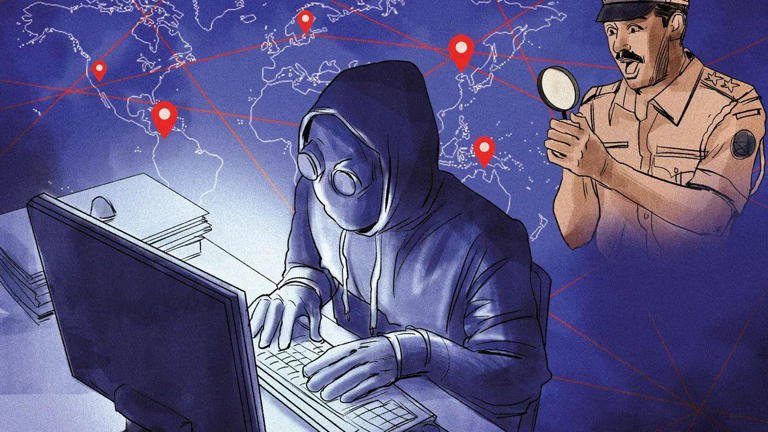
Kanpur: A massive cyber fraud network operating under the guise of online gaming apps has been uncovered in the city, revealing three active branches—one of which has been busted, while two others remain absconding. Acting in the Barra area, police arrested eight accused linked to one branch and sent them to jail. A court has remanded all accused to 14 days of judicial custody, following an earlier two-day police remand.
Dubai handlers, local runners and hidden branches
Investigations have revealed that the entire network was being controlled from overseas, primarily from Dubai. Within India, its handlers were based in Delhi, Noida, and Haryana, managing operations of Kanpur’s Branches 24, 25, and 26. After the crackdown on Branch 24, members of the remaining branches switched off their phones and went underground.
FCRF Returns With CDPO, Its Premier Data Protection Certification for Privacy Professionals
Banned app clones, Telegram links and fake profits were used to lure victims into the trap
The gang created clones of banned gaming platforms such as Lotus 365, Reddy Book, Kartikeya, and Dubai EXH to trap users. Through platforms like Telegram and Instagram Reels, they circulated links to gaming IDs, initially offering small profits to lure users. Once trust was built, victims were encouraged to invest larger amounts, which were then siphoned off.
Police investigations further revealed that the accused frequently conducted transactions while moving in cabs to avoid detection and tracking. Authorities have appealed to cab drivers and auto operators to report any suspicious activities immediately to the nearest police station.
Forged GST numbers and 78 bank accounts helped the gang move crores
One of the key methods used by the gang involved fake documentation. The accused procured forged GST numbers and used them to open current accounts. These accounts facilitated daily transactions worth lakhs of rupees, effectively masking the money trail and making it difficult for agencies to trace the flow of funds.
The cyber cell has so far identified 78 bank accounts linked to the network. Detailed transaction histories of these accounts have been sought from banks. Officials expect to receive complete data within a couple of days, which could lead to further breakthroughs and wider action against the syndicate.
Even after arrests, the network stayed alive
Shockingly, preliminary findings indicate that the gang has defrauded people of over ₹100 crore. Even after the arrest of eight accused, other members managed to withdraw around ₹50 lakh from a single account in just one day, indicating that the network is still active and operational.
During interrogation, the arrested individuals revealed that they were recruited under the pretext of call center jobs. Initially assigned routine tasks, they were gradually drawn deeper into the fraud operations. Once money started flowing, they found it difficult to exit the system due to financial temptation and pressure.
Investigating agencies are now focusing on apprehending the main operators and agents based in Delhi, Noida, and Haryana. Special teams are being formed and are expected to move out soon. Officials believe that more significant revelations are likely in the coming days as the probe expands.
Commenting on the case, renowned cyber crime expert and former IPS officer Prof. Triveni Singh said such gaming frauds are entirely based on “social engineering.” He explained,
“These gangs first build trust by showing small profits, then gradually push users into making larger investments. By using fake GST identities and multiple bank accounts, they layer transactions in a way that makes it extremely difficult for investigators to trace the money trail.”
He also advised people to stay away from unknown links, suspicious gaming offers, and platforms promising quick returns.
The case once again highlights how illegal networks operating under the guise of online gaming and betting are targeting unsuspecting users, with cybercrime expanding rapidly and posing a serious threat to the public.
