
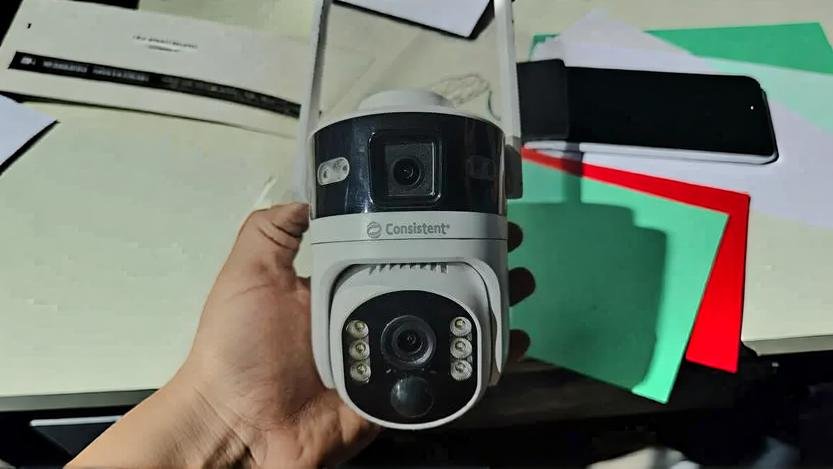

Pakistan’s Inter-Services Intelligence is suspected to have run a covert surveillance operation using compromised Chinese-made CCTV systems placed near strategic Indian assets in border states and Union Territories, enabling real-time monitoring of military movements and equipment logistics. Investigators believe the operation was intended to support precise targeting of Indian defence installations and security infrastructure in the event of a future conflict between New Delhi and Islamabad.
Live feeds from border installations
For nearly the last three months, the ISI was allegedly receiving live visual feeds and information from key strategic defence sites and Central Armed Police Forces installations across Punjab, Haryana, Rajasthan, and Jammu and Kashmir through nine solar-powered SIM-enabled devices linked to EseeCloud, a Chinese software platform used for CCTV and surveillance equipment.
EseeCloud, developed by Guangzhou Juan Intelligent Tech Joint Stock Co., Ltd. in China, is alleged to have transmitted live footage to data centres in China, from where the information was further relayed to handlers in Pakistan. The findings emerged during an ongoing Delhi Police Special Cell investigation that led to the busting of an espionage module linked to the ISI and Babbar Khalsa International after the arrest of six people, three each from Punjab and Delhi.
Investigators have recovered nine EseeCloud CCTV cameras installed near sensitive security and defence establishments in states and Union Territories close to the Pakistan border. Police sources said the findings have raised concern over vulnerabilities arising from Chinese CCTV systems installed in and around strategic premises, and have called for a security audit of such assets.
FCRF Returns With CDPO, Its Premier Data Protection Certification for Privacy Professionals
Network spread across multiple states
Police said the surveillance network was built to gather sensitive information through regular round-the-clock monitoring of the movement of personnel and machinery, with a view to using that intelligence in the event of another war with India. Investigators drew parallels between the alleged operation and reported foreign intelligence efforts involving hacked surveillance networks used to track live movements in conflict settings.
The Indian module was allegedly supervised by an ISI handler identified by the code name Captain Rana. Investigators believe the network used the terror infrastructure of Babbar Khalsa International for manpower management and sleeper cells across Spain, Germany, and Dubai to install EseeCloud cameras at locations assigned for spying.
Police said the installations were carried out under the guise of monitoring truck movement in a transportation business, and that the ring leader for the assignment was a Dubai-based Indian operator. The sites identified in the investigation included Kapurthala, Jalandhar, Pathankot, Patiala, and Moga in Punjab, Ambala in Haryana, Kathua in Jammu and Kashmir, and Bikaner and Alwar in Rajasthan.
Security concerns trigger audit calls
Additional Commissioner of Police Pramod Singh Kushwah said these locations were considered highly sensitive because of regular troop movements, proximity to international borders, and the presence of key Army cantonments and logistical corridors. Police have gathered that installation of an EseeCloud setup costs around ₹15,000, including ₹5,000 to ₹7,000 for a camera.
The investigation has also renewed attention on the government’s new framework, applicable from April, to tighten oversight on CCTV camera use and ensure compliance with security norms laid out in the policy document. Sanjeev Sehgal, founder and managing director of Sparsh CCTV and convener of the Video Surveillance Committee at the Bureau of Indian Standards, said the introduction of STQC Essential Requirements marked a major step in securing CCTV networks against vulnerabilities.
He said the framework was among the earliest and most comprehensive globally, combining cybersecurity, trusted supply chains, and continuing compliance for surveillance systems. He added that the next phase should focus on faster replacement of legacy networks and stricter enforcement, especially across critical infrastructure in high-risk regions. Police also said the accused were receiving funds through UPI accounts, with part of the money allegedly coming from proceeds linked to the sale of smuggled weapons.
