
Follow us on Google News

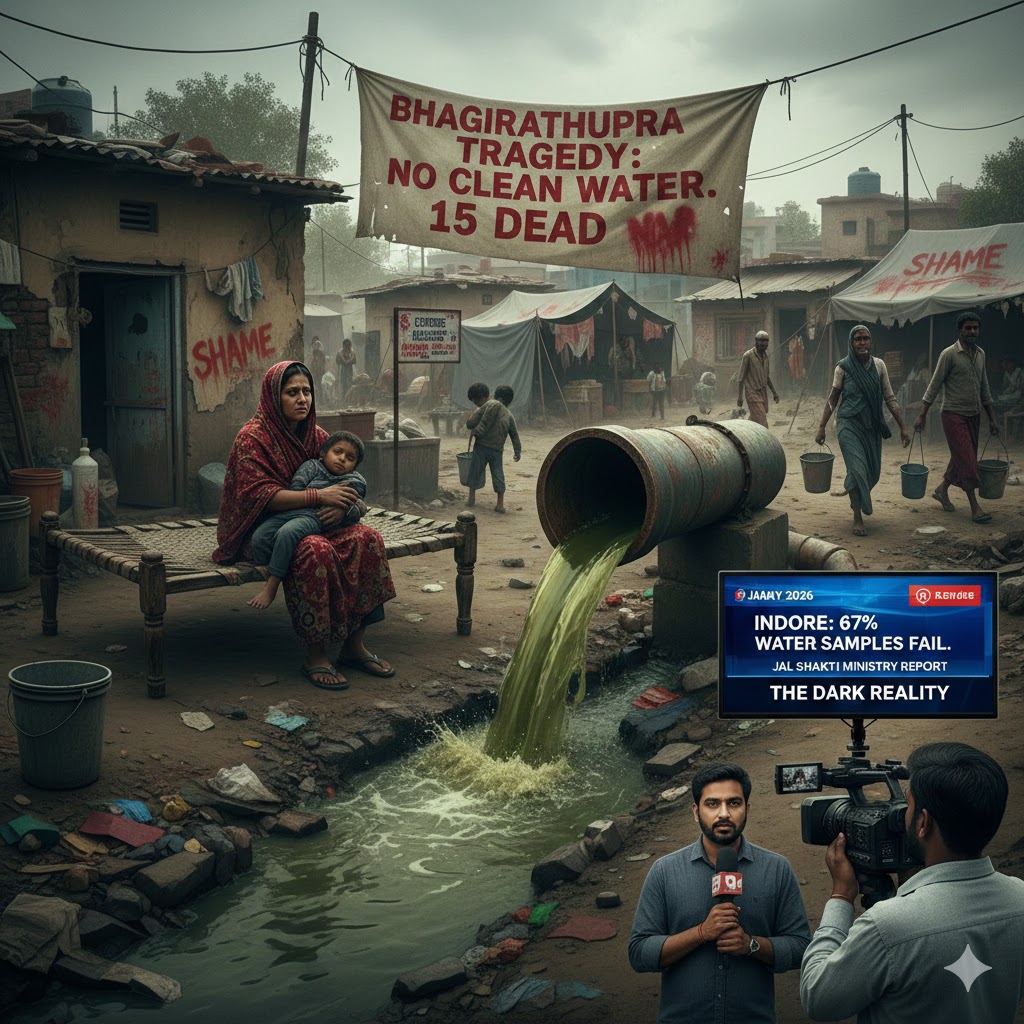
A disturbing picture has emerged from Indore, a city long celebrated as India’s ‘cleanest city’. The State Report 2024 released by the Jal Shakti Ministry has exposed serious flaws in the city’s drinking water supply system. According to the report, 67 percent of drinking water samples collected in Indore failed quality tests, meaning that only 33 percent of the water supplied is fit for consumption. This figure is alarmingly low—less than half of the national average of 76 percent potable water.
The findings come at a time when conditions in Bhagirathpura locality of Indore have turned grim due to contaminated water. So far, 15 people have lost their lives, while thousands have fallen ill. The revelations have placed the municipal corporation as well as the state administration under intense scrutiny.
https://the420.in/fcrf-certified-grc-professional-program-governance-risk-compliance-training-india/
What the Central Government Report Revealed
According to the Jal Shakti Ministry report accessed by CNN-News18, water samples collected in Indore between July and October 2024 were tested for E. coli, total coliform, and pH levels. The results were shocking: more than two-thirds of the samples failed to meet prescribed health standards.
The situation across Madhya Pradesh is also worrying. At the state level, 37 percent of water samples failed quality tests, indicating that the problem extends well beyond Indore and points to systemic weaknesses in water management and monitoring mechanisms.
98,000 Complaints Ignored
The report further notes that over the past year, more than 98,000 complaints related to drinking water quality were registered across Madhya Pradesh. Despite the sheer volume of grievances, authorities allegedly failed to carry out timely investigations or implement corrective measures.
Experts believe that persistent neglect of public complaints and the absence of regular monitoring significantly worsened the situation, eventually leading to a full-blown public health crisis.
Serious Lapses in Testing Infrastructure
The report also highlights glaring administrative failures. In Indore, the availability of field testing kits stands at just 14.7 percent. This means that officials responsible for monitoring water quality lacked even the basic tools required to carry out their duties effectively.
Additionally, during the survey, the state government was unable to clearly answer several critical questions, including:
- Whether a standard operating procedure (SOP) exists for routine water testing
- How frequently water sampling is conducted and at what administrative levels
Such gaps raise serious concerns about oversight and accountability within the water supply system.
Bhagirathpura Tragedy: Human Cost of Negligence
These figures are not merely statistical—they represent a life-threatening reality for residents of Indore. In Bhagirathpura alone, contaminated drinking water has resulted in:
- 15 deaths
- Over 2,800 people falling ill
- 201 patients still undergoing treatment in hospitals
Following the tragedy, authorities initiated disciplinary action. The Indore Municipal Corporation Commissioner, the Additional Commissioner, and two senior officials from the water distribution department were dismissed for gross negligence.
Questions Over Cleanliness Rankings
Indore’s consistent top ranking in national cleanliness surveys has now come under question. Experts argue that urban cleanliness cannot be measured solely by waste management, and that access to safe drinking water is an equally critical indicator of public health. Ignoring water quality, they say, undermines the very idea of a “healthy city”.
The Road Ahead
The Jal Shakti Ministry’s report makes it clear that Indore—and the state as a whole—urgently needs reforms in water supply infrastructure, quality monitoring, and institutional accountability. Without swift corrective action, the ‘cleanest city’ label risks becoming hollow, sustained at the cost of public health and human lives.