
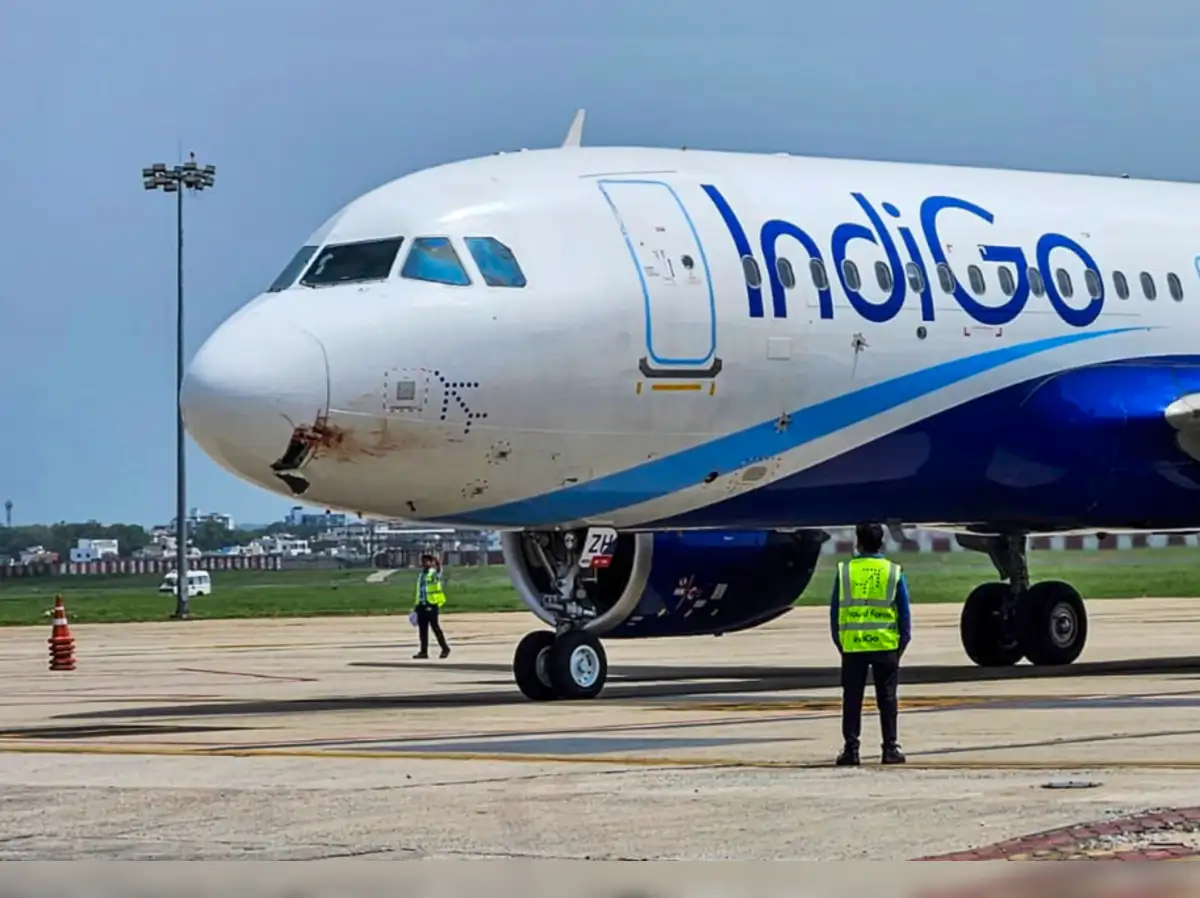

New Delhi | December 13, 2025: India’s largest airline, IndiGo, has approached the Delhi High Court seeking a refund of over ₹900 crore in customs duty, alleging that the government unlawfully imposed double taxation on aircraft engines and parts re-imported into India after overseas repairs.
The petition, filed by InterGlobe Aviation Ltd, contends that the Customs Department’s interpretation of the law violates both the Indian Constitution and established customs regulations.
The matter was listed before a bench comprising Justice Prathiba M. Singh and Justice Shail Jain. However, Justice Jain recused herself from hearing the case as her son is employed as a pilot with IndiGo. The matter will now be heard by another bench as per the directions of the Chief Justice.
Airline’s Argument: “Two Taxes on a Single Transaction”
IndiGo’s counsel told the court that the airline had re-imported aircraft engines and components through more than 4,000 bills of entry after repairs abroad. The airline said it had already paid basic customs duty (BCD) on these consignments, and also discharged Goods and Services Tax (GST) under the reverse charge mechanism, since the repair activity qualified as a service.
Despite this, the Customs Department levied another round of customs duty, treating the same transaction as a fresh import of goods. The airline’s plea stated:
“We paid all applicable taxes in good faith, yet the department treated the re-imports as new imports, unlawfully levying duty twice. This action is contrary to both the law and previous tribunal rulings.”
Prior Tribunal Relief Ignored
IndiGo argued that the Customs, Excise and Service Tax Appellate Tribunal (CESTAT) had earlier clarified that no customs duty can be imposed twice on re-imports following overseas repairs.
However, the government later issued a revised notification that extended duty applicability to such transactions. IndiGo contends that even then, the tribunal explicitly held that the amended notification would apply prospectively, not retroactively.
“Despite the tribunal’s clear ruling, customs authorities continued collecting duty on past re-imports, accumulating over ₹900 crore,” the petition said.
Duty Paid “Under Protest,” Refund Denied
According to the airline, the disputed amount was paid “under protest”, meaning the company had formally recorded its objection at the time of payment.
When IndiGo subsequently filed for a refund, the Customs Department rejected the claim, citing procedural grounds that each of the 4,000 bills of entry would need to be individually reassessed before any refund could be granted.
IndiGo has called this a delaying tactic, asserting that no such reassessment requirement exists under the law and that the department’s intent was simply to block legitimate refunds.
Legal Standpoint: Violation of Constitutional and Tax Principles
The airline’s petition argues that the department’s actions breach Article 265 of the Constitution, which stipulates that “no tax shall be levied or collected except by authority of law.”
IndiGo further stated that the case is not limited to its own operations but could set an important precedent for India’s aviation sector, as most airlines send engines and components abroad for maintenance and subsequently re-import them.
The company also highlighted the economic implications, noting that such double taxation increases operational costs, which could ultimately affect airfares.
Next Steps and Broader Implications
The High Court will now determine whether the customs authorities’ actions amount to double taxation and whether the levy was legally justified.
If the verdict favors IndiGo, it could pave the way not only for a ₹900 crore refund, but also for tax relief to other carriers facing similar treatment.
Legal experts suggest the case could redefine the tax treatment of re-imported goods in India particularly whether a repaired item should be classified as a service output or as a newly imported good.
