

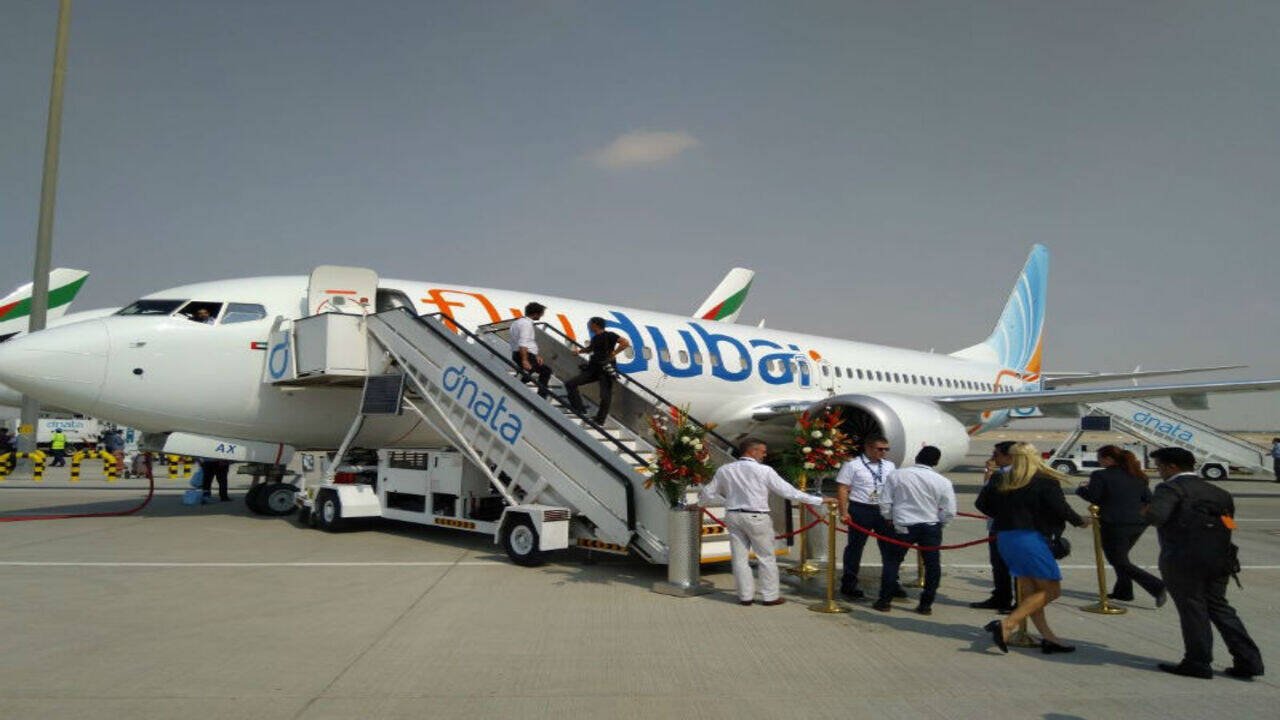

Investigators are examining the employment background, past postings, and alleged ideological associations of Omani co-pilot Hamam Alhamami after he allegedly assaulted Indian pilot Captain Smit Machchhar during a commercial flight from Dubai to Tel Aviv on September 30. The mid-air altercation occurred in the cockpit of a Flydubai passenger service, prompting the transmission of a hijacking alert before the aircraft carried out an emergency diversion to Tabuk in Saudi Arabia. Following his transfer from Saudi Arabia to the United Arab Emirates, Alhamami is now facing a terrorism-related inquiry as intelligence agencies evaluate his past movements across Oman, Syria, and Morocco.
Cockpit Struggle Triggered Rapid Descent Over Airspace
The assault took place while the aircraft was cruising en route to Tel Aviv, leading to a sudden dive in which the jet lost approximately 16,000 feet in around two minutes. Despite sustaining severe injuries during the struggle, Captain Machchhar fought back and managed to unlock the flight deck door. Cabin crew members and passengers rushed inside to overpower and restrain Alhamami, while two off-duty aviators traveling aboard assisted in securing control of the aircraft. The plane landed safely in Tabuk, where all 180 passengers and crew members disembarked without further harm.
Prior Flight Restrictions and Career Path Under Scrutiny
Scrutiny has centered on how Alhamami cleared airline vetting after reports indicated he had previously been barred from piloting duties in Oman over alleged extremist positions. Alhamami, an Omani citizen born in the UAE to an Omani father and a Syrian mother, had spent considerable time living in Syria, where he allegedly came under the influence of hardline ideology. He was reportedly relieved of a training assignment at Oman Air last year amid concerns over his personal views before receiving another internal post. He later spent time working with Morocco’s flag carrier, Royal Air Maroc, before joining Flydubai, where he had been employed for roughly eight months prior to the cockpit incident.
Clearance for Tel Aviv Sector Prompts Multilateral Inquiries
A key focus of inquiries by Israeli security and regional intelligence agencies is how an Omani national was assigned to a Tel Aviv-bound service given that Oman maintains no diplomatic ties with Israel. Search teams reportedly discovered leaflets and publications affiliated with pro-Palestinian organizations among his personal belongings, alongside documentation reflecting opposition to Israel. While investigators are evaluating the recovered literature in the context of a potential terrorism motive, authorities noted that ideological stances alone do not confirm intent, leaving the precise motivation behind the cockpit attack subject to the ongoing investigation.
Follow for daily updates on cybercrime, corporate fraud, DFIR, hacking, investigations, and digital forensics
