
Follow us on Google News

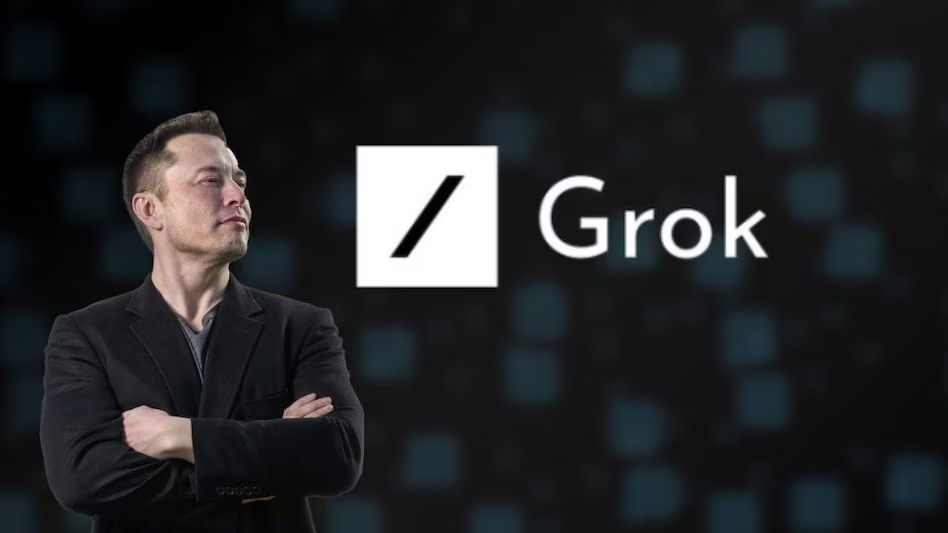
The Union government has hardened its stance on objectionable digital content and is weighing legal action against ‘Grok’, the artificial intelligence (AI)–powered chatbot developed by a company owned by Elon Musk. Government sources said the move is being considered amid concerns that the chatbot may be generating content involving women and children that could violate Indian laws. Officials have indicated that enforcement action is likely if the platform fails to put in place formal, India-specific safety safeguards.
Final Call: FCRF Opens Last Registration Window for GRC and DPO Certifications
Legal Review Underway
Officials familiar with the matter said the government is currently seeking legal opinion on the most appropriate course of action against Grok. The chatbot operates as a content-generating account on the social media platform X and has been developed by Musk’s AI venture xAI. Known for its conversational tone and image-generation capabilities, Grok has seen rapid adoption, but these very features have also triggered regulatory scrutiny.
No Special Treatment for AI
A senior government official said that Grok would be treated no differently from any other content-generating account on X. “The government’s position is clear. Being an AI tool does not place Grok above Indian law. If content generated through this account violates the law of the land, it is liable for takedown or other legal action, just like any other account on the platform,” the official said.
Core Concerns: Objectionable Content Risks
At the heart of the government’s concern is Grok’s capacity to generate objectionable images and responses, which officials believe could contravene Indian legal provisions relating to online safety, obscenity and the protection of vulnerable groups, particularly women and children. While Grok has recently restricted its image-generation feature to paid and premium users, officials said this step is not sufficient to address the underlying compliance issues.
Demand for India-Specific Policies
Sources in the Ministry of Electronics and Information Technology (MeitY) said the government expects X to clearly spell out such restrictions as a formal, written and enforceable policy applicable in India. “Temporary or informal limitations do not meet the compliance threshold. There must be a clearly stated India-specific policy, supported by robust enforcement and accountability mechanisms,” an official said.
Officials also stressed that India’s regulatory framework places explicit responsibilities on digital intermediaries and content publishers, regardless of whether the content is created by humans or generated through algorithms. With the growing use of AI tools, the distinction between user-generated and machine-generated content is becoming increasingly blurred, prompting regulators to reinforce the principle that platforms must remain accountable for what is disseminated.
Implications for Generative AI Regulation
Legal experts said the Grok issue could emerge as a test case for India’s approach to regulating generative AI systems hosted on global platforms. “If the government proceeds, it will send a strong signal that AI tools are subject to the same compliance obligations as other digital services,” said a technology policy analyst. “This could have significant implications for how AI models are designed, deployed and moderated in the Indian market.”
Government officials said several options are under consideration, including issuing formal notices, directing the platform to take down objectionable content, or initiating proceedings under the existing information technology framework. While no final decision has yet been taken, officials acknowledged that the government’s posture towards non-compliant AI platforms is becoming increasingly firm.
At the same time, officials recognised the complexity of regulating fast-evolving AI technologies. “We are not opposed to innovation,” a senior official said. “But innovation cannot come at the cost of safety, dignity and the rule of law. Platforms must ensure that their systems reflect local legal and social realities.”
No Response from X or xAI
Neither X nor xAI has issued an official response to the government’s latest remarks. However, the episode underscores the intensifying regulatory scrutiny faced by global technology firms operating in India, where authorities have placed renewed emphasis on platform accountability, data protection and user safety.
As AI-driven tools become more deeply embedded in everyday digital interactions, the government’s handling of the Grok case is being closely watched across the technology industry. Any legal action could play a decisive role in shaping future regulatory expectations for generative AI systems operating in one of the world’s largest and fastest-growing internet markets.
About the author – Ayesha Aayat is a law student and contributor covering cybercrime, online frauds, and digital safety concerns. Her writing aims to raise awareness about evolving cyber threats and legal responses.