
Follow us on Google News

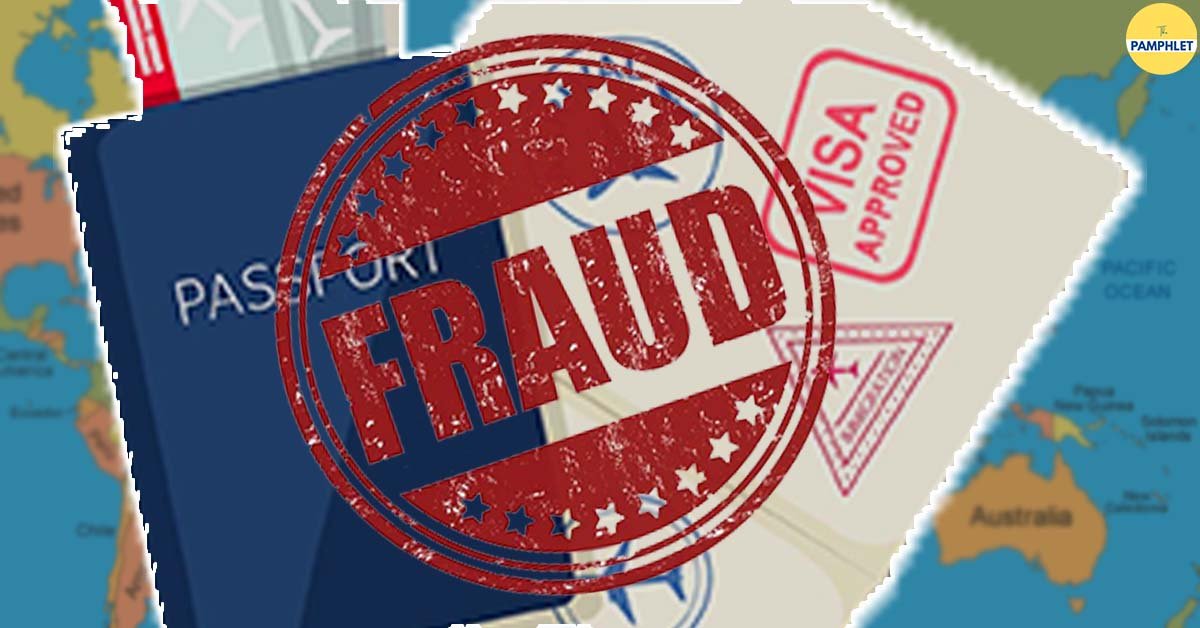
On a routine evening at Chaudhary Charan Singh International Airport in Lucknow, immigration officials intercepted Kamlesh Kumar, a 39-year-old resident of Lucknauri village in Gorakhpur. Kumar was attempting to board a flight to Don Mueang International Airport in Bangkok using a counterfeit passport. Upon scrutiny, discrepancies in his documentation were evident, leading to his detention and subsequent handover to the Sarojninagar police. He now faces charges of forgery and attempting to travel abroad using fraudulent documents.
This incident is not isolated. In a similar case, Ajit Yadav, another Gorakhpur native, was arrested at Kolkata’s Netaji Subhas Chandra Bose International Airport for using a forged passport under the alias “Ajeet Kumar.” Yadav had previously been deported from Bangkok and managed to obtain a fourth passport by falsifying personal details, allowing him to travel internationally without detection.
Algoritha: The Most Trusted Name in BFSI Investigations and DFIR Services
Inside the Fake Passport Industry
The fabrication of fake passports is a sophisticated operation involving a network of forgers, corrupt officials, and intermediaries. These networks exploit systemic weaknesses, producing counterfeit documents that can pass cursory inspections.
A report highlighted the case of a gangster, Harsh alias Chintu, who managed to flee the country using a passport obtained through forged documents, despite biometric verification systems. Chintu’s passport, though technically genuine, was backed by fabricated identity proofs, showcasing the ease with which such documents can be manipulated.
Further investigations have uncovered transnational rackets. In 2024, Delhi Police’s IGI Airport Unit dismantled multiple fake passport syndicates, arresting 19 foreign nationals and 23 agents. These operations spanned across states like Delhi, Maharashtra, and West Bengal, emphasizing the widespread nature of the problem.
The Need for Robust Verification Mechanisms
The persistence of such fraudulent activities points to systemic vulnerabilities. While the government has integrated the Passport Seva System with the Aadhaar database, gaps remain. The lack of real-time data sharing and comprehensive biometric verification allows forgeries to slip through the cracks.
Moreover, the misuse of the Tatkal passport scheme, which allows for expedited processing with post-issuance police verification, has been a significant loophole. Offenders exploit this by submitting forged documents, obtaining passports before any thorough background checks are conducted.
Law enforcement agencies face challenges in tracking and apprehending individuals who use fake identities, especially when these individuals cross international borders. The absence of a centralized system for real-time verification and the reliance on manual checks further exacerbate the issue.
About the Author – Anirudh Mittal is a B.Sc. LL.B. (Hons.) student at National Forensic Sciences University, Gandhinagar, with a keen interest in corporate law and tech-driven legal change.