
Follow us on Google News

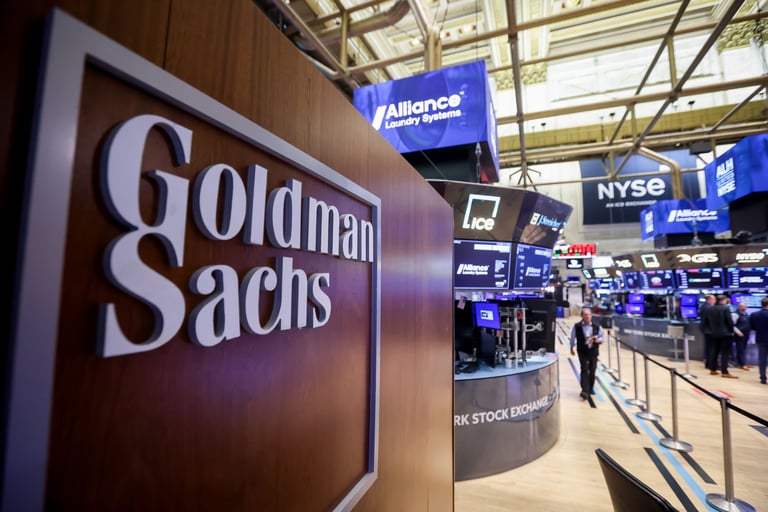
Goldman Sachs has barred the majority of its bankers and traders from using artificial intelligence coding platforms, confining access largely to technical engineers following an internal evaluation of productivity and risk management. The restrictions apply directly to Anthropic’s Claude Code and Microsoft’s GitHub, which non-engineering personnel had previously utilized for several months. Prior to the policy revision, dealmakers and trading desks used the software to track client transactions, model market movements, evaluate prospective investment scenarios, and generate content for institutional presentations.
Policy Shift Curbs Direct Application Building
The Wall Street firm revised its internal operating rules in October, bringing an end to broad experimentation across non-technical divisions. Traders and investment bankers expressed disappointment over the policy change, having relied on AI coding assistants to build custom analytical tools and small software programs without seeking help from specialized technology personnel.
Access remains permitted for a hybrid category of professionals known internally as strats. These specialists combine quantitative research, software engineering, and trading duties to build mathematical models and conduct high-level investment assessments. The broader trading and banking workforce, however, will no longer be permitted direct access to the specialized programming tools.
Balancing Productivity Gains Against Risk Controls
Bank spokesman Nick Carcaterra noted that Goldman Sachs deploys various artificial intelligence systems experimentally across different business units to evaluate practical utility, weigh productivity benefits against operational risks, and assign long-term access to roles best positioned to handle the technology. The decision marks a shift from earlier institutional enthusiasm regarding informal software development by non-technical staff.
In July, Chief Information Officer Marco Argenti endorsed the practice of vibe coding, wherein staff used standard conversational language to instruct AI models to produce functional code. Under that workflow, non-technical personnel created baseline prototypes that were subsequently refined by members of the bank’s 12,000-strong engineering division.
Wall Street Confronts Skill Erosion and Governance
Senior leadership has simultaneously voiced concern regarding the broader consequences of automated workflows on professional development. In August, Goldman Sachs partner and Global Banking and Markets AI working group co-chair Chris Churchman warned that widespread reliance on artificial intelligence tools across the financial sector could diminish the analytical capabilities of future bankers by stripping junior employees of essential opportunities to build independent judgment.
The move mirrors wider attempts across Wall Street to impose stricter guardrails on generative models. In July, JPMorgan Chase instructed staff to match AI models strictly to the complexity of individual assignments, reserving high-capability systems for intricate tasks rather than routine work such as document summarization. Goldman Sachs, which maintains its own proprietary AI assistant built upon models from Alphabet, OpenAI, and Anthropic, previously instituted targeted limits, including restricting staff in Hong Kong from accessing Anthropic’s Claude earlier this year as banks navigate data security and risk oversight.