


New Delhi: Focusing on the operational transformation of modern digital investigations, cybersecurity leaders, forensic pioneers, and threat intelligence innovators gathered for the fifth panel at the FutureCrime Summit 2026. Titled “From Data to Action: Predictive Policing, OSINT, Dark Web and AI-Led Investigation,” the session explored how intelligence gathered from open-source data, dark web forums, and artificial intelligence can be converted into actionable law enforcement and enterprise strategies.
Strategic Intelligence Frameworks and Panel Direction
Moderated by Aman Bandvi, Founder and Director of the Bharat Responsible AI Forum, the discussion highlighted the crucial transition from passive data collection to proactive threat mitigation and predictive policing.
The transition from static evidence collection to dynamic predictive policing represents a fundamental evolution in law enforcement capabilities. By integrating machine learning models with open-source data streams and dark web telemetry, investigative bodies establish proactive threat detection vectors capable of anticipating criminal operations prior to execution.
Speaker Perspectives on Forensics, Risk Monitoring, and Identity Mapping

Aditya PS, Founder and CEO of TerraEagle, established the strategic foundation of the discussion by analyzing the operational limitations of unprocessed threat data, arguing that raw intelligence lacks utility without rigorous contextual risk scoring. He explained that integrating artificial intelligence engines directly into Security Operations Centers (SOCs) enables corporate security teams and law enforcement agencies to automatically filter out high-volume digital noise. By prioritizing critical exposures and mapping adversary behaviors in real time, organizations can predict and neutralize malicious campaigns before active system exploits occur.
Piyush Kaushik, Product Manager for Forensics at Exterro, examined the technical mechanics of modern digital evidence processing, emphasizing the necessity of automating complex forensic workflows. He noted that as data volumes explode across mobile devices, cloud repositories, and IoT networks, traditional manual analysis creates severe investigative backlogs. Deploying AI-driven forensic platforms accelerates deep evidence extraction and correlation while enforcing tamper-proof digital chain-of-custody protocols, ensuring that extracted artifacts remain legally admissible in judicial proceedings.

Varun Grover, Business Unit Head for Brand Monitoring and Risk at mFilterIt, addressed the expanding threat surface of online fraud and corporate impersonation, highlighting the rise of synthetic digital identities and malicious domain registration. He underscored that continuous open-source intelligence (OSINT) surveillance across surface, deep, and dark web environments is essential for threat detection. Maintaining persistent monitoring frameworks allows organizations and regulatory bodies to identify phishing infrastructure, fake brand presences, and automated scam operations before consumers suffer financial harm.
Yasir Arafat Shaikh, Chief Technology Officer at Macksofy Technologies, detailed the complex challenges surrounding dark web tracking and subterranean criminal marketplaces. He explained that unmasking anonymous threat actors operating behind encrypted networks requires leveraging advanced graph analytics and cross-platform identity mapping tools. By correlating fragmented digital footprints across underground forums, developer channels, and clear web profiles, forensic investigators can trace anonymous adversary handles back to real-world infrastructure and physical locations.
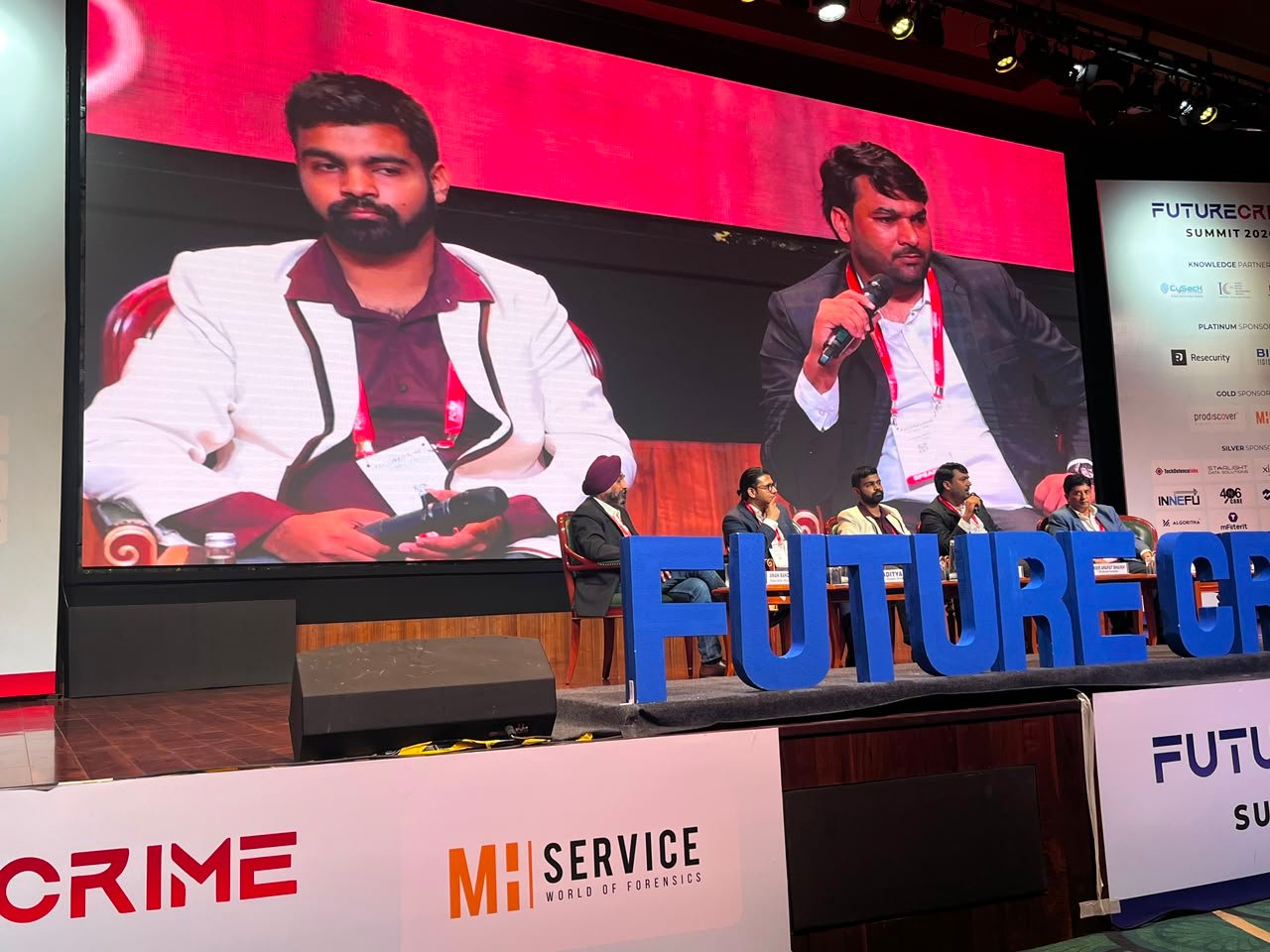
The operational strategy under review relies on connecting open-source intelligence streams with automated forensic extraction workflows. Converting raw dark web telemetry into structured relationship graphs ensures that law enforcement agencies can convert multi-source data into actionable legal proceedings.
The panel concluded with a consensus that scaling predictive policing and AI-led investigations requires merging robust OSINT capabilities, automated digital forensics, and responsible AI governance frameworks across public and private sectors.
Follow for daily updates on cybercrime, corporate fraud, DFIR, hacking, investigations, and digital forensics
