
Follow us on Google News

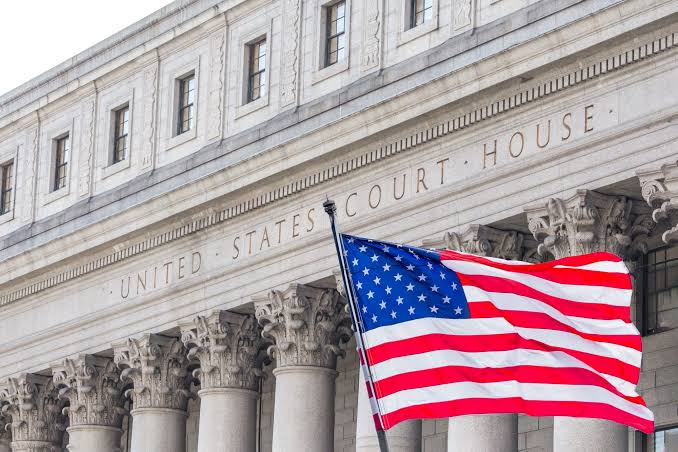
A federal court has struck down a controversial Trump administration rule that sought to limit most international students in the United States to a maximum stay of four years, offering major relief to foreign students and researchers. U.S. District Judge F. Dennis Saylor in Massachusetts invalidated the Department of Homeland Security rule on Monday, ruling that the agency acted arbitrarily and exceeded the authority granted by Congress. Following the decision, the rule, which had already been temporarily blocked ahead of its scheduled implementation in September, will not take effect, and F-1 and J-1 visa holders will not be required to seek repeated government extensions to continue their studies.
Court Rejects Attempt to Overhaul Decades-Old Policy
For decades, the United States has governed foreign students, exchange visitors, and foreign journalists under a “duration of status” system. Under this framework, F, J, and I visa holders are permitted to remain in the country for as long as they comply with visa requirements and participate in their authorized academic or professional activities, without a fixed four-year cap. In July, the Trump administration proposed replacing that policy with a rule restricting most F and J visa holders to a four-year admission period, requiring separate extension applications for unfinished programs alongside new limits on changing courses or pursuing additional degrees.
A coalition of higher education institutions and labor organizations filed a lawsuit challenging the rule in August. Judge Saylor temporarily halted enforcement in September while proceedings continued before issuing his final ruling in favor of the plaintiffs on Monday. In his order, the judge wrote that the Department of Homeland Security failed to justify the sweeping changes, neither properly weighing the rule’s costs and benefits nor proving that fraud and national security concerns warranted such broad restrictions.
Impact on Doctoral Programs and Academic Research
The court found that the proposed cap would have created serious obstacles for students enrolled in extended academic tracks, particularly doctoral candidates, dual-degree students, and researchers whose work rarely concludes within a strict four-year window. Judge Saylor noted that the F-1 visa program was established by Congress to provide educational opportunities to international students, and obstructing their studies with unnecessary administrative hurdles runs counter to that statutory purpose. He concluded that the law does not grant the department open-ended authority to weaken the student visa system.
Administration officials had argued that fixed time limits would enable immigration authorities to conduct regular reviews, helping curb visa abuse, fraud, and national security risks. Following the ruling, Department of Homeland Security General Counsel James Percival criticized the decision on social media, claiming it would force immigration authorities to allow individuals on student visas to remain in the country for decades by taking just one class per semester. Conversely, former senior homeland security official and Globally.ai co-founder Adam Klein noted that while authorities have the right to identify violators, forcing compliant doctoral students and researchers to repeatedly seek extensions is not necessarily an effective way to prevent fraud.
Declining International Enrollment at U.S. Institutions
The legal battle unfolds amid a measurable drop in international student numbers across American campuses. According to a fall 2026 survey by the Institute of International Education, overall international enrollment at surveyed U.S. colleges and universities fell by 9 percent in the 2026-27 academic year, with graduate enrollment and new international admissions each declining by 15 percent. Among institutions reporting declines, 88 percent cited the visa application process as a factor, while 70 percent pointed to travel restrictions and 60 percent noted students choosing other countries.
Miriam Feldblum, president of the Presidents’ Alliance on Higher Education and Immigration, said administration policies had already dampened foreign student interest and enrollment, adding that implementing the four-year cap would have further weakened the ability of U.S. universities to attract global talent. The lawsuit was brought jointly by higher education institutions, faculty groups, labor unions, and international educator associations, while an organization representing foreign journalists also welcomed the verdict. A separate government appeal against the judge’s earlier temporary injunction remains pending.