
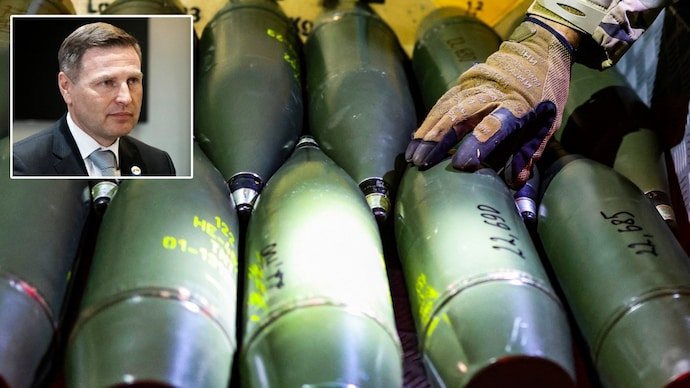

Estonia’s Defence Minister Hanno Pevkur has resigned amid mounting political turmoil over a disputed €70 million procurement agreement to supply ammunition for Ukraine. The controversy centers on contracts awarded to an Italian-registered entity later acquired by an Indian defence firm, despite the supplier having no significant prior track record in ammunition sales. Repeated delivery delays and reports that the munitions finally delivered in 2025 were of exceptionally poor quality have intensified scrutiny over the Baltic nation’s military purchasing decisions.
Phased Payments and Delivery Delays
The disputed procurement originated from agreements signed in 2024 between Estonia’s Centre for Defence Investment and Datacell SRL, a firm registered in Italy. Under an initial pact finalized in August 2024, an advance sum of approximately €15 million was disbursed to the company. Two subsequent installments followed, taking total transfers under the arrangement to around €70 million, equivalent to over ₹768.50 crore.
Although intended to rapidly reinforce Ukraine’s artillery stockpiles, the supplies failed to arrive in accordance with contractual timetables. The supplier cited manufacturing obstacles to explain persistent postponements, raising concerns over how the Estonian authorities monitored the agreement and whether vendor capacity was properly vetted prior to releasing public funds. The situation worsened when consignments delivered in 2025 reportedly failed basic quality standards.
Indian Acquisition and Vendor Background
The transaction took on an international dimension after Datacell SRL was acquired in 2024 by Neco Defence Munitions Private Limited, a firm headquartered in Nagpur, India. Incorporated in September 2023, the Indian enterprise is run by directors Anand Jaiswal and Siddharth Jaiswal, with Anand being the son of company chairman Arvind Jaiswal.
The Jaiswal Group has historically concentrated its commercial activities in the steel, casting, and engineering sectors. Its recent pivot toward military production, coupled with an absence of an established history in arms trading, has emerged as a focal point of the current inquiry. Members of the family, Manoj Jaiswal and Ramesh Jaiswal, were previously convicted by a special CBI court in 2024 regarding a separate Indian coal-block allocation case that has since been challenged on appeal.
Political Repercussions and Procurement Oversight
Pevkur’s departure from office underscores the gravity of the fallout confronting the Estonian government. Regulatory bodies and investigators are expected to focus heavily on why stringent verification of the supplier’s manufacturing facilities and past performance was not completed before committing extensive state resources.
The case has ignited a wider debate surrounding accountability and administrative rigor within European defence procurement networks. As Western governments look to accelerate military aid to Ukraine, the controversy in Tallinn demonstrates the operational and political risks of entering high-value munitions contracts with newly established market participants.
