

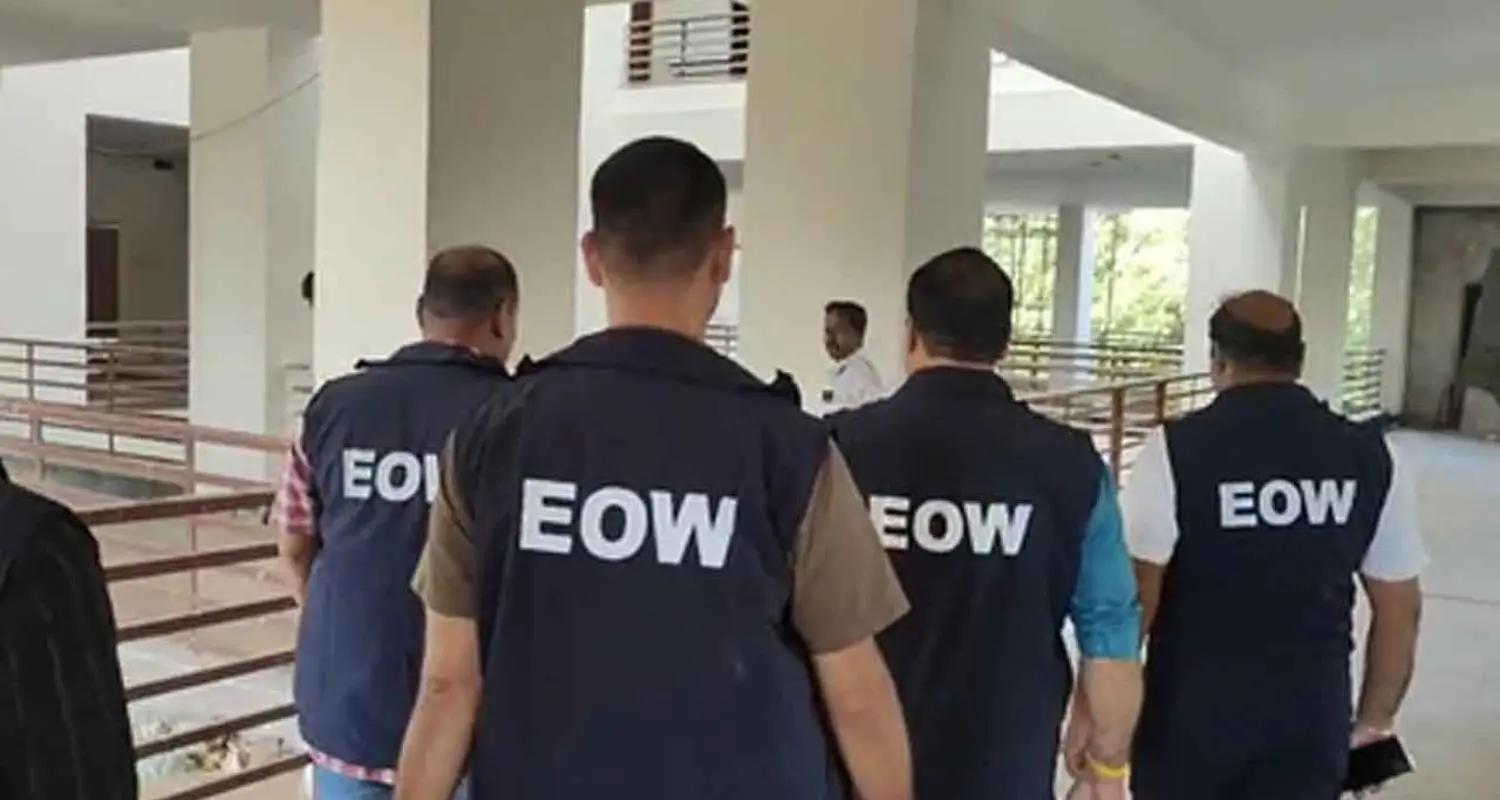
The Economic Offences Wing (EOW) of the Jammu and Kashmir Police Crime Branch has finalized a major internal banking investigation, presenting a formal chargesheet against a daily-wage worker formerly embedded within the Jammu and Kashmir Bank. Zonal detectives filed the comprehensive documentation matrix before the Court of the Chief Judicial Magistrate following deep-dive forensic audits. The criminal case centers on an alleged asset diversion scheme where internal procurement structures were weaponized to siphon away ₹1.04 crore through fraudulent credit lines.
Registration Begins for FutureCrime Summit 2026, India’s Largest Cybercrime Conference
The Internal Data Manipulation Mechanism
The structural deception was orchestrated by an insider operative identified as a daily wager stationed at a regional branch of J&K Bank. Working from a position of relative trust within the branch’s agricultural and retail credit desks, the suspect actively subverted standard underwriting workflows. Rather than operating as an outside hacker, the insider exploited physical access to processing queues to execute a highly calculated document harvesting run.
The fraudulent credit matrix relied on the systematic fabrication of loan profiles. The suspect engineered lookalike files under the Kisan Credit Card (KCC) scheme and other retail credit segments, generating fake profiles for non-existent agricultural applicants to build falsified agribusiness portfolios. To pass formal credit evaluations, the operative attached counterfeit land records consisting of forged revenue documents and simulated field verification reports to satisfy risk management parameters. Finally, through account interception, once administrative approvals were systematically cleared, the loan disbursements were routed entirely away from actual agrarian communities and instead funneled into coordinated proxy accounts.
Discovery of Mismatches and Forensic Trailing
The multi-million rupee credit drain came to light when the bank’s internal central compliance division flagged deep data anomalies during a routine seasonal portfolio review. Internal auditors identified extreme concentrations of default patterns across specific localized clusters, with subsequent field inspections revealing that the registered borrowers either did not possess the stated land holdings or were entirely unaware that credit lines had been established under their civilian details.
Following an institutional reporting trigger, the EOW took over the active case file, translating the initial internal audit into a comprehensive criminal investigation. Forensic digital experts mapped the specific terminal access logs used to upload the fraudulent applications, matching the timing sequences directly to the shift schedules of the daily wager. Additionally, banking investigators traced the subsequent movement of the ₹1.04 crore payout, establishing a clear layering trail that proved the suspect systematically withdrew the siphoned capital through secondary ATM grids and unverified cash channels.
Structural Accountability and Compliance Upgrades
The Crime Branch has officially booked the accused under relevant provisions covering cheating, forgery of valuable security, and the utilization of forged electronic records as genuine items. Legal officers presented the accumulated volume of oral, documentary, and electronic forensic evidence to the competent court to initiate immediate judicial determination and asset recovery trials.
The high-value exposure has prompted state banking regulators to issue mandatory system-wide structural safety updates to prevent similar insider compromises. Regional financial institutions have been directed to enforce strict dual-authorization requirements for all loan processing tasks, completely eliminate unverified data entry privileges for daily-wage or temporary personnel, and implement automated AI-driven cross-matching protocols between bank underwriting systems and state land revenue databases to block the entry of fabricated asset records.
