

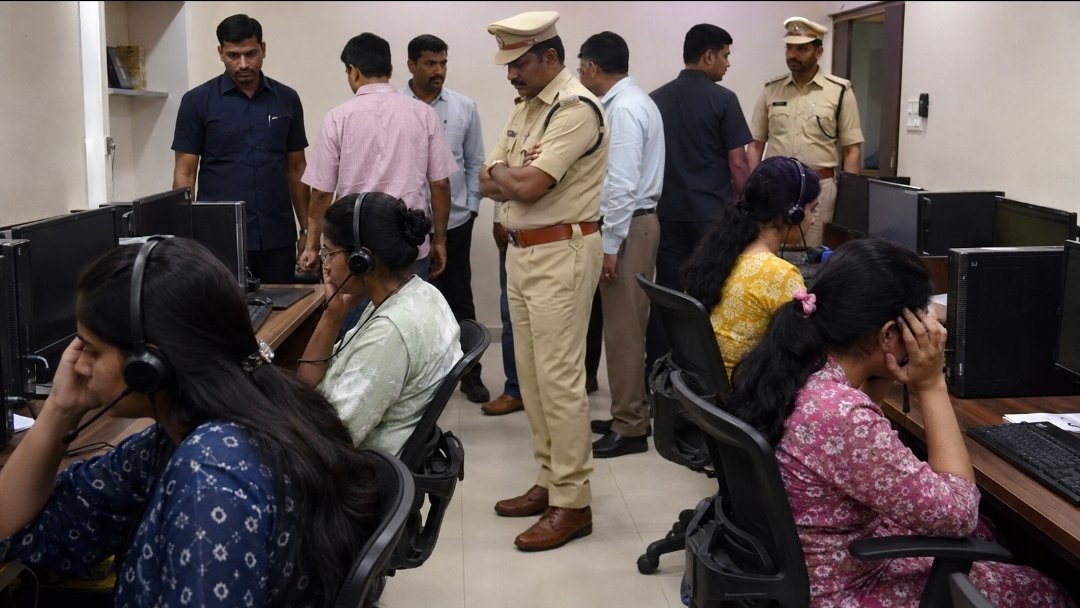
A suspected call centre in Dehradun used private numbers to contact bank customers while posing as credit card agents.
What did police recover from the call centre?
Uttarakhand STF and cyber crime police uncovered the suspected call centre in Dehradun during a raid at an office on GMS Road. Police said callers were contacting bank customers in the name of credit cards and related benefits.
During the search, police recovered a 32-slot SIM box belonging to DINSTAR, along with 45 SIM cards, a laptop, two routers and two ATM cards. According to police, the SIM box could be used to conceal the actual identity of calls and for suspicious communication activities.
Investigators also found credit card-related information concerning customers of several banks and financial institutions on the recovered laptop. Police are examining the material as part of the investigation.
FCRF Launches CP-FRM to Build India’s Next Generation of Fraud Risk Professionals
How were bank customers allegedly contacted?
According to police, customers were called with offers to provide credit cards and information about purported benefits linked to them. In some cases, callers allegedly used pressure and threats to persuade customers to deposit money quickly. Such tactics could lead customers to disclose sensitive information or transfer money under pressure, police said.
The STF investigation also found that calls from the centre were being made through personal mobile numbers rather than numbers from the designated 1600 series. Police said unauthorised SIM boxes were being used for the calling operation.
The findings have prompted authorities to advise customers to exercise additional caution when receiving calls from private mobile numbers from people claiming to represent a bank or financial institution.
Whose customer data was found?
The laptop recovered during the raid contained credit card-related data linked to customers of several banks and financial institutions, including SBI, Bank of Baroda, Axis Bank, Poonawalla Finance, Yes Bank and RBL.
Police are investigating where the information came from and how it was obtained. They are also examining how the data was used to contact customers. The discovery is significant because callers claiming to represent financial institutions may appear more convincing when they possess information related to a customer’s banking or credit card relationship.
Authorities have advised people not to disclose an OTP, ATM or debit and credit card PIN, CVV, internet banking password, UPI PIN or other confidential banking information to an unknown caller. Customers should independently verify the identity of anyone claiming to be a bank official, card department employee or representative of a financial company.
What should customers do after a suspicious call?
People who suspect they have been cheated following a banking or credit card-related call should act without delay. The advisory asks victims to report cyber financial fraud immediately through the cyber helpline number 1930 and inform the concerned bank so that the card or relevant banking facility can be blocked.
Customers should also preserve screenshots and other records connected with the suspicious call, including phone numbers, messages and transaction details, as these may assist investigators.
The STF has appealed to the public to remain cautious about suspicious calls made in the name of banks and financial institutions. It has advised people not to share banking, credit card, OTP or other sensitive information with unknown individuals and to report cyber financial fraud promptly through 1930.
Follow for daily updates on cybercrime, corporate fraud, DFIR, hacking, investigations, and digital forensics
