

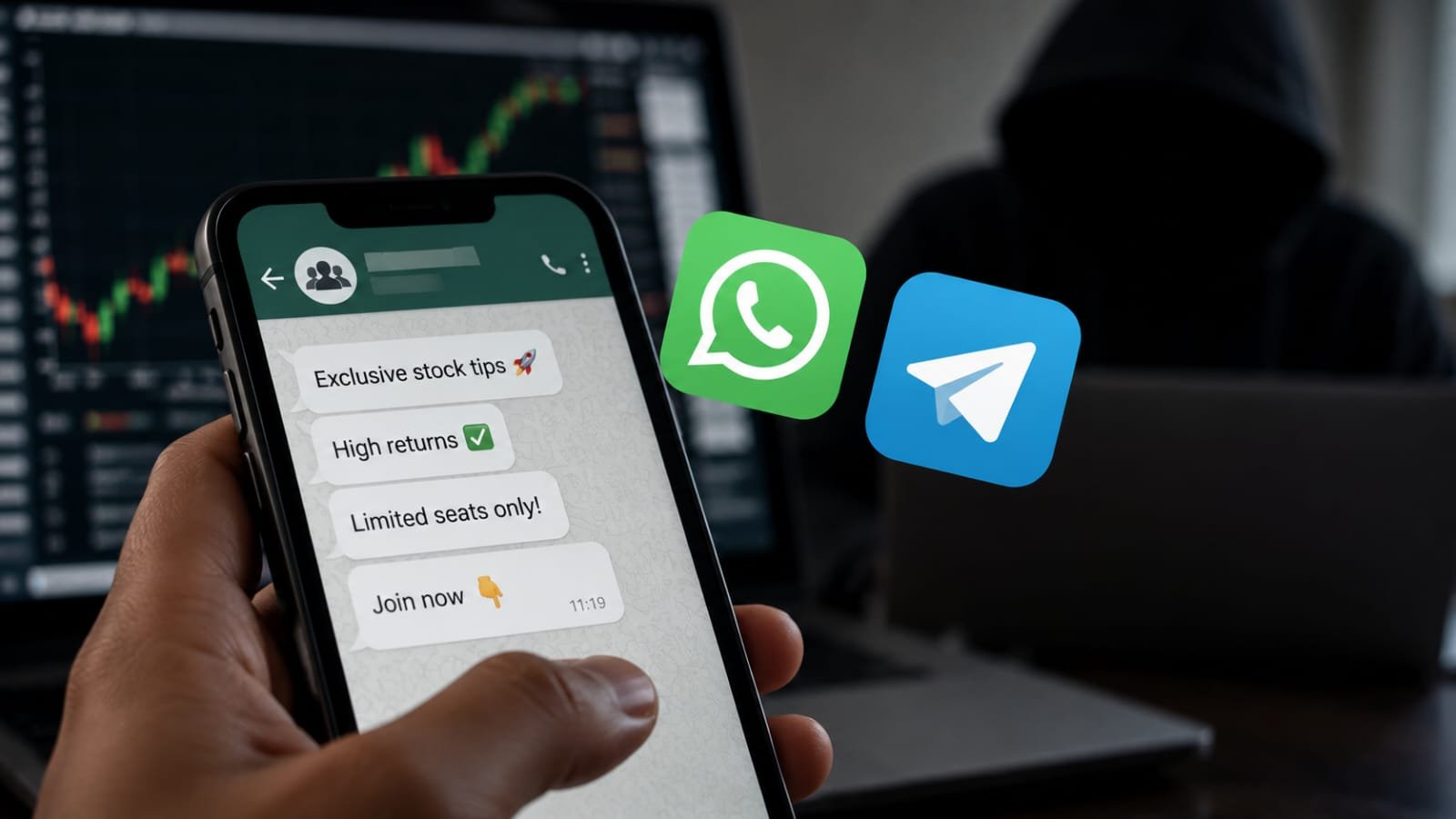
A profitable-looking trading account, hundreds of enthusiastic investors and an expert promising exclusive stock-market access can all be part of a carefully organised fraud.
WhatsApp and Telegram investment scams exploit trust through fake trading groups, fabricated profits and fraudulent investment applications.
India’s market regulator, SEBI, issued another warning on October 22, 2026, against unsolicited trading recommendations circulated through invitation-only WhatsApp groups. The regulator warned that apparently supportive messages and profit claims could be planted to mislead investors.
FCRF’s Chief AI Officer Certification Returns on November 14 to Prepare Future AI Leaders
How Do Fake Investment Groups Operate?
Fraudsters attract potential investors through social-media advertisements, unsolicited invitations or messages impersonating financial professionals.
Group administrators share stock tips, trading screenshots and apparently successful investment stories. Victims are eventually directed towards fraudulent applications displaying artificial profits.
Some scammers permit small initial withdrawals to establish credibility before demanding larger deposits. When victims attempt significant withdrawals, additional charges appear or communication stops.
India’s cybercrime authorities have documented these methods, including impersonation, misleading trading applications and payments routed into mule bank accounts.
10 Red Flags of a WhatsApp or Telegram Investment Scam
1. Guaranteed Returns Without Risk
Promises of fixed daily profits, assured stock-market earnings or guaranteed success contradict the risks inherent in securities investments. SEBI identifies unrealistic guaranteed returns as a major warning sign.
2. Unsolicited Investment Group Invitations
Unknown administrators add users to exclusive trading communities without invitation or prior contact. Overseas numbers and anonymous operators demand particular caution.
3. Fake SEBI-Registered Experts
Fraudsters impersonate legitimate advisers, brokers and financial institutions. They may display forged registration certificates or misuse authentic company names.
4. Fabricated Profit Screenshots
Members repeatedly post extraordinary returns, successful trades and glowing testimonials. These messages may be coordinated rather than genuine evidence of investment performance.
5. Exclusive Institutional Trading Offers
Promises of preferential IPO allotments, discounted block deals or special foreign institutional investor accounts are prominent fraud indicators identified by SEBI and stock exchanges.
6. Suspicious Trading Applications
Administrators direct members to unfamiliar websites, APK files or applications. Even professional-looking interfaces may display fictional balances unrelated to genuine securities transactions.
7. Transfers to Unrelated Bank Accounts
Victims are instructed to deposit investment funds into personal accounts or unrelated companies. SEBI advises investors to verify payment destinations before transferring money.
8. Pressure to Invest Immediately
Limited-time trading opportunities, VIP membership deadlines and demands to increase deposits discourage independent verification.
9. Additional Charges Before Withdrawal
A supposed trading platform displays substantial profits but demands taxes, processing fees or further deposits before releasing the money. Such demands are a serious fraud indicator.
10. Groups Suddenly Close or Change Numbers
Operators claim their original group was banned and invite members into a replacement community. SEBI specifically highlighted this tactic in its October 2026 warning.
How Can You Verify an Investment Group?
Before investing, check the adviser or broker through SEBI’s intermediary registry.
Confirm the trading application against SEBI’s authorised-app listings. For payments, use the regulator’s SEBI Check facility to verify participating intermediaries and payment details.
A genuine registration number does not establish that the person messaging you actually represents that firm. Independently contact the registered organisation.
What Should You Do After Losing Money?
Act immediately:
- Stop transferring money, including supposed withdrawal charges.
- Call India’s financial cybercrime helpline, 1930.
- Register your complaint at cybercrime.gov.in
- Inform your bank through its official fraud-reporting channel.
- Preserve chat histories, group links, transaction IDs, payment receipts and application details.
Reporting promptly may help authorities trace and restrict suspicious funds. Recovery is not guaranteed.
Frequently Asked Questions
1. Are all Telegram investment groups fraudulent?
No. However, unknown operators, guaranteed returns and unverifiable trading platforms are serious warning signs.
2. Can scammers forge SEBI certificates?
Yes. Registration claims must be checked independently through SEBI.
3. Are profits displayed inside trading apps genuine?
Not necessarily. Fraudulent applications can display fabricated balances.
4. Can money lost through investment scams be recovered?
Recovery may be possible depending on circumstances. Report immediately through 1930 and the cybercrime portal.
5. Does a successful initial withdrawal prove legitimacy?
No. Fraudsters sometimes permit small withdrawals to encourage larger investments.
6. Should victims pay taxes to unlock profits?
Do not transfer additional funds merely because an unverified platform demands withdrawal charges.
The420 Insight
Investment scammers increasingly imitate the entire experience of legitimate trading, from financial advisers to performance dashboards. The strongest defence is independent verification before the first payment, not checking profitability after money has already been transferred.
About the author — Ayesha Aayat writes on cybercrime, digital safety, and emerging online threats. Her work focuses on public awareness, legal clarity, and technology-driven risks.
Follow for daily updates on cybercrime, corporate fraud, DFIR, hacking, investigations, and digital forensics
