


In an administrative drive to reverse the financial toll of digital fraud, the Cyberabad Police facilitated the restoration of over ₹25 Crore (₹250 million) to cybercrime victims between January and July 2026. Centred around Hyderabad’s technology hub, the scale of recovery marks an operational shift for law enforcement in Telangana. Rather than focusing solely on criminal prosecution, police agencies are placing financial recovery at the heart of their immediate investigative response.
The milestone highlights how coordination between state police, commercial banks, and the judiciary can dismantle the financial gains of organized cyber syndicates. For policy planners in New Delhi and state capitals, the Cyberabad model offers a tangible blueprint for mitigating the growing threat of social engineering, digital arrest scams, and phishing networks. The drive underscores a broader reality: in the high-velocity world of digital crime, returning stolen capital to citizens is as critical as apprehending perpetrators.
A Digital Highway for Financial Restitution
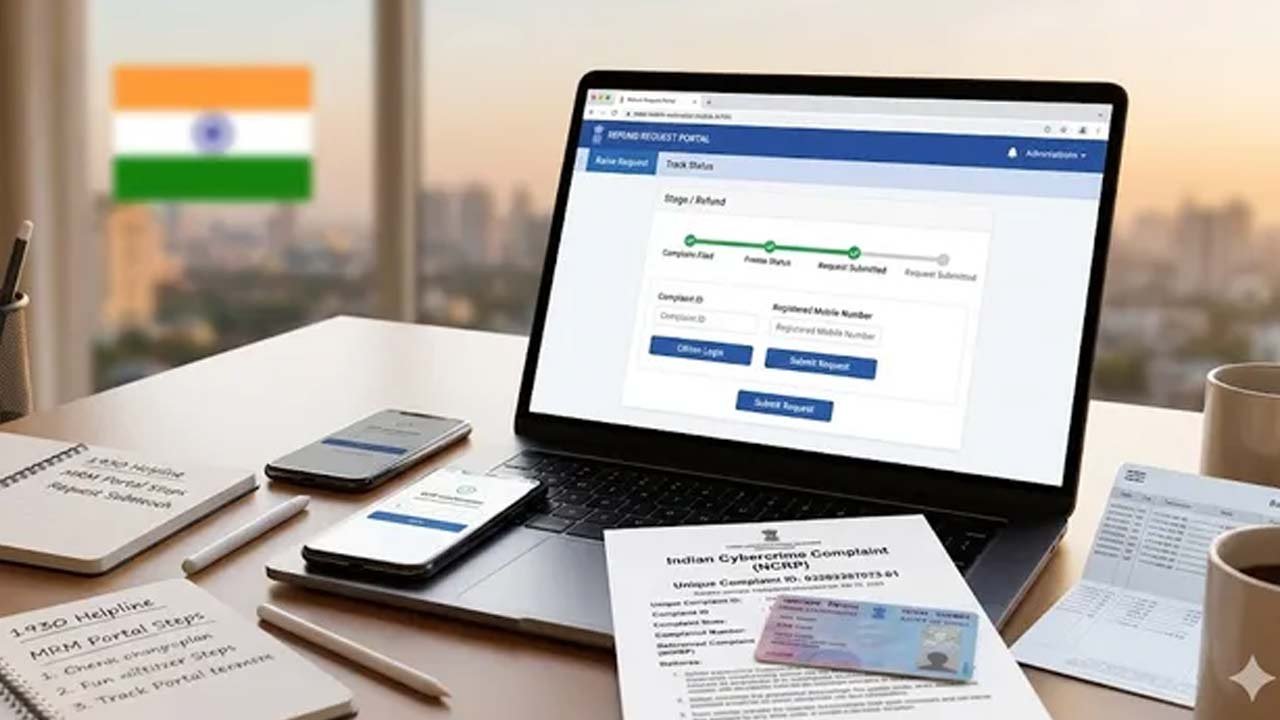
Central to this accelerated recovery effort is the rollout of the Money Restoration Module (MRM), an advanced digital interface engineered by the Indian Cyber Crime Coordination Centre (I4C) under the Union Ministry of Home Affairs. Historically, victims seeking the return of frozen funds were forced to navigate a labyrinthine bureaucratic process involving multiple police station visits, extensive paper documentation, and protracted court proceedings under criminal procedure laws. The MRM platform replaces this paper-heavy burden with a fully digitized, end-to-end electronic pipeline.
Under the new system, once law enforcement successfully traces and freezes illicit funds within the banking grid, the victim receives an automated notification containing a secure link to the national portal. Complainants verify their identity using their National Cyber Crime Reporting Portal acknowledgment number, submit bank credentials, and upload necessary affidavits online. For sums up to ₹50,000 frozen in a single account, the module allows processing based on a police verification report and an online indemnity bond, bypassing the mandatory requirement for a formal court order or First Information Report.
In the past month alone, Cyberabad’s cybercrime wing initiated over ₹2 Crore (₹20 million) in online refunds through the MRM portal. By eliminating physical friction and restricting the involvement of middle-tier intermediaries, the digital workflow has compressed the time required to credit recovered assets directly back into victims’ bank accounts.
The Critical Friction of the ‘Golden Hour’
Despite these technological advancements, law enforcement officials stress that the primary bottleneck in fund recovery remains the speed at which victims report financial breaches. When a citizen falls prey to an online scam, illicit funds are instantly routed through complex networks of layered “mule accounts” operated by interstate syndicates. Once stolen capital is converted into cash at automated teller machines or transferred into peer-to-peer cryptocurrency assets, the probability of recovery drops precipitously.
This temporal reality elevates the importance of the national 1930 Cyber Helpline, which serves as the primary emergency trigger for financial freeze protocols. Cybersecurity experts emphasize that reporting unauthorized transactions within the initial “golden hour” allows bank risk algorithms and police control rooms to intercept transfers while the funds remain within regulated banking channels. Once frozen, the automated tracking mechanisms of the Union Government’s portal prevent syndicates from completing the siphoning sequence.
The Cyberabad Police’s successful interception of ₹25 Crore illustrates the tangible benefits of rapid emergency reporting. However, maintaining this interception rate requires continuous technical integration between private payment gateways, public sector banks, and state cyber command centres.
Institutional Synergy and Sovereign Security
The operational momentum built by the Cyberabad Police points toward a broader institutional evolution in how India safeguards its rapidly expanding digital economy. As millions of citizens transition to digital payment systems under Unified Payments Interface frameworks, the threat landscape has expanded exponentially. Mitigating this risk requires law enforcement agencies to treat digital financial security not merely as a law-and-order issue, but as an essential element of national economic resilience.
The integration of centralized registries and automated refund modules demonstrates how technology can democratize access to justice for ordinary citizens. While procedural delays persist in complex cases involving multi-layered interstate bank transfers exceeding ₹50,000, state authorities are working closely with judicial magistrates to streamline court approvals. By marrying rapid digital intervention with statutory oversight, the State is establishing a transparent, accountable framework for financial restitution.
