
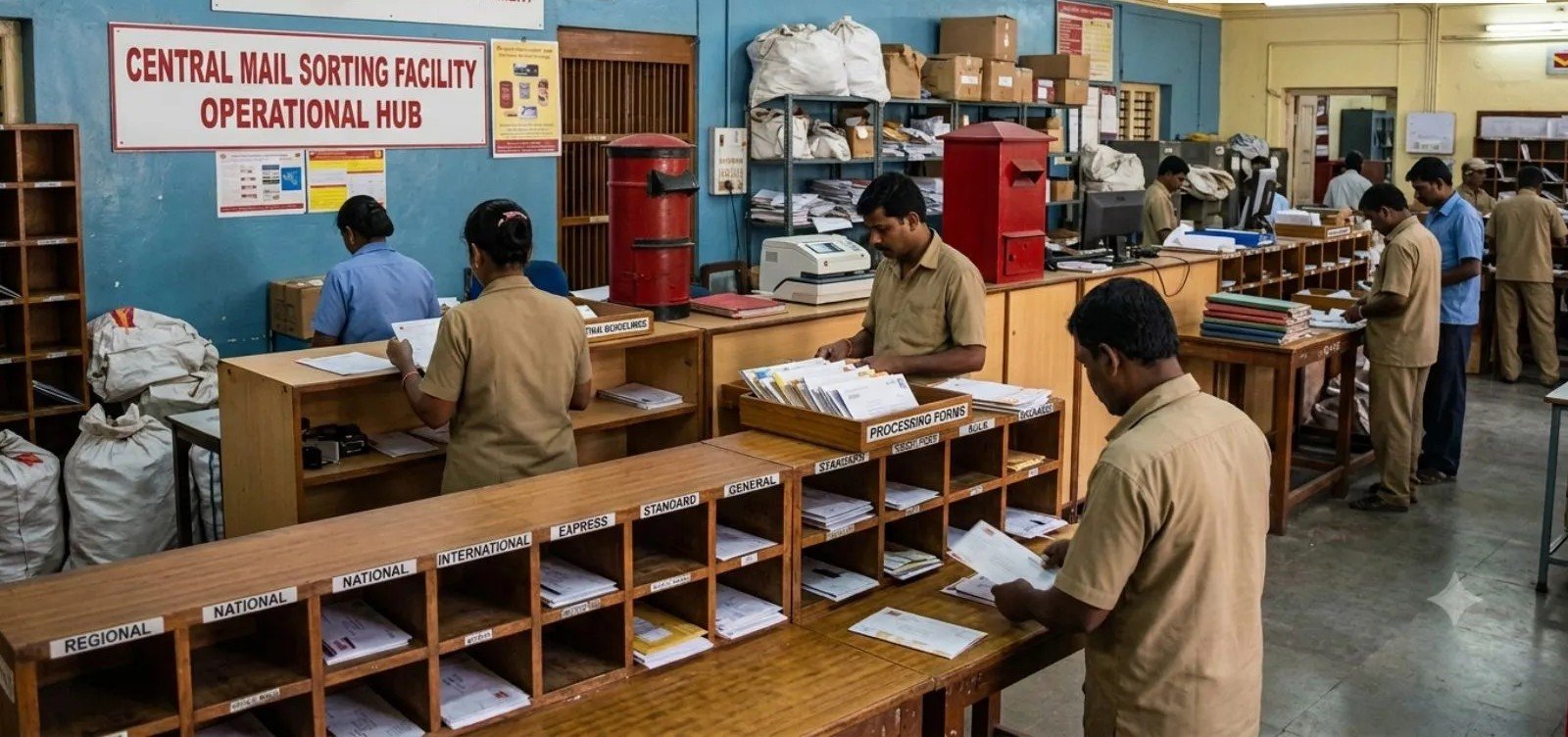
In a significant ruling reinforcing consumer rights and accountability in public utility services, the District Consumer Disputes Redressal Commission has held the Department of Posts liable for an egregious deficiency in service. The consumer bench penalised the department for a 62-day delay in delivering a nominal electronic money order (EMO) of ₹1,000 intended for an elderly widow’s basic daily survival.
The three-member commission, presided over by Pragya Devendra Hendre alongside members Ganeshkumar R. Selukar and Janhavi A. Bhide, passed the judgment on a complaint filed by 80-year-old retired Aurangabad resident Sudhakar Mohaniraj Divate. The panel rejected the postal department’s core defense that a missing PIN code caused system-wide confusion, clarifying that public service providers cannot mask administrative negligence behind trivial procedural omissions.
Registration Begins for FutureCrime Summit 2026, India’s Largest Cybercrime Conference
The Delayed Lifeline for Basic Necessities
The dispute originated on October 14, 2022, when Divate visited the City and Industrial Development Corporation (CIDCO) Post Office to send emergency financial support to his widowed sister, Pramila Mahajan. Mahajan, a vulnerable resident living in the Jalgaon district of Maharashtra, completely depended on her brother’s monthly remittance to pay for groceries, medicines, and daily household survival items.
Divate paid the ₹1,000 principal amount along with a standard ₹50 corporate electronic service fee, expecting a swift digital processing cycle. However, weeks passed without the funds reaching the recipient. Worried about his sister’s financial distress, the elderly man made multiple visits to regional postal hubs, only to be shuffled from one office to another by indifferent staff who refused to share real-time tracking updates or provide a definitive timeline.
System Routing Confusion Exposed
The electronic money order was eventually delivered on December 15, 2022—nearly two full months after it entered the state postal apparatus. Following a formal consumer grievance application, the Head Postmasters of the CIDCO and Pachora divisions admitted the massive delay but attempted to shift the legal blame onto the sender.
The postal attorneys argued that because Divate omitted the exact PIN code from the reservation slip, India Post’s centralized database algorithm experienced a severe automated routing error. They contended that two distinct regional branches shared highly identical geographic names in the system matrix, causing the transaction to be misrouted to the wrong branch where it remained frozen due to technical database issues.
The Commission Rejects the Missing PIN Defense
The Consumer Commission strongly dismissed the department’s technical justifications. After auditing the digital tracking logs, the bench noted that the transaction had successfully reached the inner postal network on the very day it was booked, and that the text address provided by the sender was otherwise entirely correct, complete, and identifiable.
The forum ruled that trained postal personnel are legally expected to identify the correct destination code from a fully detailed address. It noted that even if a missing PIN code causes a minor procedural hiccup, it can only justify an administrative delay of a few days—not an extraordinary lapse stretching across more than two months.
“Just because the PIN code was not mentioned, a delay of nearly two months in delivering a money order cannot be justified when the address was otherwise correct.”
– District Consumer Commission Ruling
Furthermore, because the department failed to produce explicit, certified forensic logs of the alleged server breakdown or show what immediate corrective measures were taken to retrieve the stuck funds, the bench classified the delay as pure administrative negligence.
Holding the Head Postmasters of the CIDCO and Pachora divisions jointly and severally liable, the commission ordered the department to pay Divate ₹3,000 as compensation for severe financial hardship and mental agony, along with ₹2,000 to cover his legal litigation expenses. The case against the third defendant, a technology services project manager, was dismissed due to the lack of a direct consumer relationship. The judgment sets a strong legal precedent, confirming that state-run public agencies remain fully answerable to ordinary citizens under consumer protection frameworks.
