

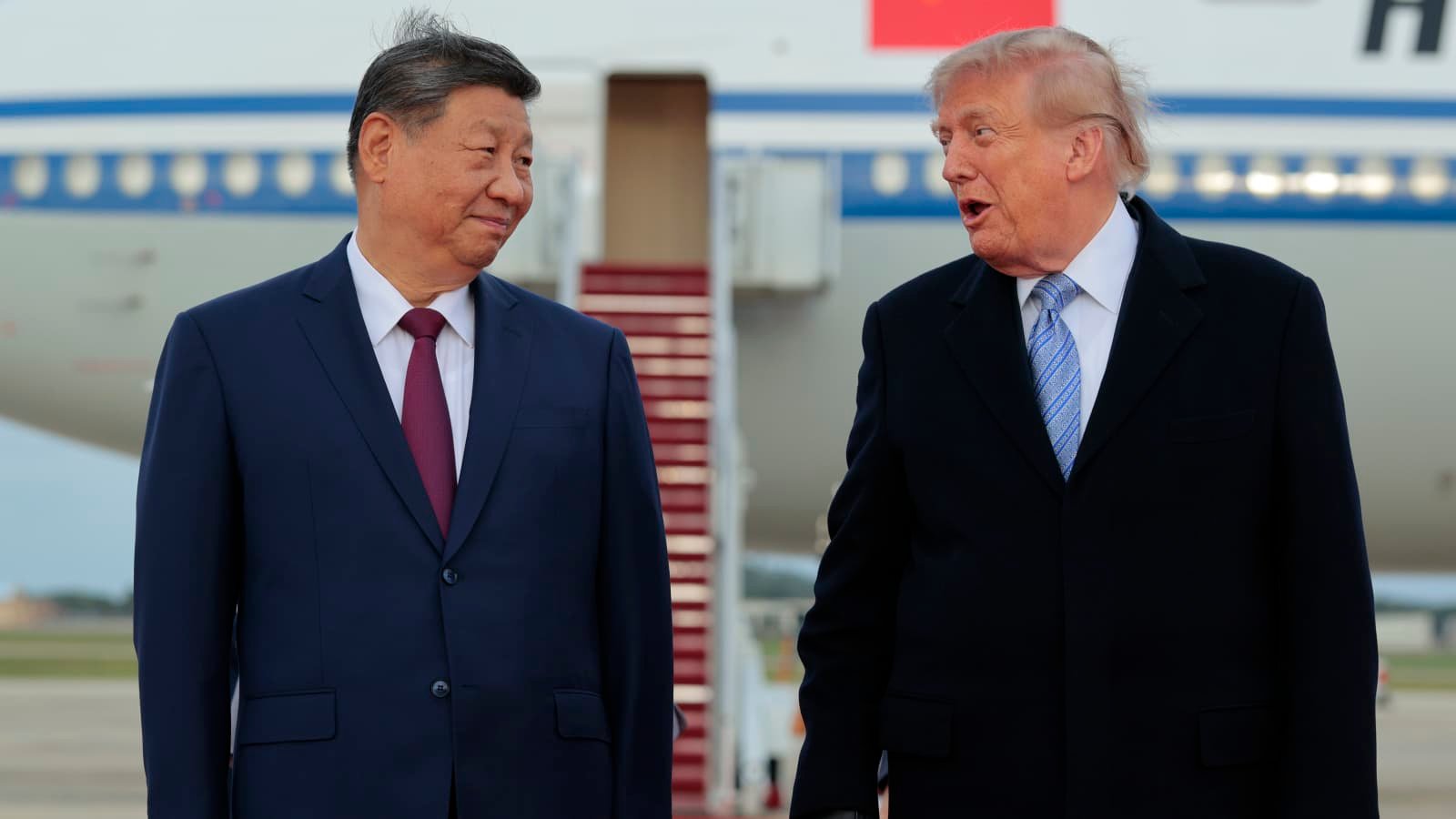

China said it has reached an agreement with the United States on a $30 billion reciprocal tariff-reduction arrangement and a new dialogue on artificial intelligence following President Xi Jinping’s state visit to Washington.
The measures form part of an eight-point consensus reached during Xi’s meetings with US President Donald Trump, according to China’s Foreign Ministry. The two sides also agreed to create a trade council and extend the outcome of earlier economic talks held in Kuala Lumpur.
The announcement came after Xi concluded a three-day US visit that focused on trade, artificial intelligence, strategic competition and other areas where Washington and Beijing remain divided.
Proposal for Conducting Cyber Crisis Drill, Tabletop Exercise (TTEx) & CCMP Readiness Exercise
Beijing announces $30 billion tariff-reduction arrangement
China’s Foreign Ministry said the two governments had agreed to a reciprocal tariff-reduction arrangement valued at $30 billion.
Reuters reported the announcement based on Beijing’s statement. At the time of publication, the US Embassy in Beijing had not responded to a request for comment on the details.
That distinction matters because the exact mechanics of the $30 billion figure have not yet been publicly set out in detail.
It is not clear from the initial announcement whether the figure represents the estimated annual value of tariff relief, the value of goods covered by lower duties or another calculation agreed during the negotiations.
The development follows an earlier decision by the two countries to extend their existing trade truce for another two months.
US Treasury Secretary Scott Bessent said that extension would provide additional time to work towards a broader economic agreement.
Trade truce extended but larger disputes remain
The temporary truce had been due to expire on November 10.
Its extension delays a possible renewed escalation in tariffs while negotiators continue discussing unresolved issues including tariffs, agricultural purchases, rare-earth supplies and technology restrictions.
Bessent said China had been meeting an earlier commitment to purchase 25 million tonnes of US soybeans but remained behind on a separate pledge to buy $17 billion worth of other agricultural products.
US officials have also raised concerns about the pace of Chinese rare-earth deliveries.
The new tariff announcement therefore represents further movement in negotiations, but it does not amount to a comprehensive settlement of the broader US-China trade dispute.
For businesses, the immediate effect will depend on which goods are eventually covered by the tariff reductions and when the revised rates take effect.
US and China agree to formal AI talks
Artificial intelligence emerged as another major outcome of the visit.
China said the two countries agreed to hold a bilateral dialogue covering the risks and benefits of AI, with the next round expected in November.
They also agreed to establish a communication channel for AI-related incidents.
Such a channel could potentially give officials a direct mechanism to communicate when an AI-related event creates security concerns or risks escalating tensions.
The precise scope of that mechanism has not yet been publicly defined.
China’s Foreign Ministry had already said during the summit that the two countries should exchange views on AI risks, benefits and misuse. Xi said AI should remain under human control and be developed in ways that serve people.
Trump has taken a different public approach to AI regulation, arguing against additional guardrails and promoting US technological leadership. Reuters noted that the two leaders expressed different views on how AI should be governed even as they agreed that dialogue should continue.
AI competition remains central to US-China relationship
The decision to create a formal AI dialogue is significant because technology has become one of the most sensitive areas in US-China relations.
Washington has imposed restrictions affecting China’s access to some advanced semiconductors and AI-related technology, while Beijing has increased investment in domestic chips and AI models.
The two countries also have different approaches to international AI governance.
Xi said during his Washington talks that China and the United States have both competition and room for cooperation in AI, and that the two sides should work to prevent misuse and abuse of the technology.
The agreement does not indicate that existing technology restrictions will be removed.
Instead, the dialogue creates an additional channel through which officials can discuss safety, incidents and broader AI policy while strategic competition continues.
Trade council and diplomatic coordination also agreed
China said Washington and Beijing would establish a trade council as part of the eight-point consensus.
The two governments also agreed to support each other in hosting major international meetings, including the Asia-Pacific Economic Cooperation leaders’ meeting and the G20 summit.
Both leaders are expected to attend meetings hosted by the other country.
On international security, China’s Foreign Ministry said the leaders agreed that Iran should fulfil its commitment not to develop nuclear weapons and that countries or other entities should not impose transit tolls on international waterways.
The two sides continue to disagree on several major issues, including Taiwan.
During the summit, Xi urged Washington to handle Taiwan cautiously and said China hoped the US would oppose Taiwanese independence. Reuters reported no indication that Washington was changing its longstanding formulation that it does not support Taiwan independence.
Summit produced incremental agreements rather than full reset
The latest announcements add more concrete outcomes to a summit that initially appeared focused more heavily on diplomacy than major policy breakthroughs.
Reuters reported that the visit showcased extensive personal diplomacy between Trump and Xi, while several central economic questions remained unresolved.
China described the visit as opening a new chapter in bilateral relations and said the two countries had agreed to pursue a relationship based on strategic stability, respect, fairness and reciprocity.
Those descriptions reflect Beijing’s position.
The practical significance of the visit will depend on whether the tariff reductions are implemented, whether the broader trade truce holds and whether the proposed AI dialogue produces enforceable agreements or remains primarily a diplomatic consultation mechanism.
What this means for you: The tariff agreement could lower costs for businesses trading between the US and China once the covered goods and implementation details become clear. The AI dialogue is also notable because Washington and Beijing are creating a formal channel for discussing risks and incidents even while competing aggressively in advanced technology.
Follow for daily updates on cybercrime, corporate fraud, DFIR, hacking, investigations, and digital forensics
