
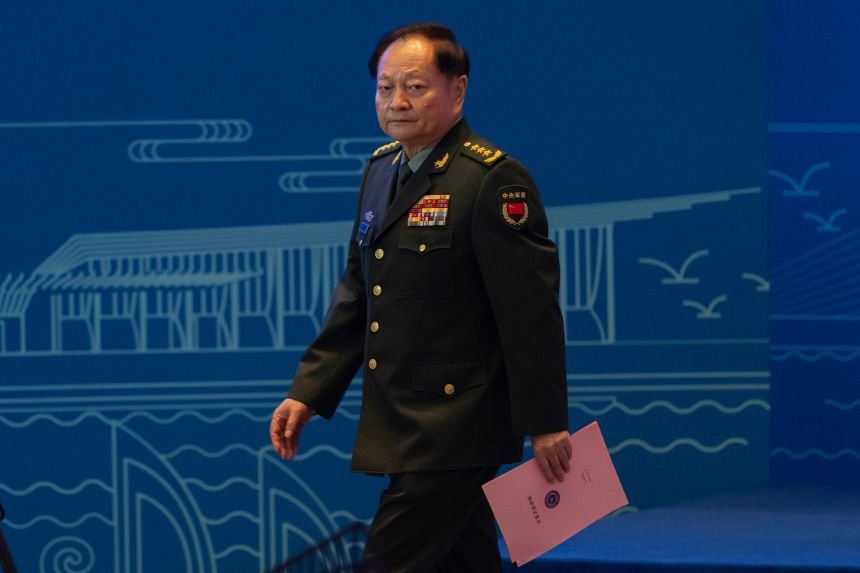
Fresh signs of unease within China’s military establishment have emerged after confirmation that a highly influential top-ranking military commander has been placed under investigation for serious violations of discipline and law. The move is being viewed as one of the most significant and high-profile actions taken within the Chinese armed forces in recent decades, raising questions about internal stability, command discipline and power dynamics at the highest levels of the military hierarchy.
While China’s military has not fought a full-scale war for decades, it has been engaged in a different kind of internal struggle over the past several years—one involving corruption, authority, and strategic control. The latest investigation is widely seen as a critical chapter in that ongoing process, particularly because the officer concerned was part of the military’s top decision-making structure and wielded considerable influence over policy and command matters.
Certified Cyber Crime Investigator Course Launched by Centre for Police Technology
Why this investigation matters
Defence analysts say the case stands out because actions against officers of this rank are extremely rare. Senior commanders at this level typically play a central role not only in operational planning but also in long-term military modernisation, force restructuring and regional security strategy. As a result, the probe is not being viewed merely as a matter of individual misconduct, but as one with broader institutional and political implications.
Experts suggest the investigation reflects mounting concern within the system about discipline at the highest echelons. In recent years, several senior officers have faced action, but the current case is considered exceptional due to the stature, proximity to power and operational experience of the individual involved. It signals that scrutiny is no longer confined to mid-level leadership and that the net has widened considerably.
Backdrop of a long-running anti-corruption drive
Since the early 2010s, China has pursued an extensive anti-corruption campaign, with the military emerging as one of its key focal points. Over the years, numerous figures linked to defence procurement, logistics and promotions have faced investigations, removals or expulsions from party positions. The latest probe is widely interpreted as an extension of this effort, reinforcing the message that no segment of the armed forces is beyond oversight.
Some analysts, however, argue that the campaign is not solely about corruption. They see it as part of a broader attempt to consolidate control over the military, streamline command structures and ensure absolute loyalty at a time when China is accelerating its defence modernisation agenda. From this perspective, disciplinary action serves both corrective and strategic purposes.
Strategic context and global scrutiny
The investigation comes at a sensitive moment in regional and global security. China has adopted a more assertive posture in the Taiwan Strait and the western Pacific, prompting heightened attention to the readiness and cohesion of its armed forces. Any sign of instability or internal friction within the command structure is therefore being closely examined by defence planners and strategic observers worldwide.
Global analysts are assessing whether internal tensions or disciplinary concerns could affect decision-making, operational efficiency or long-term military objectives. While some believe such actions could cause short-term disruption, others argue that decisive intervention at senior levels may ultimately strengthen command discipline and reinforce centralised control.
The persistent challenge of corruption
Multiple international studies and media analyses have previously pointed to corruption as a systemic challenge within China’s military, extending beyond lower ranks to senior leadership. Areas such as weapons procurement, infrastructure contracts and promotions have often been cited as vulnerable to irregularities. Despite repeated crackdowns, experts note that addressing corruption in a force of such scale and complexity remains a formidable task.
The recurrence of high-profile investigations suggests that earlier measures, while impactful, have not fully eliminated entrenched practices. This has reinforced the view among analysts that sustained pressure and periodic high-level action are being used to reshape institutional culture within the armed forces.
What lies ahead
At present, the investigation is said to be at an initial stage, and its outcome may take time to emerge. Nevertheless, its symbolic significance is already clear. The case has reopened debate about power balance, discipline and accountability within China’s military system.
More broadly, the episode underscores an ongoing transformation—one aimed at creating a force that is more disciplined, modern and tightly controlled. Whether this process strengthens long-term stability or exposes deeper structural tensions will become clearer as developments unfold.
For now, global attention remains firmly fixed on how the investigation progresses and what it may reveal about the evolving dynamics inside one of the world’s largest and most closely watched military establishments.
About the author – Ayesha Aayat is a law student and contributor covering cybercrime, online frauds, and digital safety concerns. Her writing aims to raise awareness about evolving cyber threats and legal responses.
