

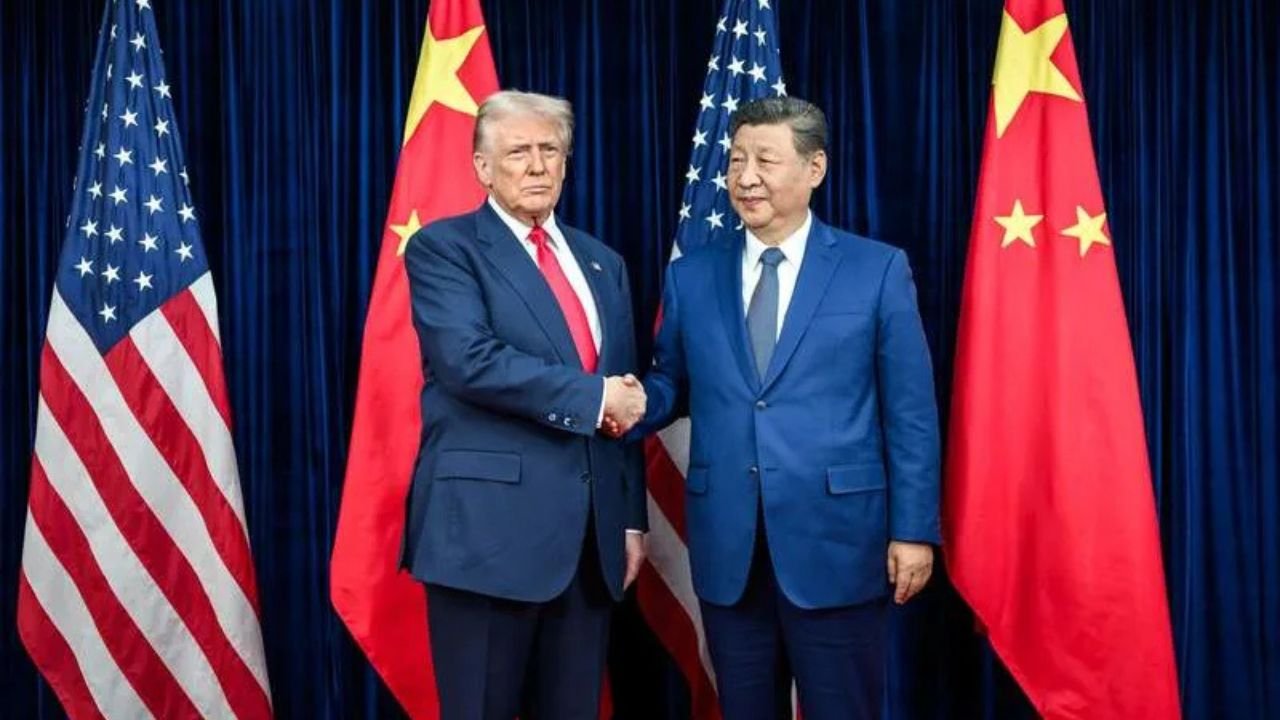

China has reiterated four “red lines” in its relations with the United States ahead of President Donald Trump’s two-day visit to Beijing for talks with Chinese President Xi Jinping, placing Taiwan, democracy and human rights, political systems and China’s development rights at the centre of its diplomatic position.
According to the Chinese Embassy in the US, these areas must not be challenged in China-US relations. The statement comes as Trump heads to Beijing for a summit expected to cover Taiwan, trade, Iran, rare-earth exports, artificial intelligence rivalry and other issues between the world’s two largest economies.
Registration Begins for FutureCrime Summit 2026, India’s Largest Cybercrime Conference
Beijing Lists Four Non-Negotiables
The Chinese Embassy in the US said in a post on X that the “four red lines” in China-US relations must not be challenged. The accompanying graphic listed “The Taiwan Question”, “Democracy and Human Rights”, “Paths and Political Systems” and “China’s Development Right” as Beijing’s non-negotiable concerns.
In another post, the embassy said China and the US should explore building a “strategic, constructive, and stable China-US relationship.” It added that mutual respect, peaceful coexistence and win-win cooperation remained the right way for the two countries to get along.
Chinese President Xi Jinping had first announced the four red lines in a statement after meeting then President Joe Biden in November 2024.
Taiwan Issue Set To Dominate Talks
Taiwan is expected to be a major point of discussion during the two days of meetings between Trump and Xi. China views the democratically governed island as its own territory, while US weapons sales to Taipei remain a recurring source of tension between Beijing and Washington.
China on Wednesday reiterated its opposition to US arms sales to Taiwan and called on Washington to honour its commitments before Trump’s arrival in Beijing. Zhang Han, a spokesperson for China’s Taiwan Affairs Office, said Taiwan was an internal issue and a matter for the Chinese people.
“We firmly oppose the United States engaging in any form of military ties with China’s Taiwan region and firmly oppose the United States selling weapons to China’s Taiwan region. This position is consistent and unequivocal,” she said in Beijing.
Zhang also said Taiwan was the “core of China’s core interests” and that honouring commitments made by successive US administrations was an international obligation the US side was duty-bound to fulfil.
The US officially takes no position on Taiwan’s sovereignty under Washington’s “One China” policy, but acknowledges, without accepting, Beijing’s position that the island is China’s. Washington is also bound by law to provide Taipei with the means to defend itself despite the absence of formal diplomatic ties.
Trade, Iran And Strategic Rivalry On Agenda
In December, the Trump administration announced an $11 billion weapons package for Taiwan, described in the screenshots as the largest ever. The issue is likely to remain central to Beijing’s concerns during the summit.
China also opposes US intervention in its internal affairs under the guise of democracy and human rights concerns. It has defended its socialist system under the leadership of the Communist Party of China.
The talks are also expected to include China’s controls on rare-earth exports, AI rivalry and the countries’ trade relationship. China has been manoeuvring against Western sanctions, activating its 2021 blocking rules to compel domestic firms to ignore US penalties, particularly those involving Iranian crude imports.
Trump is on his way to Beijing for his first China visit since 2017. The two-day trip will include high-stakes talks with Xi, along with a state banquet and tea reception. According to the report, Trump is heading into the visit with his ambitions narrowed by court rulings on tariffs, with possible goals focused on deals involving beans, beef and Boeing jets.
