

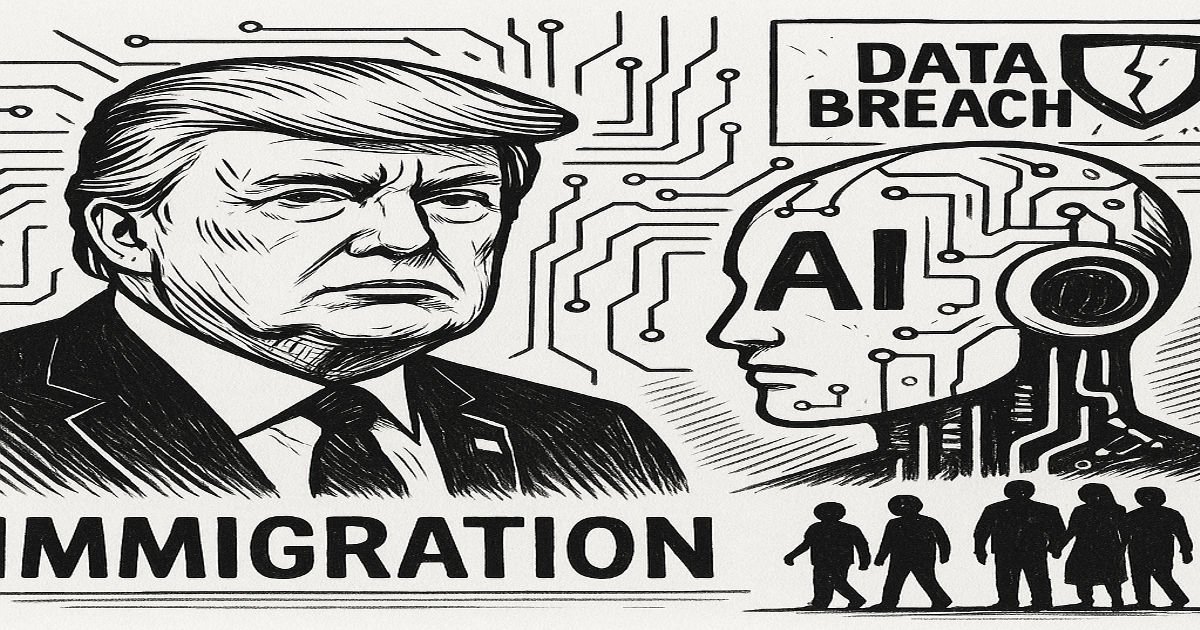

The U.S. government under President Donald Trump is accelerating the use of surveillance technology and artificial intelligence (AI) in immigration enforcement, raising serious concerns among digital rights and civil liberties advocates about privacy, accuracy, and the potential for widespread misuse.
From facial recognition scanners in public spaces to AI-driven social media monitoring tools and robotic patrols at the southern border, the Department of Homeland Security (DHS) and other federal agencies are leveraging advanced technologies to track and detain immigrants. Critics argue that these systems, many of which were introduced under previous administrations, have now expanded in scope and intensity.
According to Saira Hussain, an attorney with the Electronic Frontier Foundation, the expansion of these tools goes beyond immigration enforcement. She says that they’re targeting a broader range of individuals, with many more officials now gaining access to the collected data.
ALSO READ: Call for Cyber Experts: Join FCRF Academy as Trainers and Course Creators
One controversial initiative is the “Catch and Revoke” program, launched in March by Secretary of State Marco Rubio. This AI-powered initiative monitors the public speech of foreign nationals, particularly those on student or visitor visas, for any signs of support for designated terror groups. More than 300 visas have already been revoked under this program, sparking fears of overreach and false accusations.
Critics warn that the reliance on AI in sensitive enforcement areas like immigration is fraught with risks. The technology’s tendency to generate so-called “hallucinations” — misleading or inaccurate outputs — has already led to wrongful detentions.
Among them are Jonathan Guerrero, a U.S. citizen wrongly arrested in Philadelphia, and Jensy Machado, held at gunpoint in Virginia while on his way to work. Both were later released, but their cases underscore the dangers of over-relying on flawed AI tools.
Paromita Shah, executive director at Just Futures Law, warned that these arrests raise deep concerns about civil rights violations. Immigration enforcement based on inaccurate AI data is not just a glitch—it’s a systemic failure.
An executive order signed in January also hinted at the return of controversial practices such as Rapid DNA testing to verify familial relationships at the border — a technique previously abandoned over accuracy and privacy concerns.
Independent technology analyst Tekendra Parmar echoed similar warnings, noting that the administration appears to prioritize deportation numbers over technological reliability. Parmar said that the fallibility of these systems enables a rubber-stamp approach to deportation, cloaked in the appearance of objectivity through AI.
The federal surveillance net continues to widen, with data aggregation practices collecting vast amounts of personal information on citizens and non-citizens alike.
ALSO READ: Call for Chapters: Contribute to the Book “Cyber Crime – From Theory to Practice”
A 2021 Georgetown University Law Center study revealed that Immigration and Customs Enforcement (ICE) had access to driver’s license data and utility records covering nearly three-quarters of the U.S. adult population.
Emerald Tse from Georgetown Law’s Center on Privacy and Technology exclaims that these tools can implicate anyone your family, your neighbors, your co-workers. This isn’t just about immigration. It’s about an expansive surveillance state.
Adding to the concern is a renewed push for 287(g) agreements, which allow local law enforcement agencies to act as federal immigration officers. This gives local police direct access to federal surveillance and AI tools, multiplying the number of people who can use and potentially misuse private data.
Hussain also says that the real danger lies in the scale of information sharing between federal and local agencies. The more access is granted, the greater the risk to civil liberties.
