

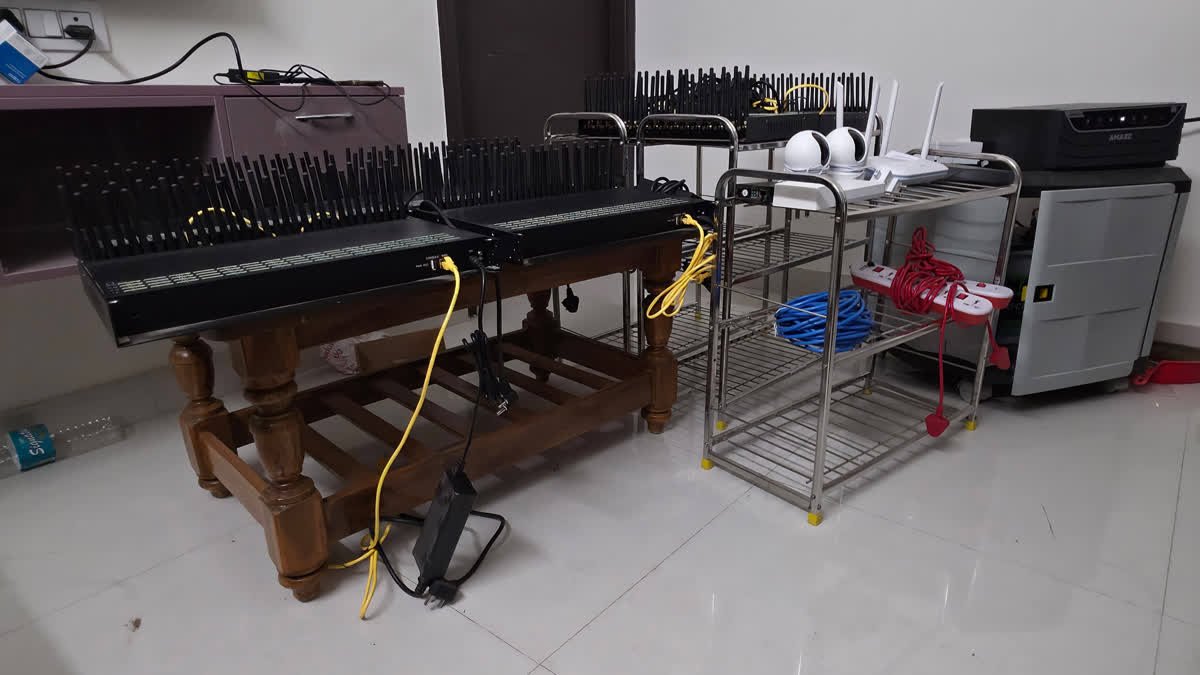

The Karnataka Cyber Command Unit has dismantled an illegal SIM box network operating from two apartments in Bengaluru’s Whitefield area, arresting four men from Maharashtra and seizing 10 devices capable of hosting 320 active SIM connections. Investigators believe the clandestine setup may have been used to route fraudulent calls for nationwide cybercrimes, including digital arrest scams, sextortion rackets, and large-scale financial frauds that could run into hundreds of crores of rupees.
Joint Operation Follows Telecom Provider Complaint
The crackdown was initiated after the Chief Circle Nodal Officer of Bharti Airtel in Bengaluru lodged a formal complaint on August 26, reporting the unauthorized routing of its SIM cards through a suspected SIM box setup. Acting on the complaint, a case was registered at the Whitefield Cyber Crime Police Station. Police teams then coordinated with officials from the Karnataka unit of the Department of Telecommunications to trace the suspicious telecommunications activity, which led them to two residential locations within the Whitefield area.
Raids conducted across both apartments uncovered extensive hardware deployed to mask criminal communications. Six 32-slot SIM box devices were seized from a flat in Kadugodi, while four identical units were recovered from another residence in Pattandur Agrahara. While SIM boxes have legitimate telecommunications applications, unauthorized setups are widely used by cybercriminal networks to conceal the geographic origin of calls, bypass standard telecom gateways, and coordinate fraudulent operations across multiple numbers simultaneously.
Suspected Links to Digital Arrest and Sextortion Networks
All four arrested individuals hail from Tiroda in Maharashtra’s Gondia district. Police suspect that the equipment was being prepared or utilized to facilitate widespread extortion calls. In typical digital arrest operations, callers pose as police personnel, central investigative officers, or government authorities, coercing victims into transferring large sums of money under threats of immediate detention. In sextortion schemes, perpetrators use compromising photographs or videos to blackmail targets.
Preliminary assessments suggest the wider syndicate could be tied to cybercrime operations involving financial exposure running into hundreds of crores of rupees. However, authorities emphasized that this figure represents an initial estimate of the network’s potential reach. While the infrastructure has been confiscated, investigators have not yet linked the seized devices directly to individual victims or specific confirmed offenses.
Probe Focuses on e-SIM Activation and Supply Chain
Investigators are now examining the procurement pipeline that supplied the SIM cards and facilitated their conversion into e-SIM profiles. Inquiries in Tiroda are focusing on who sourced the physical SIMs, how the activations were secured, and whether local distributors or retail agents assisted the syndicate.
The investigation is working to map out the exact division of labor among the four suspects, determine who provided the technical architecture to run the devices, and track any wider criminal syndicates operating behind the scenes. Further findings on the overall scale of financial losses and the total number of individuals targeted are expected as forensic examinations proceed.
Follow for daily updates on cybercrime, corporate fraud, DFIR, hacking, investigations, and digital forensics
