
Follow us on Google News

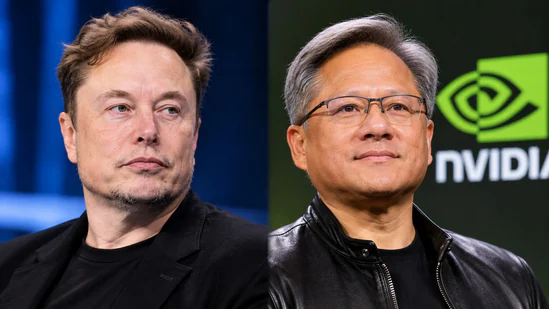
Tesla and SpaceX chief executive Elon Musk has warned that Nvidia could lose important commercial agreements following the departure of its founder and former chief executive Jensen Huang, arguing that some of the chipmaker’s most valuable business arrangements depended on Huang’s personal relationships rather than written contracts.
Musk’s remarks on Saturday have brought fresh attention to the commercial consequences of Nvidia’s leadership crisis, just two days after the artificial intelligence chipmaker confirmed Huang’s resignation.
The warning comes as Nvidia’s board attempts to maintain confidence among customers, suppliers and investors while searching for a permanent successor to the executive who led the company for more than three decades.
FCRF’s Chief AI Officer Certification Returns on November 14 to Prepare Future AI Leaders
Musk Questions Stability Of Nvidia’s Supply Chain Agreements
In a post on social media platform X, Musk praised Huang’s management of Nvidia’s supply chain and suggested that his departure could undermine important business relationships.
He described many of the arrangements as “a handshake with Jensen, not a written contract”, arguing that at least some of those agreements could be lost without Huang’s involvement.
The remarks highlight the potential importance of personal relationships in an industry where companies compete for limited supplies of advanced semiconductor chips, specialised memory and sophisticated manufacturing capacity.
Musk has also drawn on his own experience dealing with Huang over the delivery of computing equipment and requests to accelerate component supplies.
In a separate social media post, he indicated that Huang had consistently honoured such commitments, even when formal purchase orders were completed later.
Musk’s companies are significant participants in the artificial intelligence infrastructure market, with substantial computing requirements for developing and operating advanced AI systems.
However, he did not identify which specific Nvidia agreements he believed were at risk or disclose whether any suppliers had already withdrawn their commitments.
His assessment therefore represents a warning about potential commercial consequences rather than evidence that Nvidia has lost business following Huang’s departure.
Musk Supports Calls For Huang’s Reinstatement
Musk has also publicly supported efforts to bring Huang back as Nvidia’s chief executive.
Responding to a social media user on Friday, the billionaire said he intended to sign a petition seeking Huang’s reinstatement.
He separately responded positively to a suggestion that he hire the former Nvidia chief, although no employment offer or formal arrangement has been announced.
Huang’s departure followed growing scrutiny of reports concerning his personal relationships and questions about corporate security.
Nvidia had previously appointed an independent law firm to investigate allegations that raised concerns about possible foreign intelligence involvement and the protection of sensitive company information.
The company has maintained that it has no evidence that its confidential technology or national security information was compromised.
The allegations surrounding Huang’s departure remain distinct from Musk’s concerns about Nvidia’s commercial operations.
The billionaire’s support for Huang does not establish that Nvidia’s board is reconsidering its decision or that the former chief executive is preparing to return.
Nvidia Board Maintains Confidence In Interim Leadership
Nvidia’s board has offered a considerably different assessment of the company’s operational prospects.
In its official announcement on November 12, the chipmaker confirmed that Huang had resigned as president, chief executive and a member of its board.
Colette Kress, Nvidia’s executive vice president and chief financial officer, was appointed interim chief executive while the board searches for a permanent successor.
Kress, who joined Nvidia in 2013, will continue overseeing the company’s finances alongside her interim leadership responsibilities.
The board also appointed Harvey C Jones as its chairperson and announced that both internal and external candidates would be considered for the permanent chief executive position.
Jones expressed confidence in Kress and Nvidia’s experienced leadership team, saying the company expected its operations, customer commitments and product development plans to continue without disruption.
Kress similarly indicated that Nvidia would maintain its focus on artificial intelligence, accelerated computing and its responsibilities towards customers and business partners.
The board’s assurances provide an important counterpoint to Musk’s warning.
While the billionaire believes personal relationships could prove difficult to replace, Nvidia maintains that its existing management team possesses the experience required to sustain its business.
Leadership Transition Raises Wider Questions For Global AI Industry
The debate over Huang’s departure comes at a particularly sensitive time for Nvidia and the broader artificial intelligence industry.
Technology companies are investing heavily in data centres, advanced computing equipment and infrastructure needed to train and operate AI models.
Nvidia occupies a central position in this market because its graphics processing units and related software are widely used by AI developers and cloud computing providers.
Any significant disruption to the company’s commercial relationships or equipment deliveries could consequently affect businesses beyond the semiconductor industry.
However, Nvidia’s ability to fulfil customer commitments depends on several factors, including manufacturing capacity, contractual arrangements, technical expertise and relationships maintained by its wider management team.
Huang’s departure has brought renewed attention to the risks associated with businesses becoming closely identified with a single influential executive.
Earlier leadership transitions at major technology companies have demonstrated that founder-led organisations can maintain commercial momentum under professional management, provided their operational capabilities and strategic relationships remain intact.
For Nvidia, an important opportunity to address these concerns will come on November 17, when the company is scheduled to announce its third-quarter financial results.
Investors are likely to examine management’s assessment of customer demand, production capacity and business continuity under its new leadership.
What This Means For You:
Businesses dependent on Nvidia’s computing equipment should review delivery commitments and contingency arrangements rather than assume existing agreements will be disrupted. Investors should distinguish Musk’s predictions from confirmed commercial developments and monitor Nvidia’s upcoming earnings announcement for evidence of changes to its operations.