
Follow us on Google News

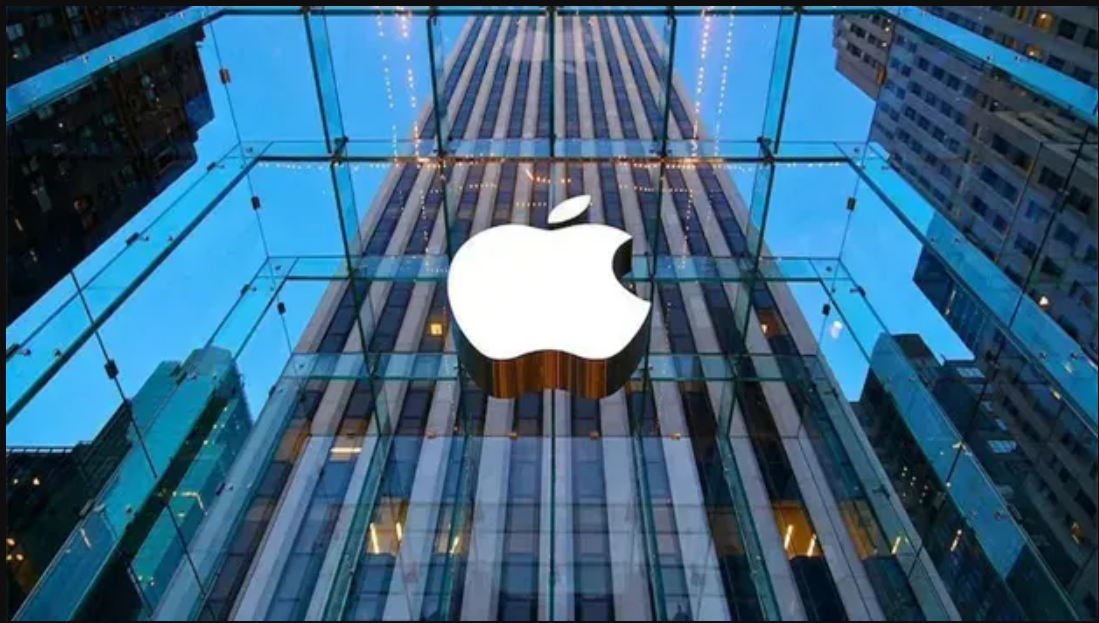
NEW DELHI: United States technology major Apple has initiated spending restrictions on internal employee access to third-party artificial intelligence tools, seeking to rein in ballooning expenses tied to generative software development and computing infrastructure. The company has slashed the daily budget cap for select engineering units utilising external AI models from $300 to $200, representing an immediate reduction of approximately 33 per cent. According to a Bloomberg report, corporate leadership is considering further curbs that could lower technical allowances to $100 per day. For non-engineering divisions currently capped at $100 daily, budgets could drop to $25, though employees demonstrating high-volume workflow requirements can petition for formal exemptions. The policy arrives even as Chief Executive Officer John Ternus promotes internal workflow modernisation through automated code generation, software testing, and technical troubleshooting.
Operating Costs Mount as R&D Outlays Rise
The fiscal impetus behind the expenditure controls is reflected in Apple’s financial disclosures for fiscal year 2026, which revealed that overall operating expenses jumped 22 per cent to $75.5 billion, or approximately Rs 7.17 lakh crore. This total represented roughly 16 per cent of the company’s net sales. Research and development spending alone accelerated by 32 per cent across the period, driven substantially by outlays on computing capacity, external data pipelines, and infrastructure expansion. To moderate costs without dampening innovation, Apple is nudging staff toward smaller, less resource-intensive models alongside on-device data processing, which handles computations locally rather than transmitting queries to expensive cloud servers. The internal curbs have triggered mixed reactions across engineering teams, where some employees view the step as a realistic rationalisation, while others worry that the caps and the deployment of outside productivity consultants could presage wider corporate restructuring.
Token Consumption Drives Heavy Expenditure
The budgetary caps centre primarily on managing the consumption of AI tokens, the foundational metric by which large language models process text, code, and structured data. Complex engineering undertakings, such as generating extensive codebases or parsing lengthy technical documentation, exhaust vast volumes of tokens in minutes. Because third-party model providers charge enterprise clients based on query volume and model complexity, relying on flagship systems at scale creates substantial overheads. Apple personnel currently have access to leading industry platforms, including OpenAI’s ChatGPT, Google’s Gemini, and Anthropic’s Claude. While these models yield significant productivity gains, unrestricted access across thousands of engineers has compounded corporate bills, prompting finance teams to demand tighter usage monitoring and accountability.
Industry-Wide Curbs Reflect Focus on Returns
Apple’s budgetary retrenchment mirrors a broader recalibration underway across the global technology landscape, as enterprises scrutinise the actual return on investment delivered by expensive artificial intelligence platforms. Rival software producer Microsoft has likewise restricted employee AI allowances, while Meta is actively steering its workforce toward proprietary internal systems to lower licensing costs. Similar expenditure ceilings have surfaced across the transport and automotive sectors, with electric vehicle maker Tesla instituting a $200 weekly cap per employee on AI services and ride-hailing firm Uber establishing a $1,500 monthly limit for individual coding accounts. Across Silicon Valley, executive priorities are shifting from rapid tool adoption toward strict fiscal discipline, compelling engineers to justify external model queries against concrete operational outputs.