
Follow us on Google News

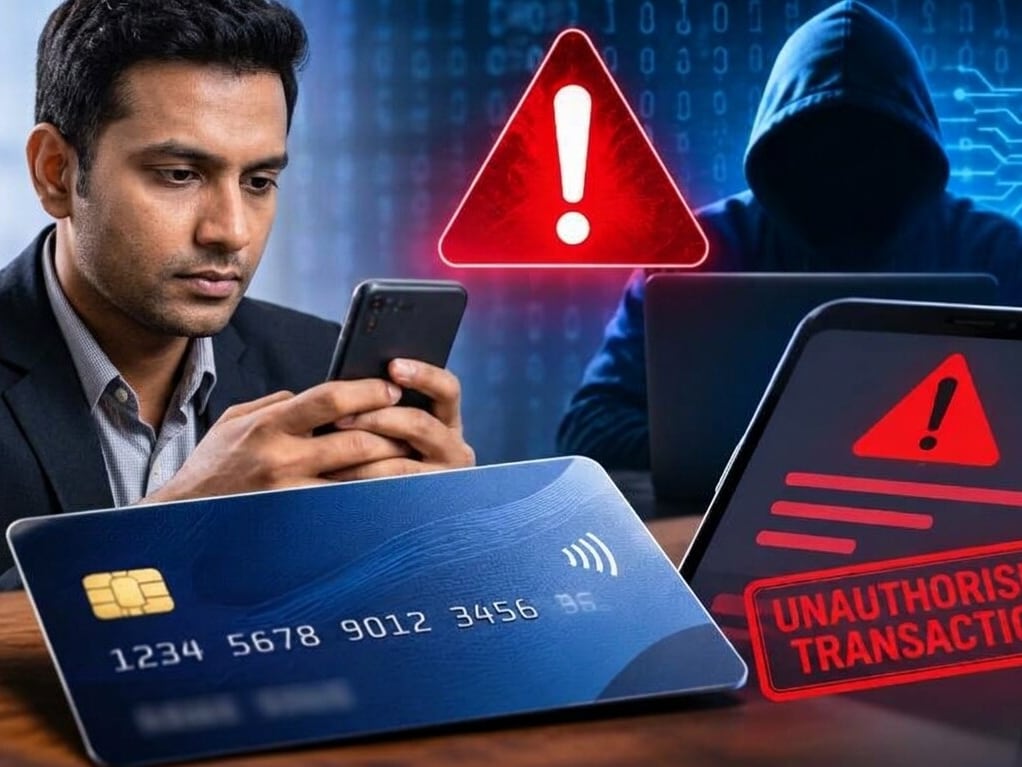
Prayagraj. Cybercriminals defrauded a reverse osmosis water supplier from Purana Katra of Rs 4.76 lakh on the pretext of activating his newly issued credit card. The fraudsters gained unauthorized access to the victim’s mobile phone through a fake application and siphoned money from both his credit card and his bank savings. During the incident, the accused also broke his fixed deposit and got a personal loan of Rs 4.88 lakh approved in his name. However, timely intervention by the victim to freeze his bank account prevented the fraudsters from transferring the approved loan amount. The victim has lodged a formal complaint at the cyber police station to initiate an investigation into the financial fraud.
Fake Application Used to Gain Mobile Access
Amit Kumar, a resident of Purana Katra, runs an RO water supply business for his livelihood. He had saved his hard-earned money in a Kotak Mahindra Bank account with plans to construct a house. Meanwhile, he had applied for a credit card from IndusInd Bank. After receiving the physical card by post, he received a phone call from an unknown number on September 30. The caller impersonated a bank employee and offered to guide him through the credit card activation process. Trusting the caller, Kumar followed the instructions and downloaded a fake application named Indus Support. He entered his required personal and banking details on the platform to complete the activation, unaware that the application was designed to compromise his device security and provide remote access to cybercriminals.
Card Charged and Fixed Deposit Broken Without OTP
Shortly after completing the process on the application, two unauthorized transactions were executed on Kumar’s credit card. Initially, Rs 49,000 was debited, followed quickly by another deduction of Rs 11,000. Kumar did not immediately realize the loss, but the situation escalated the very next day on October 1. He began receiving continuous alert messages regarding money being deducted from his Kotak Mahindra Bank account. Notably, he had neither shared any one-time password with anyone nor initiated any payment himself. Alarmed by the alerts, Kumar visited his bank branch and obtained an account statement. The records revealed that the fraudsters had broken his fixed deposit and withdrawn Rs 4,16,879 in multiple installments. Combined with the Rs 60,000 stolen from his credit card, his total financial loss reached Rs 4,76,879.
Timely Account Freeze Prevents Additional Loan Fraud
Further scrutiny of the banking records uncovered another alarming attempt by the cybercriminals. Using the stolen personal details and mobile access, the fraudsters had successfully secured approval for a loan of Rs 4.88 lakh in Kumar’s name. Investigators suspect the accused were preparing to transfer this newly approved loan amount into their own accounts. Fortunately, Kumar acted swiftly upon noticing the unauthorized deductions and got his bank account frozen in time. This prompt action blocked the transfer of the loan funds and saved him from a much larger financial setback.
Renowned cybercrime expert and former IPS officer Prof. Triveni Singh explained that fraudsters frequently impersonate bank officials and trick citizens into downloading malicious third-party applications or APK files under the guise of card activation or KYC updates. Once installed, these applications grant criminals access to sensitive device data, SMS messages, and screen activities, enabling them to execute unauthorized transactions without needing an OTP. Prof. Singh advised citizens never to download applications from unknown links and to verify any banking request through official channels. He added that victims of cyber fraud must immediately report the incident on the national cybercrime helpline number 1930 and instruct their banks to block compromised accounts and cards without delay.