

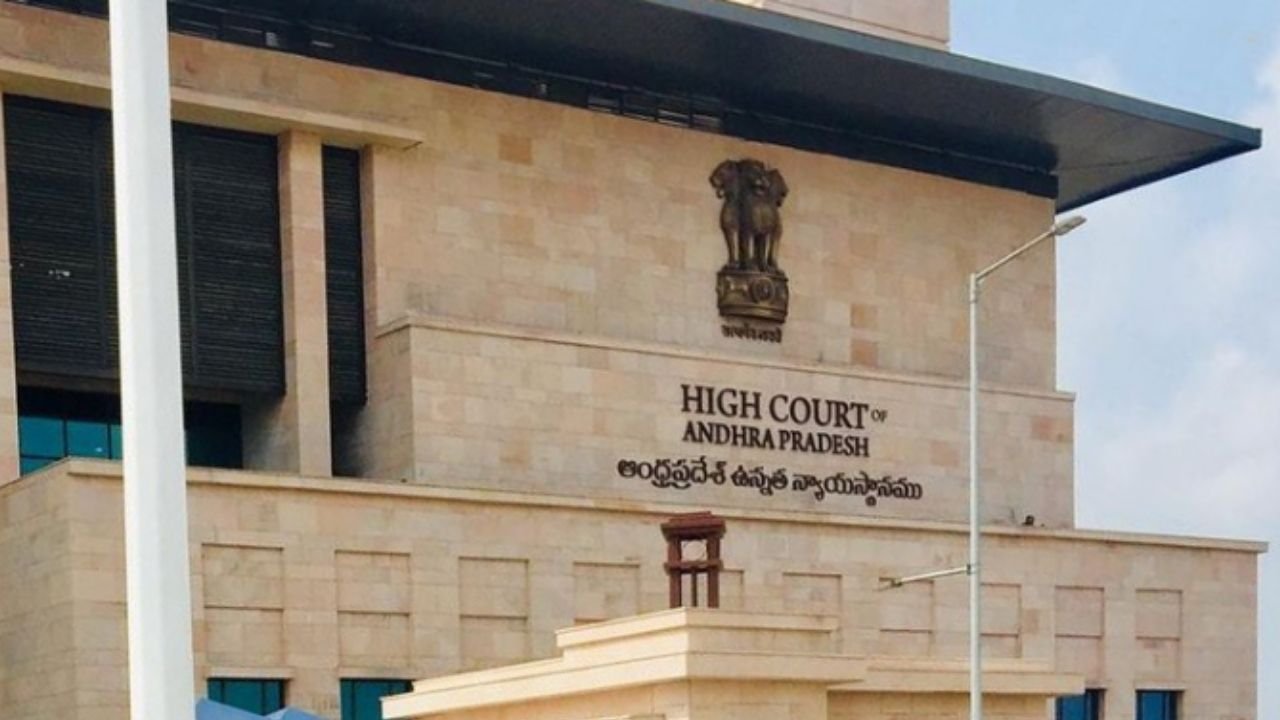

Amaravati: The Andhra Pradesh High Court has ordered an Anti-Corruption Bureau (ACB) investigation into allegations that fraud was allegedly played on the court in a dispute involving a high-value parcel of land in Kakinada. Treating the allegations as serious, the court recalled its earlier common order in two writ petitions and directed that the matter be investigated by an officer not below the rank of Inspector General (IG), with a report to be submitted within 12 weeks.
The order was passed by Justice Harinath N while allowing review petitions filed by the Jayendra Nagar Residents Welfare Association. The dispute concerns land earmarked as open space for public use in an approved residential layout. The Association claims the land had been gifted to the municipal corporation for public purposes, while the original writ petitioners asserted ownership over the property.
During the proceedings, the High Court made strong observations regarding the conduct of certain advocates who had appeared in the case. The court noted that the available records and sequence of events raised a prima facie suspicion that an order had been obtained by misleading the court. It emphasized that advocates are duty-bound to assist the justice delivery system and that allegations of collusion, dual representation or fraud can undermine public confidence in the judiciary.
At the same time, the court clarified that it was not expressing any final opinion on the involvement or guilt of any advocate or other individual. However, it held that the circumstances warranted an independent and thorough investigation to determine whether fraud had indeed been committed and to identify the roles of all those involved.
The court’s concerns intensified after the Kakinada Municipal Corporation filed an affidavit in 2026 that took a position completely contrary to the stand it had adopted in its counter-affidavit filed in 2015. When the Municipal Commissioner was summoned through virtual proceedings and asked who had instructed him to file the new affidavit, he informed the court that he had only recently assumed office and had no knowledge of the case history or the earlier pleadings.
The Residents Welfare Association argued that the disputed land was a public open space whose legal character could not be altered through subsequent documentation. It further alleged that its former counsel had conceded the writ petitioners’ claim without authorization, leading to the earlier order. According to the Association, the property, valued at nearly ₹15 crore, was the subject of an alleged conspiracy to secure ownership through fraudulent means.
After examining the case records, the High Court noted that the advocate who had represented the writ petitioners until November 2025 later appeared for the State as a Special Government Pleader, while her husband subsequently represented the writ petitioners. The court observed that this sequence raised serious concerns regarding professional misconduct and a possible conflict of interest, creating a risk that privileged information could have passed between counsel representing opposing sides.
In view of these circumstances, the High Court recalled its earlier order and directed that both writ petitions be heard afresh on their merits. It also instructed the Director General of the Anti-Corruption Bureau to have the matter investigated by an officer of Inspector General rank or above and submit a report within 12 weeks. The court further directed the Registrar (Judicial) to forward the complete case records to the ACB for investigation.
The order is being seen as a significant step toward ensuring transparency in judicial proceedings and reinforcing accountability in cases involving allegations of fraud on the court. It also underscores the judiciary’s emphasis on maintaining professional ethics and public confidence in the justice delivery system while ensuring that any allegations of misconduct are examined through an independent investigation.
About the author — Suvedita Nath is a science student with a growing interest in cybercrime and digital safety. She writes on online activity, cyber threats, and technology-driven risks. Her work focuses on clarity, accuracy, and public awareness.
Follow for daily updates on cybercrime, corporate fraud, DFIR, hacking, investigations, and digital forensics
