

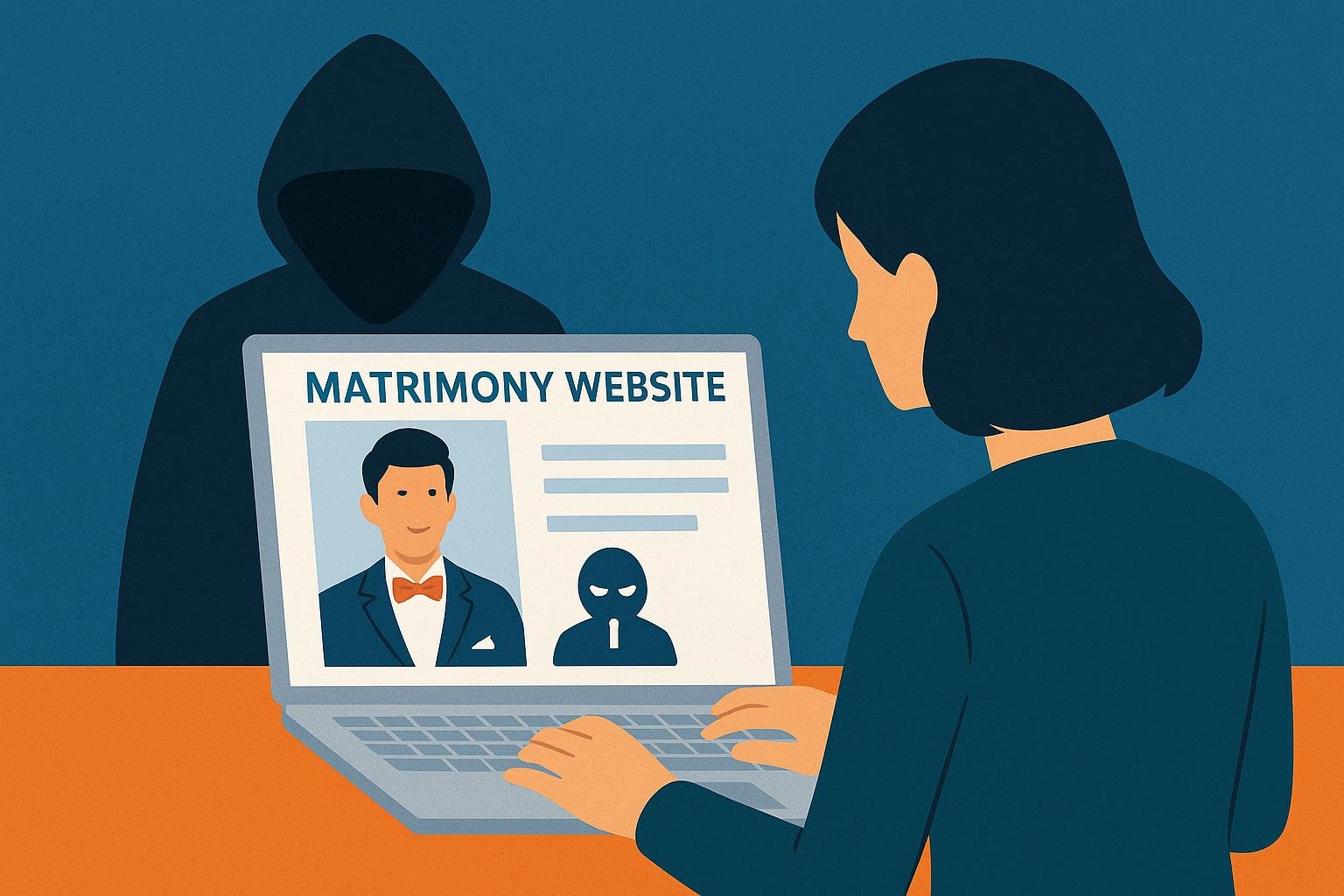
A case of cyber fraud involving a matrimonial website has come to light, in which an AIIMS nursing officer was allegedly cheated of ₹3.29 lakh after being promised marriage. The victim has lodged a complaint at the AIIMS police station, following which a case has been registered and an investigation initiated to trace the accused and the financial trail of the transactions.
According to the complaint, the victim came in contact with a man through a matrimonial website on December 2, 2024. The individual introduced himself as Umakant Verma and claimed to be a scientist working with the Indian Space Research Organisation (ISRO). During the initial conversations, the accused presented himself as well-educated, professionally established and serious about marriage, which gradually led the victim to place trust in him.
Certified Cyber Crime Investigator Course Launched by Centre for Police Technology
The victim stated that the accused maintained regular communication and projected long-term marital intentions. Over time, he also gained the confidence of her family members by speaking convincingly about his background, career and future plans. To reinforce his credibility, the accused later travelled to Gorakhpur and met the victim in person, a step that significantly reduced any lingering doubts regarding his identity and intentions.
Soon after establishing this trust, the accused allegedly began seeking financial assistance. He first claimed that his mother was critically ill and required urgent medical treatment. Appealing to the victim’s emotions and reiterating his commitment to marriage, he requested monetary help. Believing his claims, the victim agreed to extend financial support.
Subsequently, the accused informed the victim that his mother’s condition had worsened and later claimed that she had passed away, citing funeral-related expenses and other associated costs. Each request was accompanied by emotional appeals, assurances of repayment, and repeated references to their impending marriage.
Between December 13, 2024, and January 25, 2025, the victim transferred money to bank accounts provided by the accused on multiple occasions. In total, an amount of ₹3,29,000 was transferred through digital payment modes. The complaint notes that all transactions were made electronically, leaving a clear financial record.
After receiving the money, the accused reportedly began reducing communication. Calls and messages were responded to sporadically at first, before he eventually cut off all contact entirely. His phone became unreachable, and messages sent through online platforms went unanswered. Attempts to reconnect through the matrimonial website and other communication channels also failed.
Realising that she may have been deceived, the victim approached the police and submitted a detailed complaint outlining the sequence of events, including communication records and transaction details. Based on the complaint, the police registered a case and initiated preliminary inquiries.
Investigators are currently examining bank transaction records, call detail records, and the online profiles used by the accused. Efforts are also underway to verify the identity claimed by Umakant Verma and to determine whether he used forged credentials or impersonated a government official. Police are probing the possibility that the accused may be part of a larger organised cyber fraud network targeting individuals through matrimonial platforms.
Law enforcement agencies have noted that cases involving matrimonial fraud are on the rise, with perpetrators often posing as professionals in prestigious organisations to gain credibility. Such scams typically rely on emotional manipulation, gradual trust-building and fabricated personal emergencies to extract money from victims.
The police have advised citizens to exercise extreme caution while interacting with unknown individuals on matrimonial and social networking platforms. They have emphasised the importance of independent verification of personal and professional claims, particularly before any financial transactions are made. Authorities have also urged people to report suspicious behaviour at the earliest to prevent further losses.
The investigation is ongoing, and officials said efforts are being made to trace the accused through digital evidence and banking channels. Further action will be taken based on the findings of the probe.
About the author – Ayesha Aayat is a law student and contributor covering cybercrime, online frauds, and digital safety concerns. Her writing aims to raise awareness about evolving cyber threats and legal responses.
