
Follow us on Google News

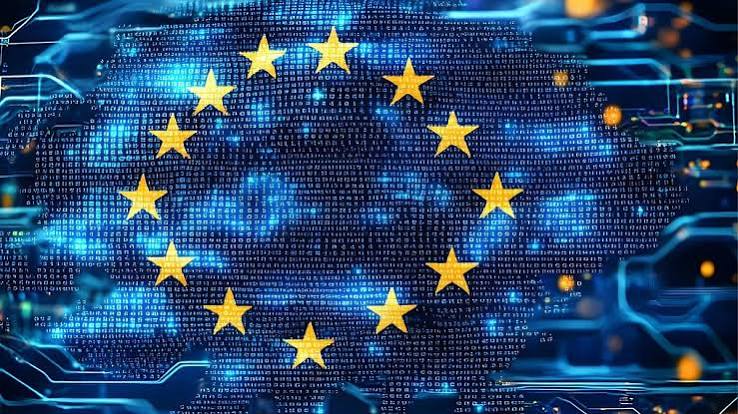
The European Commission has confirmed that its internal computer systems were targeted in a cyberattack involving artificial intelligence tools, forcing several applications offline and raising concerns about the possible exposure of sensitive employee information.
The attack was detected on October 22 but publicly confirmed on November 19, after an investigation by Politico revealed that the incident had disrupted internal systems for more than 10 days.
The affected services reportedly included payroll, employee attendance records, medical reimbursements and translation applications. Some services remained unavailable even after authorities began restoring operations.
European Commission spokesperson Thomas Regnier confirmed the involvement of AI tools but said investigators had not found evidence of a widespread data breach affecting Commission employees.
The identity of the attackers, the full extent of the intrusion and whether sensitive information was stolen remain under investigation.
FCRF Launches Certified Chief Risk Officer (CRO) Program for India’s Risk Leaders
Cyberattack Disrupts Payroll And Sensitive Employee Systems
According to Politico, the cyberattack affected several internal applications used by European Commission employees for routine administrative work.
These included systems handling payslips, working hours, leave requests and medical reimbursements.
The disruption raised concerns because such systems can contain sensitive personal and financial information, including employee records and potentially health-related details.
The Commission detected suspicious activity on October 22 and confirmed the incident internally following initial investigations on October 26.
As a precaution, officials temporarily shut down several applications to prevent further damage.
Regnier said most of the affected services had subsequently been restored, although the investigation was continuing.
The Commission also convened its highest-level internal crisis management body to assess the situation.
Henna Virkkunen, the European Commissioner responsible for technology sovereignty and security, reportedly briefed fellow commissioners on November 18.
Despite concerns about possible information theft, officials have not confirmed that attackers obtained large amounts of personal data.
Regnier also declined to identify suspected perpetrators and said he was unaware of any ransom demand.
How Artificial Intelligence Was Used In The Attack
Investigators believe the cyberattack involved AI-assisted tools capable of identifying weaknesses in computer systems.
According to cybersecurity reporting, the attackers reportedly used ARTEX, a publicly available AI-powered security testing framework.
Such tools can help cybersecurity professionals identify vulnerabilities in software and networks before criminals exploit them.
However, similar capabilities can be misused by attackers to search for weak points and automate parts of an intrusion.
A vulnerability is a weakness in software that may allow someone to access information or perform actions without proper authorisation.
For example, an outdated application may contain a security flaw that an automated tool can identify much faster than a person manually examining the system.
AI-powered tools can potentially accelerate this process by analysing software and helping automate technical tasks.
However, the use of artificial intelligence does not mean the attack was carried out entirely without human involvement.
Nor has the Commission publicly confirmed precisely how the attackers entered its systems.
The FBI had previously warned about criminals and state-backed groups misusing AI-assisted tools to exploit vulnerabilities in government and commercial networks.
The European Commission incident adds to concerns that widely available automation could reduce the time organisations have to identify and repair security weaknesses.
Earlier European Commission Breaches Raise Security Questions
The latest incident follows previous cybersecurity problems involving European Union infrastructure.
In January 2026, the Commission disclosed an attack affecting systems used to manage staff mobile devices, potentially exposing some employees’ names and telephone numbers.
Another incident was discovered in March 2026, when attackers targeted cloud infrastructure supporting parts of the Commission’s Europa.eu websites.
Initial findings from that investigation suggested that information had been taken from affected online services.
The November disclosure represents another significant cybersecurity incident involving the institution during the same year.
However, investigators have not established any connection between the attacks.
The Commission said it was coordinating with CERT-EU, the cybersecurity body responsible for protecting European Union institutions, and the European Data Protection Supervisor.
Those agencies have important roles in investigating security incidents and assessing potential risks to personal information.
The latest incident also raises questions about how quickly public institutions should disclose cyberattacks affecting employee systems.
Regnier said publicly revealing defensive measures while an investigation was underway could weaken their effectiveness.
For India, where government departments increasingly rely on interconnected digital platforms, the incident illustrates why sensitive employee databases require continuous monitoring and clear incident-response procedures.
The Commission has not announced a final assessment of the damage. Investigators are continuing to examine the attack, determine its origins and establish whether any personal information was accessed.
If your organisation handles employee payroll, medical or identity records, strengthen access controls, monitor unusual activity and maintain tested backup systems. Employees should treat unexpected messages requesting passwords or financial details with caution, particularly during service disruptions.