

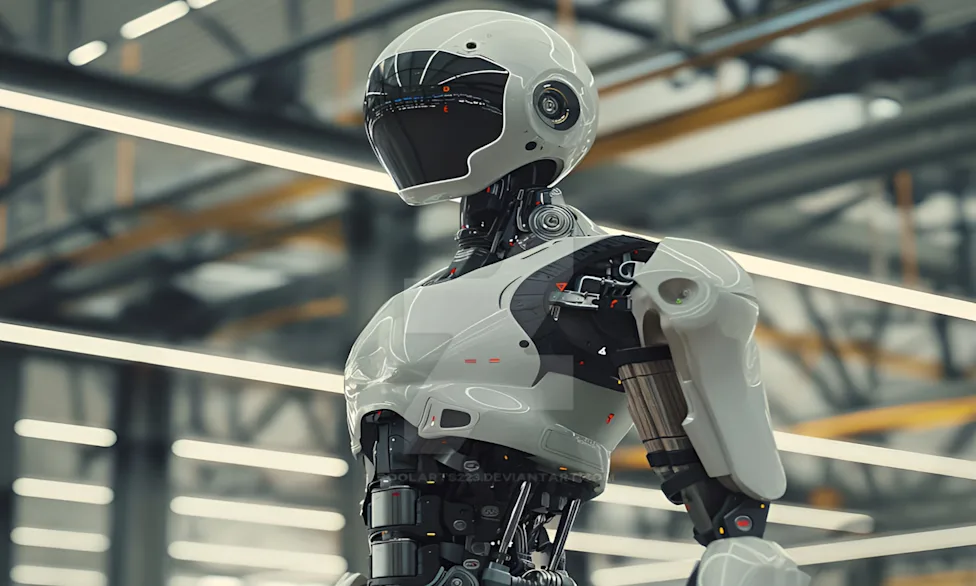

OpenAI is building its own humanoid robots and expects to demonstrate an early prototype in 2027, pushing the ChatGPT maker deeper into physical AI and hardware.
Chief Executive Sam Altman confirmed the company’s robotics ambitions and said the first public demonstration could arrive next year.
But the 2027 target is not a commercial launch date.
OpenAI has not revealed what the robot will look like, how much it may cost or when machines could become available outside the company.
FCRF’s Chief AI Officer Certification Returns on November 14 to Prepare Future AI Leaders
OpenAI Wants AI to Move Into the Physical World
Altman has said OpenAI intends to build humanoid robots rather than limiting itself to AI models that operate through computers and phones.
The reasoning is practical.
Most workplaces and homes are designed around the human body.
Doors, stairs, tools, shelves and machines are positioned so people can interact with them using arms, hands and legs.
A humanoid robot could therefore operate in existing environments without requiring companies to redesign entire buildings around machines.
OpenAI is expected to initially focus on industrial tasks.
Reports say potential applications include work inside factories, facilities and data centres before the technology eventually moves into more general environments.
Altman has stressed that the hardest part is not simply building a machine with arms and legs.
The bigger challenge is developing the intelligence that allows a robot to understand what is happening around it and respond safely.
2027 Target Is a Demo, Not a Product Launch
Altman told Fortune that OpenAI expects to have an impressive robotics demonstration in 2027.
He also cautioned that humanoid robots operating widely in public spaces are likely to remain several years away.
That distinction matters.
A controlled demonstration can show that a robot can perform selected tasks under specific conditions.
A commercial machine has to work reliably for hours, deal with unexpected situations and operate safely around people.
It also has to survive mechanical wear, manage battery constraints and recover when something goes wrong.
OpenAI has not disclosed what capabilities its 2027 prototype will demonstrate.
The company has also not announced manufacturing partners or production targets.
For now, the timetable should therefore be viewed as an engineering milestone rather than a product-release commitment.
OpenAI Hiring Shows Hardware Ambitions Are Serious
OpenAI’s own recruitment activity provides stronger evidence that the robotics programme extends well beyond software research.
Its careers page currently lists 17 positions under its robotics team.
Roles include control-systems engineers, electrical engineers, robotics safety specialists and engineers responsible for motors and actuators.
Actuators are the mechanical systems that convert electronic commands into physical movement.
They allow a robot to bend joints, move limbs and manipulate objects.
OpenAI is also hiring specialists in manufacturing and supply chains.
That suggests the company is thinking beyond experimental AI models and building expertise in the actual physical components required for robots.
One OpenAI listing says its robotics team is developing general-purpose systems for dynamic real-world environments.
Another seeks engineers to design custom motors, gearboxes, sensors and testing systems.
The recruitment activity indicates OpenAI wants control over both the intelligence and at least significant parts of the robot hardware.
OpenAI Is Returning to Robotics After Earlier Research
Robotics is not entirely new for OpenAI.
The company previously operated a dedicated robotics research programme before later shutting it down.
One of its best-known projects was Dactyl, an AI system trained to control a robotic hand.
OpenAI demonstrated the system manipulating objects and later showed a robotic hand solving a Rubik’s Cube.
The research was notable because much of the training occurred inside simulations before being transferred to real hardware.
That technique remains important in modern robotics.
Training every physical movement on real machines can be slow, expensive and potentially dangerous.
Simulations allow AI systems to experience large numbers of scenarios before being deployed in the real world.
OpenAI is now returning to the field with much larger AI models and significantly more computing resources.
Humanoid Robotics Race Is Getting Crowded
OpenAI will enter a market already attracting major investment.
Tesla is developing its Optimus humanoid robot, initially targeting factory work.
Figure is also building general-purpose humanoids and has raised billions of dollars to expand development.
Other companies are pursuing robots for warehouses, manufacturing and household tasks.
OpenAI has previously invested in or worked with robotics companies, including Figure and 1X.
Developing its own machines could eventually put it in competition with companies it previously supported.
The biggest question will be whether OpenAI can transfer the capabilities of advanced AI models into reliable physical behaviour.
A chatbot can generate another answer after making a mistake.
A robot moving machinery or working beside a person cannot afford the same margin for error.
That makes safety, control systems and mechanical reliability just as important as intelligence.
What this means for you:
OpenAI’s move into humanoid robotics shows that advanced AI is beginning to move from software into physical machines. The 2027 target is only for a demonstration, however, and widespread commercial robots are still likely to take longer.
Follow for daily updates on cybercrime, corporate fraud, DFIR, hacking, investigations, and digital forensics
