

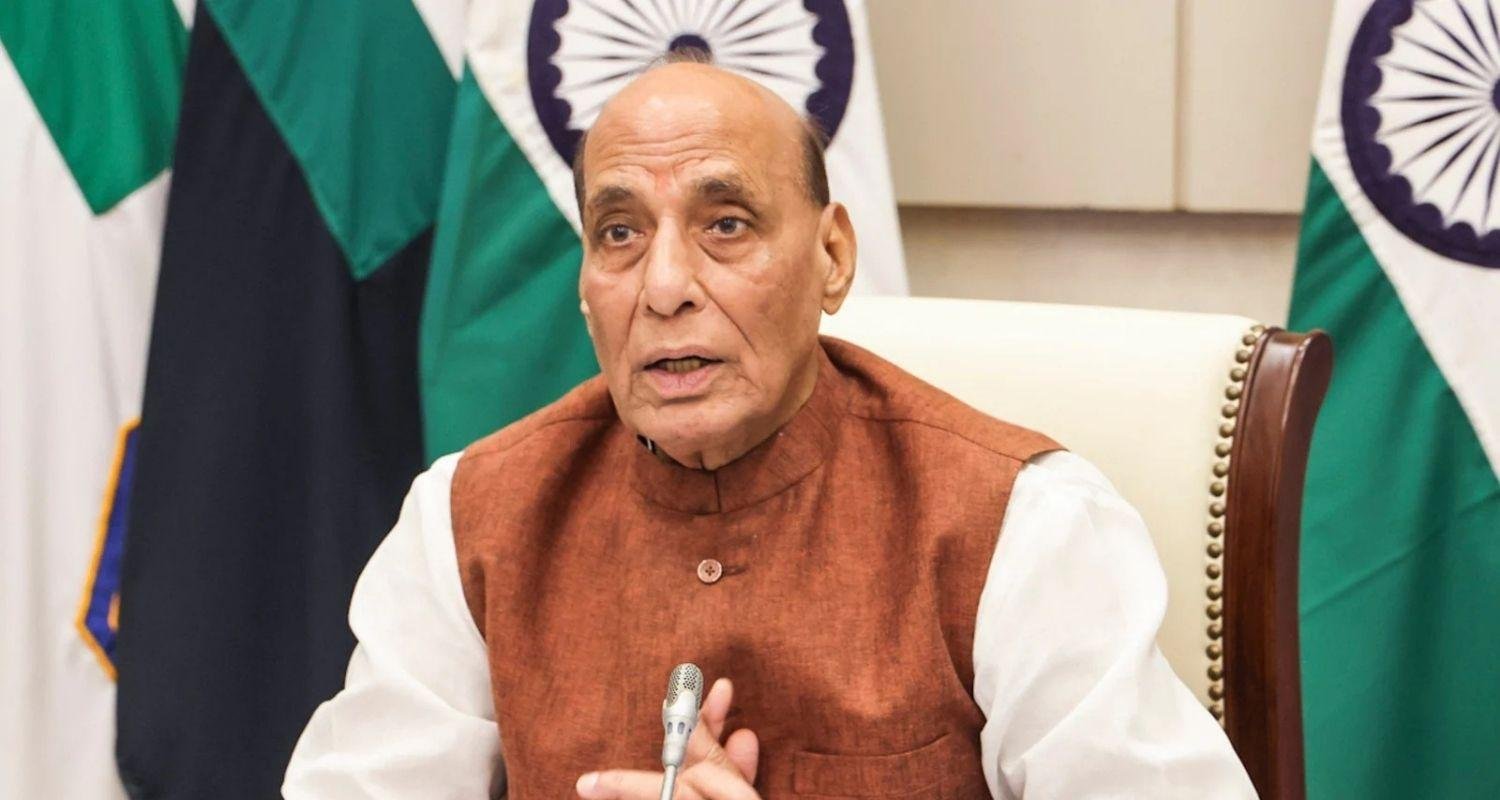
Defence Minister Rajnath Singh has called for closer India-ASEAN cooperation in cybersecurity, maritime security and defence technology.
Why Is India Seeking Stronger Defence Cooperation With ASEAN?
Addressing the inaugural ASEAN-India Defence Think Tank Forum in New Delhi on October 14, Singh said regional security challenges required collective action and practical solutions. He urged participating countries to move beyond discussions and identify measures that governments, research institutions and defence organisations could implement together.
The Defence Minister identified terrorism, cybercrime, piracy, trafficking, illegal fishing, climate-related disasters and threats to critical supply chains as challenges that frequently cross national boundaries. He also warned that growing strategic competition and activities at sea were creating uncertainty across the region.
Singh said countries should respect sovereignty, follow international law and resolve differences through dialogue before they develop into disputes. He reaffirmed India’s commitment to an open and inclusive Indo-Pacific, describing ASEAN as central to India’s regional outlook.
What Cybersecurity and Defence Technologies Did Singh Highlight?
Singh identified artificial intelligence, drones, cyber capabilities and space-based systems as increasingly important components of national defence.
He observed that recent conflicts had demonstrated how relatively inexpensive drones could challenge considerably more expensive defence systems.
Calling for affordable and adaptable solutions, Singh encouraged cooperation between Indian and ASEAN researchers on counter-drone systems, cyber defence, maritime surveillance and disaster response. He proposed joint research projects, shared testing opportunities, exchanges among young researchers and innovation challenges addressing clearly defined security problems.
Singh also highlighted India’s Innovations for Defence Excellence initiative and Technology Development Fund as mechanisms supporting collaboration with defence innovators. He stressed that joint technological development should protect sensitive information, respect intellectual property rights and ensure responsible technology sharing.
How Can India and ASEAN Improve Maritime Security?
Singh described the Indian Ocean and Southeast Asian waters as a connected maritime region supporting trade, energy supplies and the movement of people. He said maintaining security across these waters was a shared responsibility requiring stronger coordination between navies, coast guards and maritime information centres.
With 2026 designated the ASEAN-India Year of Maritime Cooperation, Singh called for improved maritime information sharing, underwater awareness and joint emergency-response capabilities. He proposed practical exercises covering search and rescue, disaster relief and protection of critical maritime infrastructure.
The Defence Minister also emphasised preparedness for cyclones, floods, rising sea levels and extreme weather that could damage ports, disrupt trade and threaten livelihoods.
What Joint Projects and Partnerships Has India Proposed?
Singh suggested developing a joint India-ASEAN research agenda covering maritime security, cyber threats, emerging technologies, disaster response and defence industry cooperation.
Potential pilot projects included a maritime disaster-response exercise, a joint study on counter-drone solutions and research into secure maritime information sharing. He also proposed researcher exchanges, fellowships, visiting programmes and joint publications.
On defence manufacturing, Singh said India was prepared to explore partnerships involving patrol vessels, radars, air defence systems, helicopters and drones. He encouraged cooperation beyond equipment purchases, including co-development, co-production, maintenance, training and long-term technical support.
Singh said India’s Atmanirbhar Bharat initiative did not mean working in isolation. He emphasised partnerships that strengthen domestic capabilities while creating opportunities for trusted international collaborators. He called for recommendations that could be assigned to responsible institutions and reviewed at subsequent meetings.
Concluding his address, Singh said India stood ready to work with ASEAN as a reliable and equal partner, with cooperation focused on practical outcomes and lasting regional security.
India’s proposed cooperation with ASEAN reflects the growing importance of cybersecurity, autonomous systems and secure maritime infrastructure in regional defence planning. Joint research, technology development and information sharing could help participating countries address threats that extend beyond national borders.
Follow for daily updates on cybercrime, corporate fraud, DFIR, hacking, investigations, and digital forensics
