

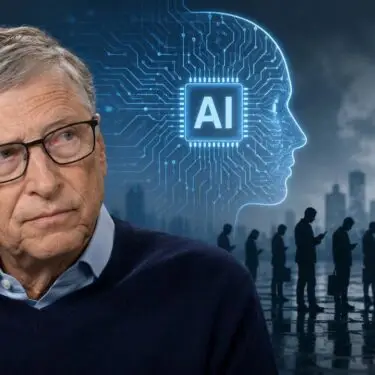
Microsoft co-founder Bill Gates has called for clear AI safeguards, comparing regulation to rules for cars and medicine.
Why Is Bill Gates Calling for AI Regulation?
Microsoft co-founder Bill Gates has urged governments to establish stronger safeguards for artificial intelligence, arguing that the technology requires regulatory oversight comparable to that governing medicines, cars and aircraft.
In a post on X, Gates said regulations could help society benefit from AI while reducing the possibility of misuse. He acknowledged that safeguards would not eliminate every danger but could limit harmful applications by malicious actors.
Gates also expressed concern about the current pace of regulatory development, saying existing protections remain inadequate and require greater attention.
Does Gates Believe AI Could Threaten Humanity?
Gates has questioned some extreme predictions about artificial intelligence, particularly claims that the technology could eventually destroy humanity. In comments to CNN, he suggested that discussions about humanity facing an imminent existential threat sometimes exaggerate the risks.
However, he maintained that AI presents serious dangers requiring effective oversight. He previously warned that sufficiently powerful systems could contribute to catastrophic outcomes, including widespread loss of life.
His position reflects a distinction between recognising significant technological risks and treating every worst-case prediction as inevitable.
What Regulatory Approach Does Gates Support?
Gates has advocated a middle-ground approach that combines technological development with enforceable safety measures. He argued that society already possesses considerable regulatory experience in sectors such as aviation, pharmaceuticals and automobiles. Similar oversight, he suggested, could help manage the dangers associated with increasingly capable AI systems.
He also acknowledged the technology industry’s role in drawing attention to emerging threats.
What Have Other Microsoft Executives Said?
Microsoft president Brad Smith has similarly called for international AI regulation, arguing that everyday consumer products face more extensive safety requirements than artificial intelligence. Speaking to the BBC, Smith compared existing rules governing washing machines and milk with the comparatively limited oversight of AI.
Microsoft chief executive Satya Nadella has separately warned against placing unquestioning trust in increasingly powerful AI models, particularly as they gain access to sensitive information. Nadella advocated precautionary controls that assume systems could be compromised.
Why Is the AI Industry Divided?
The debate has exposed differing approaches among major technology companies. OpenAI and Anthropic have supported stronger regulation, while Meta and Nvidia have taken contrasting positions. US President Donald Trump has warned that restrictive AI regulations could weaken America’s competitiveness against China.
Technology leaders have also signed voluntary, non-binding agreements concerning responsible AI development. The disagreement centres on balancing innovation, international competition and public safety as artificial intelligence becomes increasingly powerful and widely deployed.
Follow for daily updates on cybercrime, corporate fraud, DFIR, hacking, investigations, and digital forensics
