

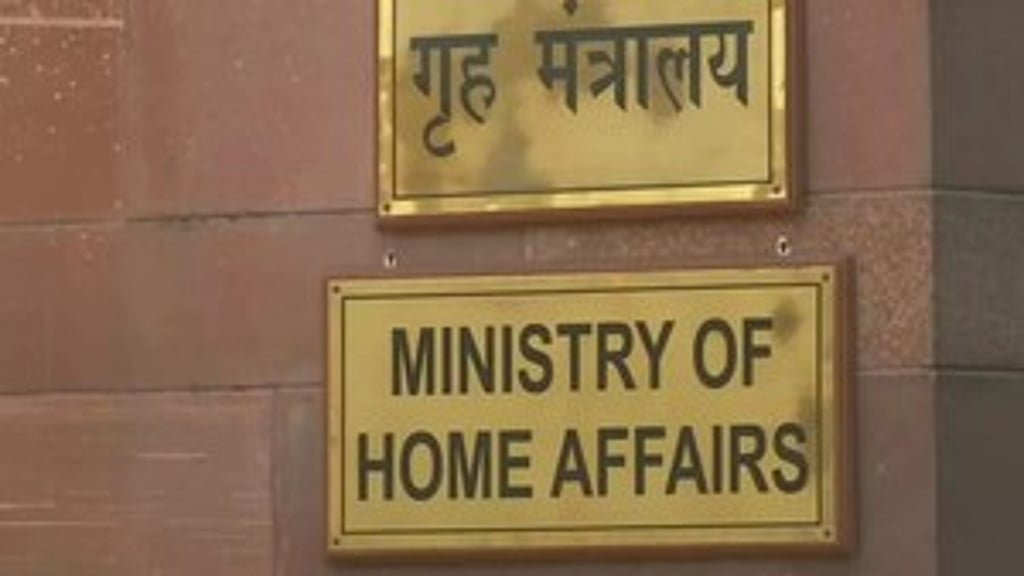

NEW DELHI — The Union Ministry of Home Affairs has tightened guidelines governing the blacklisting of foreign nationals, expanding the framework to explicitly encompass cybercrime, child abuse, human trafficking, and organised financial rackets involving cryptocurrency. Under the revised norms, overseas citizens implicated in terror financing, subversive activities, money laundering, and hawala operations face strict entry and residency prohibitions. The measure aims to fortify national security mechanisms against individuals linked to grave offences, while formalising administrative procedures for cross-border surveillance and enforcement.
Three-Tier Classification Retained for Offences
The updated framework preserves the established three-tier grading mechanism, categorising violations under Grade A, Grade B, and Grade C in accordance with their gravity and relevant statutory provisions. Grade A addresses the most critical national security concerns. It applies to individuals deemed security threats, members of organisations banned under the Unlawful Activities (Prevention) Act, persons designated under United Nations sanctions, and those involved in forged travel documents or fraudulent visas. Restrictive orders under this premier tier require mandatory clearance from an officer holding at least the rank of Joint Secretary in the Home Ministry or the Commissioner of the Bureau of Immigration.
Grade B targets individuals convicted of or implicated in offences carrying prison terms under three years, excluding offences covered by the Immigration and Foreigners Act. This category encompasses recurrent immigration breaches, financial irregularities, illegal funding, tax evasion, and violations under the Foreign Exchange Management Act. Grade C covers lesser infractions, including overstaying and non-compliance with mandatory registration for up to 90 days. Enforcement under Grade C remains subject to specific country exemptions, with explicit allowances provided for foreign children aged seven years and below under designated circumstances.
Alignment with Immigration and Foreigners Order
The overhauled guidelines operate alongside the Immigration and Foreigners Order, 2025, which was notified on September 1, 2025. This statutory instrument empowers authorities to bar entry or cancel the stay of foreign nationals associated with espionage, terrorism, narcotics smuggling, cybercrime, child abuse, and currency racketeering, including digital assets. Authorities noted that bringing cryptocurrency operations and cyber syndicates within formal scrutiny equips enforcement bodies with explicit grounds to track illicit capital movements and digital networks across borders.
Beyond financial and security transgressions, the provisions place sharp emphasis on crimes against minors, particularly human trafficking and child exploitation. Action will also extend to foreign nationals who threaten, intimidate, or obstruct immigration personnel on duty. However, blacklisting for obstructing public officers remains confined to exceptional situations, necessitating concrete documentary evidence along with advance authorisation from the Commissioner of the Bureau of Immigration.
Mandatory Registry and Periodic Case Reviews
Under the revised mandate, the Bureau of Immigration must curate and maintain a live central registry of foreign nationals prohibited from entering the country. To prevent arbitrary exclusions, all blacklisting entries will undergo systematic periodic reviews. Affected individuals retain the right to submit formal representations to the Ministry of Home Affairs seeking administrative reconsideration of their entry bans.
The ministry stated that the updated parameters establish a clear, consolidated standard for regulatory intervention against cross-border criminality. Authorities affirmed that every enforcement action will continue to adhere strictly to statutory provisions, grounded in individual evidentiary merits and the specific nature of the alleged infractions.
Follow for daily updates on cybercrime, corporate fraud, DFIR, hacking, investigations, and digital forensics
