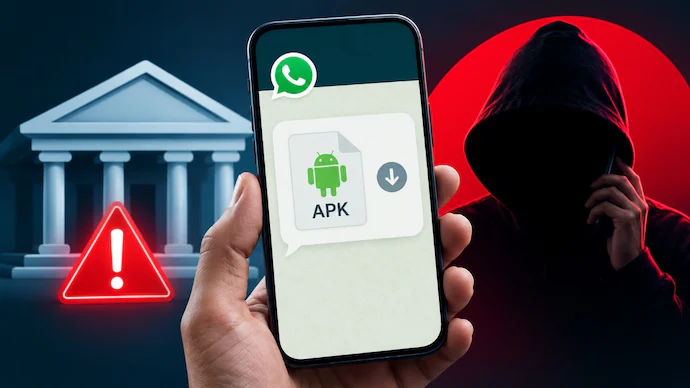

PUNE: A 47-year-old software engineer from Pune has allegedly lost ₹2.17 crore in an online investment scam involving a fraudulent trading application, WhatsApp groups and forged regulatory credentials. The case highlights how cybercriminals use social media advertisements and fabricated investment platforms to manipulate victims into making increasingly large financial transfers.
According to the reported details, the victim first encountered an investment opportunity through an advertisement on Instagram. What appeared to be a legitimate stock market investment operation allegedly turned out to be a carefully constructed fraud designed to build confidence and extract money.
How the Alleged Investment Scam Worked
The fraud reportedly began with an Instagram advertisement promoting investment opportunities. After engaging with the scheme, the software engineer was allegedly drawn into WhatsApp groups where investment-related discussions and representations were used to establish credibility.
The operators reportedly relied on a fake Securities and Exchange Board of India (SEBI) certificate to make the operation appear legitimate. The use of fabricated regulatory credentials can be particularly deceptive because investors may interpret official-looking documents as evidence that an investment platform has been authorised by the regulator.
The victim was also allegedly directed to use a sham trading application. Such applications can imitate legitimate investment platforms and create the appearance of a functioning trading environment, making it difficult for investors to distinguish a genuine service from a fraudulent operation.
Over several months, the engineer allegedly transferred substantial sums into the scheme, eventually suffering reported losses of ₹2.17 crore.
https://the420.in/fcrf-certified-chief-ai-officer-second-cohort-november-2026/
Why Fake Trading Platforms Can Fool Experienced Professionals
The case challenges the assumption that technical knowledge automatically protects people from financial fraud. Even an experienced software professional may be vulnerable when scammers combine social engineering, persuasive investment claims and convincing digital interfaces.
Fraudsters can exploit trust through coordinated tactics, including social media advertising, group-based persuasion, forged documents and applications designed to resemble genuine financial services. Repeated interactions and apparently professional communication may encourage victims to lower their guard and commit progressively larger amounts.
A fake regulatory certificate can further reinforce this false sense of security. However, a document bearing a regulator’s name or logo is not proof of registration or authorisation.
Warning Signs Investors Should Not Ignore
Investors should independently verify the registration and regulatory status of any investment intermediary before transferring money. Verification should be conducted through the regulator’s official channels rather than through links, certificates or contact details supplied by the person promoting the investment.
Other warning signs include unsolicited investment advertisements, WhatsApp groups promoting particular trading schemes, unfamiliar trading applications and pressure to increase investments. Investors should also be cautious about platforms that display profits without providing a reliable and independently verifiable way to withdraw funds.
The case reinforces the importance of treating online investment opportunities with caution, regardless of how sophisticated the application or persuasive the promoters may appear.
What This Means For You
Never invest solely because of an Instagram advertisement, WhatsApp recommendation or certificate shared by a promoter. Verify the intermediary independently through SEBI’s official website, download trading applications only from trusted sources, and be wary of anyone encouraging unusually large or repeated transfers.
If you suspect investment fraud, contact your bank immediately and report the incident through India’s cybercrime reporting system or by calling 1930 as soon as possible.
The420 Insight
Modern investment scams often exploit human trust rather than technical ignorance. By combining fabricated regulatory credentials, social media advertising and convincing digital platforms, fraudsters can make fraudulent schemes appear legitimate. Independent verification—not professional appearance or technical sophistication—is a critical defence against investment fraud.
About the Author – Ananya Aradhya writes on cybercrime, fraud, scams, cybersecurity, digital safety, and emerging threats. Her work also covers major criminal cases, financial frauds, consumer scams, and stories that highlight risks affecting people in the real and digital world.