

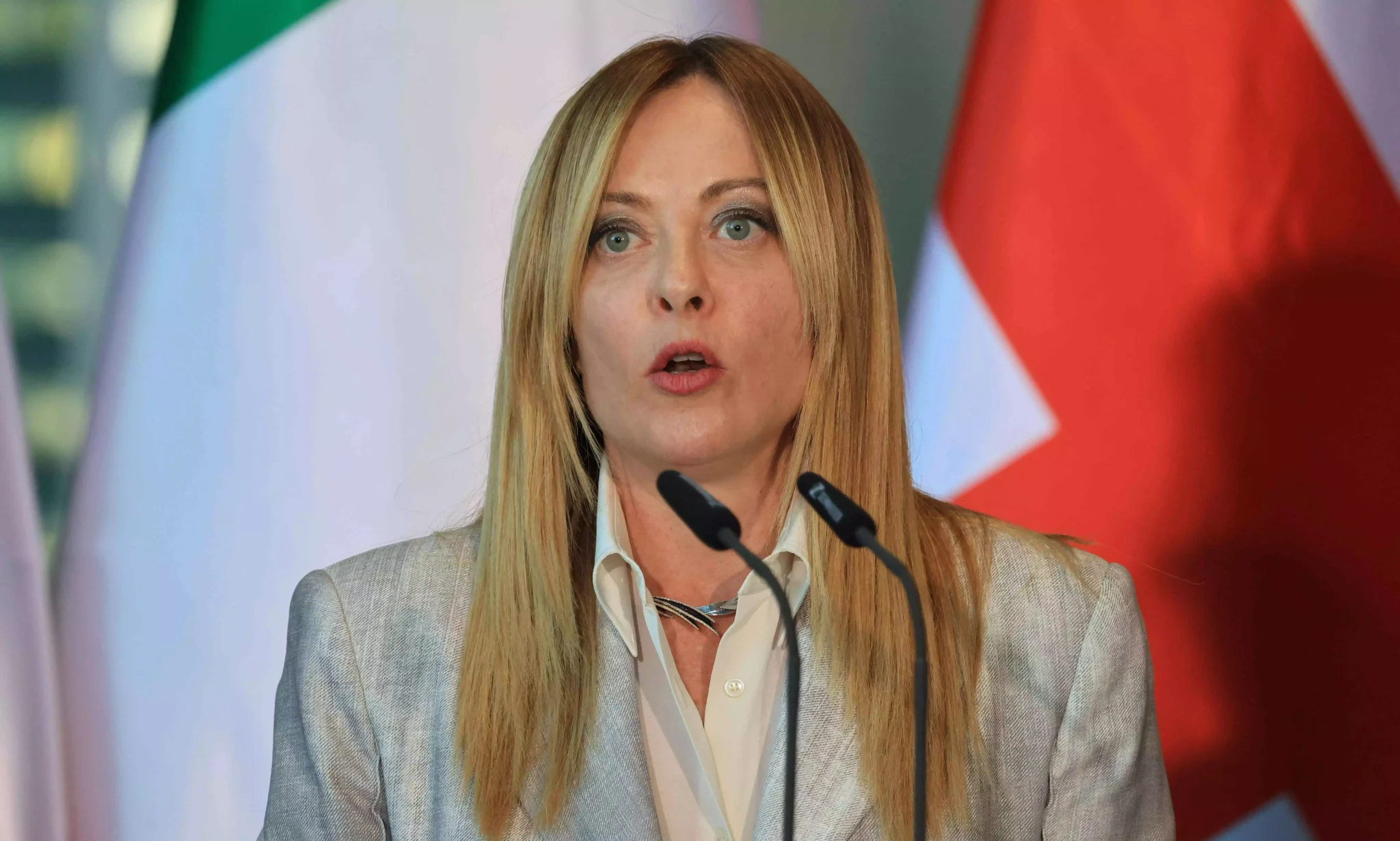

Italian Prime Minister Giorgia Meloni has applied to trademark her voice across the European Union as concerns grow over AI systems capable of convincingly cloning politicians, celebrities and other public figures.
Meloni submitted a four-second audio recording to the European Union Intellectual Property Office on October 5 in which she says, “Io sono Giorgia Meloni” — “I am Giorgia Meloni.”
The application is intended to give her another legal tool against unauthorised voice cloning and AI-generated deepfakes.
The filing is currently under examination.
FCRF Launches CP-FRM to Build India’s Next Generation of Fraud Risk Professionals
Meloni Files Her Voice as a Sound Trademark
According to EU trademark records cited by Italian news agency ANSA, the application concerns a sound mark rather than an ordinary written word or logo.
The four-second recording contains Meloni saying her own name.
The filing covers three broad areas, including downloadable multimedia content, cultural activities and the organisation of political events.
That means any eventual trademark protection would operate within defined commercial and service categories.
It would not give Meloni unlimited ownership over every possible reproduction of her voice.
‘Io Sono Giorgia’ Is Closely Tied to Her Political Identity
The wording chosen for the filing is significant.
“Io sono Giorgia” became closely associated with Meloni after a 2019 political speech in which she repeatedly described herself through a series of personal and political identities.
The phrase later became widely circulated in memes, remixes and political content and was also used in connection with her autobiography.
By filing a version that explicitly includes her full name, Meloni is seeking protection over a sound strongly associated with her public identity.
AI Has Made Voice Cloning Much Easier
The move comes as generative AI tools make it increasingly simple to create convincing replicas of a person’s speech.
Modern voice-cloning systems can sometimes reproduce tone, accent and speaking style from relatively short audio samples.
That creates opportunities for legitimate uses such as accessibility, dubbing and entertainment.
But the same technology can also be used to create fake political speeches, financial scams, impersonation attacks and non-consensual content.
For politicians in particular, synthetic audio can create false statements that appear authentic enough to circulate widely before they can be disproved.
Trademark Could Add Another Legal Route
A successful sound trademark could give Meloni an additional basis to challenge certain unauthorised commercial uses of a cloned version of her voice.
That could matter where existing privacy, personality-rights or defamation laws are difficult to apply quickly.
But trademark law has limits.
It is generally designed to protect distinctive signs used in connection with goods and services.
It does not automatically create a universal prohibition on imitation.
That means parody, political commentary, news reporting or other uses may raise very different legal questions depending on the circumstances and jurisdiction.
Reuters noted that registering the voice would not guarantee an end to AI-generated imitations but could make some unauthorised uses legally harder to defend.
Meloni Has Already Faced Deepfake Abuse
The move is not purely theoretical for the Italian prime minister.
Meloni has previously taken legal action over manipulated sexual images and videos that allegedly used her likeness.
Reuters reported that a 2024 case involving AI-generated pornographic deepfakes of Meloni remains under judicial consideration.
That history helps explain why she is seeking stronger control over how her identity can be digitally replicated.
The problem is increasingly shifting from fake images to synthetic voice and video, where a person can appear to say or do something that never happened.
Other Public Figures Are Seeking Similar Protection
Meloni is not the first prominent person to explore intellectual-property protections against AI cloning.
Artists, actors and musicians have increasingly sought ways to prevent their voices and likenesses from being copied without permission.
Reuters and AP noted that public figures including singers and actors have pursued legal or trademark-based strategies as generative AI tools become more accessible.
Italian singer Giusy Ferreri had also previously sought protection for her voice through a similar route, according to ANSA.
The trend reflects a wider legal question: whether existing trademark, copyright, privacy and personality-rights laws are sufficient for the age of generative AI.
Europe Is Already Tightening Deepfake Rules
The European Union is separately introducing transparency obligations for certain AI-generated and manipulated content under its AI regulatory framework.
Those rules are intended to make it easier for users to recognise synthetic material.
But disclosure requirements do not necessarily prevent the creation of deepfakes in the first place.
Trademark protection could therefore become one additional layer alongside privacy law, platform rules and AI-specific regulation.
Sound Marks Are Unusual but Legally Recognised
EU trademark law allows sounds to be registered when they can function as distinctive identifiers.
Companies have historically trademarked jingles, tones and other recognisable sounds.
Using the same mechanism to protect a politician’s spoken voice is less common.
That makes Meloni’s application notable because it attempts to adapt an established intellectual-property tool to a new AI-era problem.
The EUIPO will now examine whether the application satisfies the legal requirements for registration.
Trademark Does Not Solve Deepfake Detection
Even if Meloni receives the trademark, enforcement will remain difficult.
AI-generated material can spread through social networks, encrypted channels and websites located outside the EU.
Synthetic audio can also be slightly altered while retaining enough resemblance to mislead listeners.
That means technical detection tools and platform responses will remain important even when a person has additional legal protections.
The deeper challenge is determining whether a recording is authentic quickly enough to stop false content from spreading.
Politicians Face Particularly High Deepfake Risk
Political figures are among the most sensitive targets for AI impersonation.
A convincing fake recording released shortly before an election, diplomatic meeting or national-security event could influence voters or financial markets before verification catches up.
Voice cloning also creates risks for fraud.
Criminals can potentially impersonate senior officials, executives or family members to pressure people into transferring money or disclosing information.
That makes identity protection increasingly important beyond celebrity rights or reputation management.
What this means for you
A familiar voice should no longer be treated as proof that a recording is genuine. AI can now imitate public figures and private individuals, so unexpected audio asking you to believe a sensational claim or take urgent action should be independently verified through trusted sources.
Follow for daily updates on cybercrime, corporate fraud, DFIR, hacking, investigations, and digital forensics
