

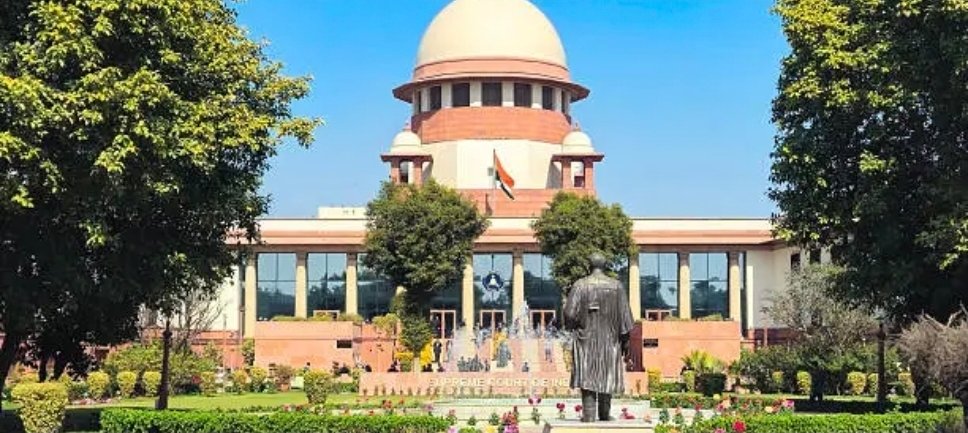
The Supreme Court has raised concern over steep medicine mark-ups and questioned whether retail margins should be capped at 16%.
Why Is the Supreme Court Concerned?
The Supreme Court has expressed concern over rising medicine prices and treatment costs at corporate hospitals, observing that such hospitals are service-providing institutions rather than industries operating primarily for profit.
During the hearing of a petition, a bench presided over by Justice Sandeep Mehta referred to the example of a cancer medicine that could be available to retailers for ₹3,000 while carrying a printed maximum retail price of ₹27,000.
The court questioned whether the government could frame a rule limiting the MRP of medicines to no more than 16 per cent above the price at which they are received by retailers. It also raised the possibility of preventing the sale of medicines above such a prescribed MRP.
FCRF Launches CP-FRM to Build India’s Next Generation of Fraud Risk Professionals
What Happens Inside Corporate Hospitals?
The court noted that patients admitted to corporate hospitals may be required to purchase medicines from the hospital’s in-house pharmacy, where drugs can be sold at significantly higher retail prices.
According to the proceedings described, patients who bring medicines purchased elsewhere may face refusal of treatment on the ground that the hospital will not accept responsibility for medication obtained from outside.
The court’s observations placed attention on the position of patients who may have limited freedom to choose where they purchase medicines while undergoing treatment.
How Could Inflated MRPs Affect Taxpayers?
The court also referred to treatment provided under government welfare schemes. Corporate hospitals may receive the full amount from the government on the basis of artificially inflated MRPs, directly affecting public expenditure and taxpayers, it observed. The gap between procurement prices and printed retail prices was also identified as a source of uncertainty for patients.
The court said that if a medicine carries an MRP of ₹27,000 but an honest chemist offers the same medicine for ₹3,000, a patient may become suspicious about the cheaper product and wonder whether it is counterfeit. Such a wide difference can therefore create confusion in addition to increasing treatment costs.
What Did the Government Tell the Court?
Solicitor General Tushar Mehta, representing the central government, acknowledged before the court that a solution needed to be found.
He said the government would have to strike a balance between the interests of all parties and sought additional time to discuss the issue with officials. The court granted the government time for further consideration.
The proceedings leave the question of medicine pricing and permissible retail margins open for further discussion. The court’s observations focused on whether a clearer pricing framework could address large differences between the price paid by retailers and the MRP ultimately faced by patients.
The next hearing in the case is scheduled for October 12.
Follow for daily updates on cybercrime, corporate fraud, DFIR, hacking, investigations, and digital forensics
