

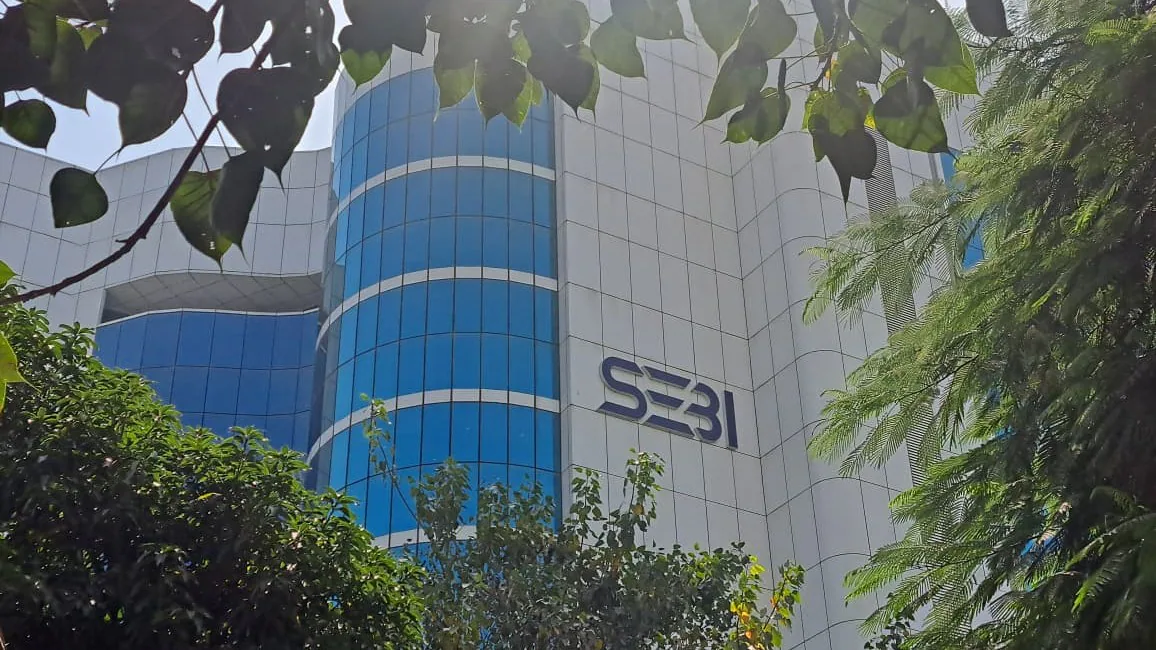

The Securities and Exchange Board of India has ordered the closure of the Growpital investment scheme after concluding that it operated as an unregistered collective investment scheme and raised ₹192.88 crore from 5,208 investors.
The regulator has directed the principal entities and individuals behind the platform to stop raising money, refund outstanding investor funds with 12% annual interest and remain out of the securities market for periods of up to five years. SEBI’s enforcement records show that both a final order and a separate settlement order in the Growpital matter were issued on September 28.
The investigation examined money mobilised through the platform between April 1, 2020 and January 31, 2024.
FCRF Launches CP-FRM to Build India’s Next Generation of Fraud Risk Professionals
Investors were offered returns of up to 18.5%
Growpital promoted investment plans linked to agricultural activities and offered projected returns ranging from around 10% to 18.5%.
Investors were brought in as partners in several ZF limited liability partnerships and were allotted units in return for their contributions.
Funds collected through the platform were routed through an escrow account to entities including ZF Project 1 LLP, ZF Project 2 LLP and ZF Project 3 LLP.
Farm Silo Tech LLP and Yotta Agro Ventures Pvt Ltd were also central to the structure examined by SEBI.
The regulator found that investor contributions were pooled, managed on their behalf and invested with an expectation of profits or income.
Investors, meanwhile, did not exercise day-to-day control over how the money was managed.
Those characteristics led SEBI to conclude that the arrangement satisfied the statutory conditions of a collective investment scheme, or CIS.
What makes a collective investment scheme different
A CIS broadly involves pooling money from multiple investors and managing it collectively with the expectation of generating returns.
Such schemes must comply with SEBI’s registration and regulatory requirements.
The issue in the Growpital case was therefore not simply that investors were promised returns.
SEBI’s finding was that money was pooled and professionally managed on behalf of investors without the required registration.
The regulator had first intervened in January 2024 through an interim order stopping Growpital from launching or continuing further schemes. A confirmatory order followed in April 2024, after which SEBI continued its investigation into the entities and fund flows.
The September 28 order is the final enforcement action arising from that investigation.
Refund to carry 12% interest from January 2024
SEBI has ordered the concerned noticees to refund the outstanding amount due to investors.
The refund must include annual interest of 12% calculated from January 29, 2024, the date of SEBI’s interim action, until the money is actually repaid.
That provision is important because investors have effectively been deprived of access to their money while the matter remained under investigation.
SEBI has also prohibited the key noticees from raising fresh funds or launching, operating or promoting another collective investment scheme.
Noticees 1 to 8 have been restrained from accessing the securities market for five years or until investor refunds are completed, whichever is later.
Other noticees found to have aided or facilitated the scheme face three-year market restrictions.
30 noticees named, penalties exceed ₹26 crore
SEBI’s order names 30 noticees connected with the platform and associated entities.
They include Rituraj Sharma, Krishnna Joshi, Gayatri Rinwa, Yotta Agro Venture Private Limited, Farm Silo Tech LLP, ZF Project 1 LLP, ZF Project 2 LLP and ZF Project 3 LLP, among others.
The regulator found that several other noticees aided or abetted the scheme, including by facilitating movement of funds from the ZF LLPs towards Yotta.
Monetary penalties have been imposed on the entities and individuals covered by the final order.
According to reporting on the order, the total penalty comes to around ₹26.1 crore.
The penalties must be deposited within 45 days of receipt of the order.
Separate settlement proceedings were also concluded in relation to some parties. SEBI’s records show a distinct Growpital settlement order issued on the same date as the final order.
Two entities reportedly settled their proceedings through payment of about ₹40.6 lakh.
Agricultural investment pitch drew thousands of investors
The case is significant because Growpital’s investment model was presented around agriculture, rather than conventional securities.
That can create the impression that a scheme falls outside securities regulation.
But SEBI’s test focuses on how investor money is actually pooled, controlled and managed.
If investors contribute money, expect profits, have their funds managed collectively and do not control daily operations, the arrangement can still fall within CIS regulations.
That is why platforms offering farm, land, livestock or similar asset-linked returns can come under securities scrutiny even if they do not resemble a traditional mutual fund.
The regulator’s order does not merely require the platform to stop operating.
It imposes refund obligations, interest, monetary penalties and market restrictions against the individuals and entities found responsible.
What this means for you: An investment platform does not become safe or unregulated simply because it is linked to farming, land or another physical asset. Before investing in pooled-return schemes, check whether the entity is registered with SEBI and whether its promised returns depend on money being managed collectively on your behalf.
Follow for daily updates on cybercrime, corporate fraud, DFIR, hacking, investigations, and digital forensics
