

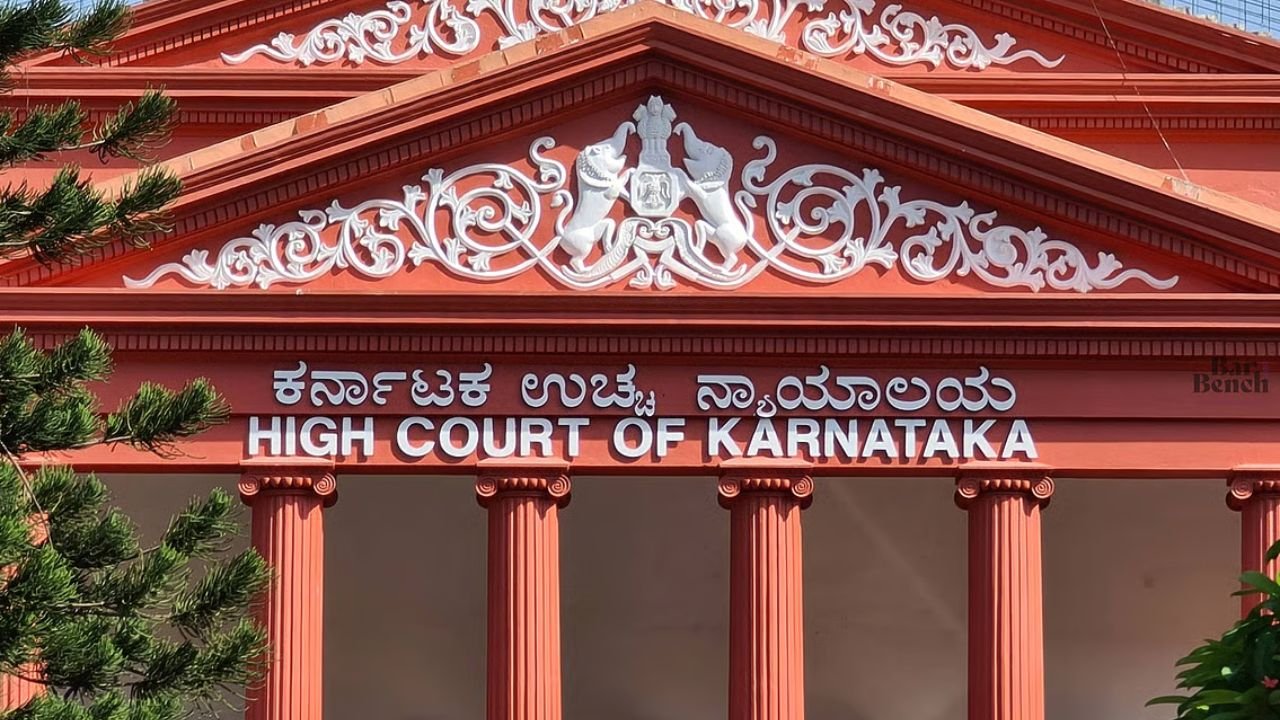

Bengaluru. A 29-year-old veterinary doctor who secured the third rank in a Karnataka Public Service Commission (KPSC) examination has been granted interim protection from arrest by the Karnataka High Court in a case involving alleged large-scale irregularities in the recruitment process. The court on Tuesday directed that she should not be arrested until the next hearing on October 13 and asked her to cooperate with the investigation. Investigators suspect that she may be among several rank holders who allegedly obtained leaked questions and answers before the examination.
During the hearing, the State Public Prosecutor told the court that nine rank holders, including the candidates who secured the top two positions, had admitted that they received questions before the examination. According to the prosecution, the third-rank holder has not yet provided a complete explanation about certain activities, including her whereabouts and communications around the time of the examination.
FCRF Launches CP-FRM to Build India’s Next Generation of Fraud Risk Professionals
The investigation has also examined her performance, as she scored 81.12 per cent in the examination. The prosecution told the court that the examination involved negative marking, yet the candidate secured 486 marks. In one paper, she attempted 95 questions, answering 89 correctly and six incorrectly. In another paper, she attempted 91 questions, of which 83 were correct and eight were wrong.
Investigators have reportedly found similarities between the questions she answered incorrectly and those answered incorrectly by other successful candidates suspected of involvement in the alleged examination irregularities. The prosecution told the court that she selected many of the same questions and gave the same incorrect answers as other candidates under suspicion. Investigators are examining whether this pattern has any connection with the alleged leakage of examination material.
The prosecution also referred to an analysis of the candidate’s call detail records. It told the court that on the night of January 8, a day before the examination, her location was allegedly different from the place where she was expected to be. The investigating agency said certain technical reports relating to internet-based calls were still awaited, and this was one of the reasons she had not been arrested so far.
The court was also informed that the nine rank holders identified during the investigation could potentially be considered as approvers, or prosecution witnesses, when the chargesheet is filed. Investigators have identified two sets of alleged malpractice in the recruitment process. The first involves around 11 candidates, while the second concerns around nine additional candidates whose roles are being examined.
The third-rank holder’s anticipatory bail application had earlier been rejected by a special court on August 18. The court had described her as an “average student” while considering the application. Nine of the 29 candidates named in the original FIR, including the top two rank holders, have meanwhile secured anticipatory bail from courts.
The investigation alleges that 11 candidates paid a total of ₹1.52 crore to arrested middleman Basavaraj Kannale to obtain examination questions before the test. Investigators allege that the questions were leaked through the examination controller, arrested IAS officer Gyanendra Kumar Gangwar, and subsequently reached the middleman. However, the candidates who allegedly paid the bribes have not been arrested so far. Investigators are examining the roles of more candidates before deciding whether the aspirants will be treated as accused or considered for approver status.
The probe has also found that the candidates who secured the top three positions in the backlog category and six candidates who finished among the top 15 in the main category allegedly accessed the examination questions a day before the test. Around 1,400 candidates appeared for the recruitment examination, which was conducted to fill 400 vacancies. A total of 329 candidates were selected, including 56 in the backlog category and 273 in the main category.
Investigators allege that the leaked questions were provided to selected candidates at luxury villas on the outskirts of Bengaluru. According to the probe, the examination controller allegedly transferred the questions to the middleman through a pen drive, after which the material was allegedly supplied to candidates.
The investigation is also examining the case of a candidate who secured the 84th rank with 296.25 marks, or 49.37 per cent. It is alleged that after the examination, the candidate was told that he was unlikely to qualify unless he paid ₹30 lakh to facilitate manipulation of his OMR sheet. However, investigators have so far found no evidence that the OMR sheets were actually tampered with.
The High Court has now adjourned the matter for 10 days and directed the third-rank holder to cooperate with the investigation. Her protection from arrest will remain in force until the next hearing on October 13, when the court is expected to consider the matter further.
Follow for daily updates on cybercrime, corporate fraud, DFIR, hacking, investigations, and digital forensics
