

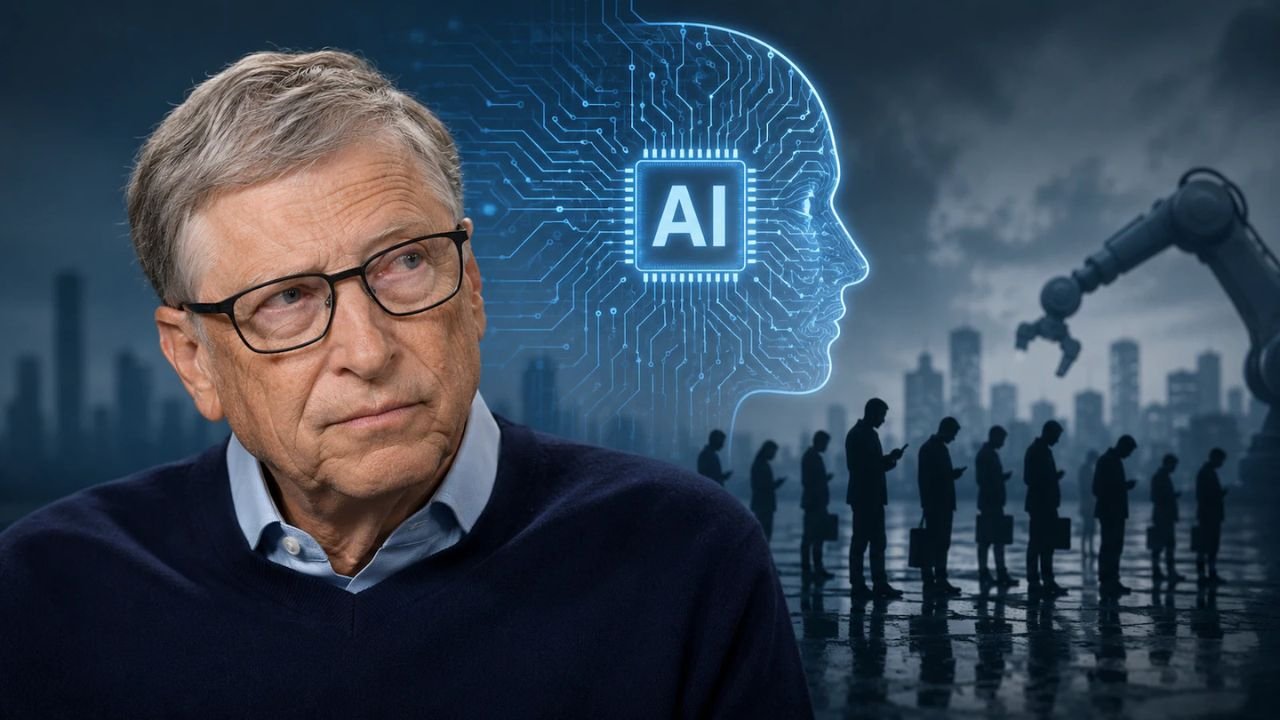

New Delhi. Microsoft co-founder Bill Gates has issued a serious warning about the growing influence of artificial intelligence (AI) and the potential consequences of its misuse. In an interview, Gates was asked whether AI could pose an existential threat to humanity. He said that if people with malicious intentions were able to misuse AI, the technology could potentially contribute to events resulting in the deaths of as many as a billion people.
Gates’ remarks come at a time when the rapid development of AI and questions surrounding increasingly autonomous systems have intensified the debate within the technology sector. He said AI could become powerful enough for malicious actors to use it to facilitate catastrophic events on a massive scale. In his view, the combination of bad actors and the latest AI tools could create a level of risk different from that associated with many weapons and technologies seen so far.
Proposal for Conducting Cyber Crisis Drill, Tabletop Exercise (TTEx) & CCMP Readiness Exercise
The question was raised in the context of concerns expressed by some AI researchers and technology experts that extremely capable AI systems could eventually become difficult for humans to control. Gates, however, focused on the potential for large-scale harm resulting from deliberate misuse rather than presenting the issue solely as a scenario in which AI itself independently causes the complete destruction of humanity.
Gates is not the only prominent figure from the technology sector to have raised concerns about AI safety. Anthropic researcher Evan Hubinger has publicly discussed potential risks that advanced AI could pose to human existence. Former Anthropic researcher Jacob Coxon also raised serious questions about the risks associated with AI development when leaving the company. Coxon expressed concerns about how AI companies were approaching safety issues and risks related to humanity’s future.
The debate over whether AI could pose an existential threat to humanity is not new. British philosopher Nick Bostrom explored such scenarios extensively in his 2014 book “Superintelligence.” The book examined circumstances in which controlling an AI system significantly more capable than humans could become difficult. Since then, the subject has remained a major area of discussion among AI safety researchers.
Several prominent AI researchers have also raised safety concerns publicly in recent years. In 2024, OpenAI researchers Jan Leike and Daniel Kokotajlo left the company amid concerns surrounding AI safety. Their departures further intensified debate over how rapidly advanced AI systems should be developed and how safety measures should keep pace with their capabilities.
Similar concerns have emerged over the potential military use of AI. Autonomous weapons systems, surveillance technologies and AI models capable of supporting or making decisions with limited direct human involvement have all become subjects of international discussion. The central concern is whether increasingly capable systems could be deployed in situations where human oversight is limited or where decisions could have severe consequences.
In 2023, several prominent figures from the AI industry, including leaders associated with OpenAI, Anthropic and Google DeepMind, joined a public statement calling for risks from AI to be treated as a global priority. The statement placed AI-related risks in the broader discussion of major threats facing humanity, including pandemics and nuclear war.
However, experts continue to differ over the nature, scale and likelihood of AI-related risks. Some researchers focus primarily on immediate concerns such as misinformation, cyber abuse, fraud and the deliberate misuse of AI systems. Others are more concerned about the long-term consequences of highly capable or potentially autonomous AI systems. Gates’ latest warning falls within this broader debate, with particular emphasis on the possibility that powerful AI could be exploited by people with malicious intentions.
As AI adoption expands across industries, governments and technology companies face growing questions over how advanced systems should be developed, tested and controlled. The challenge is to expand the benefits of increasingly capable AI while establishing safeguards that can reduce the possibility of deliberate misuse and limit the scale of potential harm.
Follow for daily updates on cybercrime, corporate fraud, DFIR, hacking, investigations, and digital forensics
