
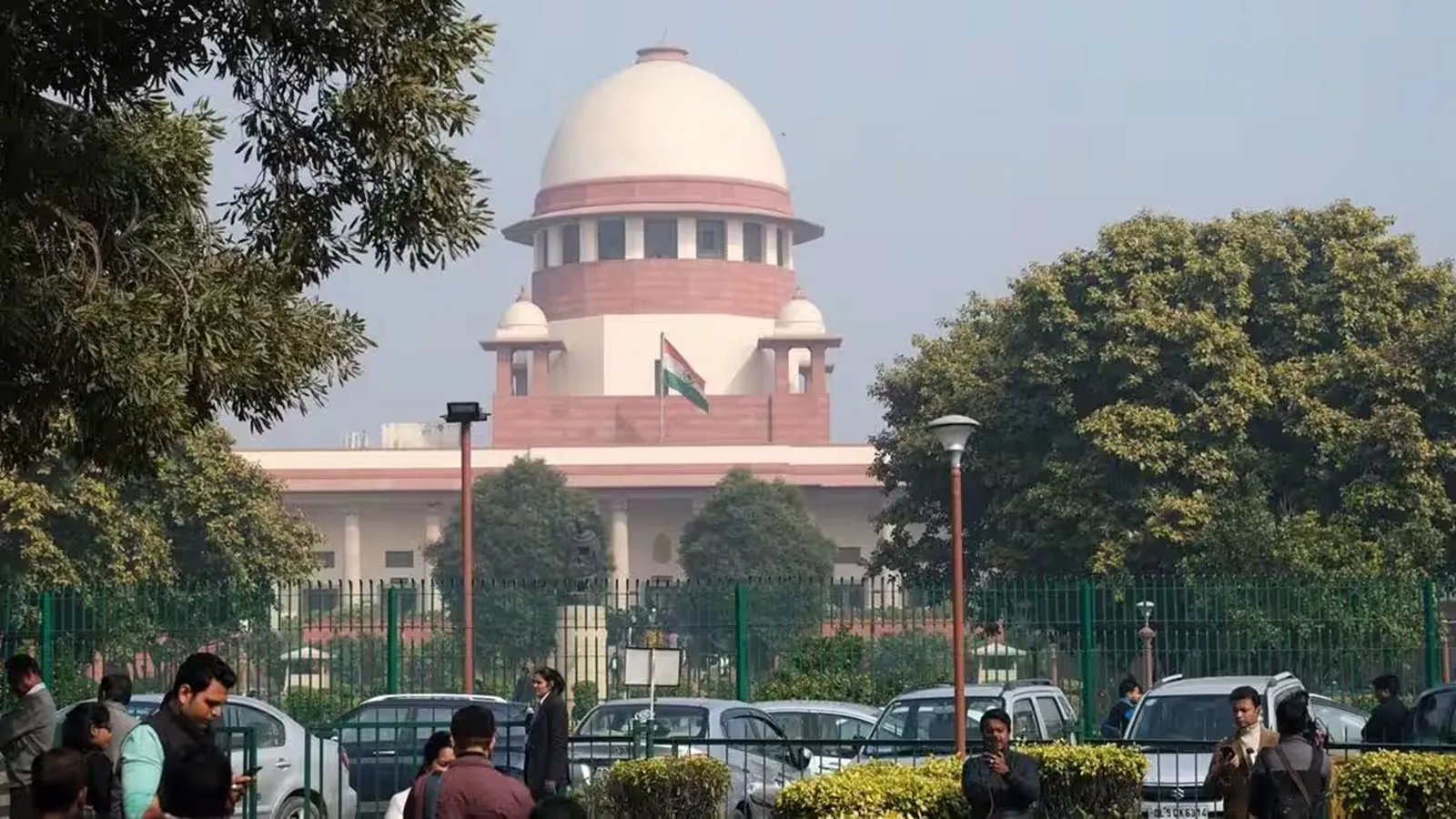

The Supreme Court has ordered Indian Oil Corporation to pay ₹12 lakh to a Haryana woman who was denied a job at an LPG bottling plant in 1988 after the company considered the work unsuitable for her because she was a woman.
A bench of Justices Aravind Kumar and Vipul M Pancholi sharply questioned the assumption that a woman could not perform duties involving LPG cylinders and said denial of employment on such reasoning was an affront to her dignity.
The case, which has lasted for more than three decades, ended with compensation because the woman has now crossed retirement age and can no longer practically be appointed to the post.
Proposal for Conducting Cyber Crisis Drill, Tabletop Exercise (TTEx) & CCMP Readiness Exercise
Woman was among 49 candidates recommended for the job
The petitioner, Sumitra, is from Karnal in Haryana.
She applied for employment when an Indian Oil LPG bottling plant opened in Karnal in 1988 and was among 49 people recommended for jobs at the facility. She appeared for an interview for the post of casual khalasi, peon or refilling helper.
Forty-three candidates subsequently received appointment letters.
Sumitra did not.
According to evidence examined during the litigation, she had fulfilled the prescribed eligibility conditions, but Indian Oil did not appoint her because the work was considered unsuitable for a woman.
The company’s position before the Supreme Court referred to the physically demanding nature of the job, including handling cylinders and working in an environment involving male employees and odd hours.
The bench was not persuaded by that reasoning.
Supreme Court questions assumption that women cannot lift cylinders
The court focused on the fact that Sumitra’s suitability had effectively been judged through a gender-based assumption rather than an individual assessment of her capability.
The bench questioned why a woman should automatically be treated as incapable of lifting LPG cylinders.
It also pointed to the reality that women routinely handle domestic LPG cylinders in households, while criticising the public-sector company for denying her an employment opportunity on the basis of gender.
The principle emerging from the case is straightforward.
If a job genuinely requires a particular level of strength, stamina or physical capacity, an employer can prescribe a neutral test and assess every candidate against the same standard.
What is problematic is replacing that assessment with an assumption that all women are incapable of meeting the requirement.
Litigation stretched from trial court to Supreme Court
Sumitra first challenged the denial before a trial court.
The trial court found that she met the eligibility requirements and relied on evidence showing that she had been denied appointment because she was a woman. It directed Indian Oil to absorb her in a casual, administrative or peon-level post other than labour work.
That decision was later reversed by the first appellate court.
The appellate court held that Sumitra’s name had only been recommended and that she had not acquired a legal right to appointment.
The Punjab and Haryana High Court upheld that position on October 14, 2025, finding that recommendation alone did not create a vested right to employment.
Sumitra then moved the Supreme Court.
By the time the matter reached its final stage, the original employment opportunity had effectively disappeared because she had crossed the age of superannuation.
Why the Court awarded ₹12 lakh instead of the job
The Supreme Court therefore chose compensation rather than directing Indian Oil to appoint her decades after the original recruitment process.
Sumitra is now 63.
The court took into account both the discriminatory treatment alleged in the case and the unusually long litigation she had been forced to pursue since the original recruitment process.
It awarded her a lump sum of ₹12 lakh.
The amount is not back salary for the entire period she might have worked.
It is compensation ordered because a direct employment remedy is no longer practical.
That distinction matters because the Supreme Court was not recreating the employment relationship or calculating decades of wages.
Case reinforces need for neutral physical standards
The ruling has significance beyond one LPG bottling plant.
Physical requirements can be legitimate in jobs involving heavy lifting, industrial operations or hazardous working environments.
But such requirements should normally be expressed through measurable standards.
For example, an employer can require all applicants to demonstrate that they can safely lift a specified weight or perform a defined physical task.
That treats physical ability as an individual qualification rather than a characteristic assumed from sex.
The Supreme Court’s criticism in Sumitra’s case goes directly to that difference.
A blanket assumption that a woman will be unable to perform the job can exclude capable candidates before their actual ability is ever tested.
What this means for you
Employers can set genuine physical standards where a job requires them, but those standards should be applied equally to candidates rather than replaced with assumptions based on gender.
The420 Insight
The most striking part of this case is its age. A hiring decision made in 1988 continued through the courts until the original remedy — the job itself — had become impossible. The ₹12 lakh compensation therefore closes not just a discrimination dispute, but a 38-year legal battle over whether physical capability can be presumed from gender.
Follow for daily updates on cybercrime, corporate fraud, DFIR, hacking, investigations, and digital forensics
