
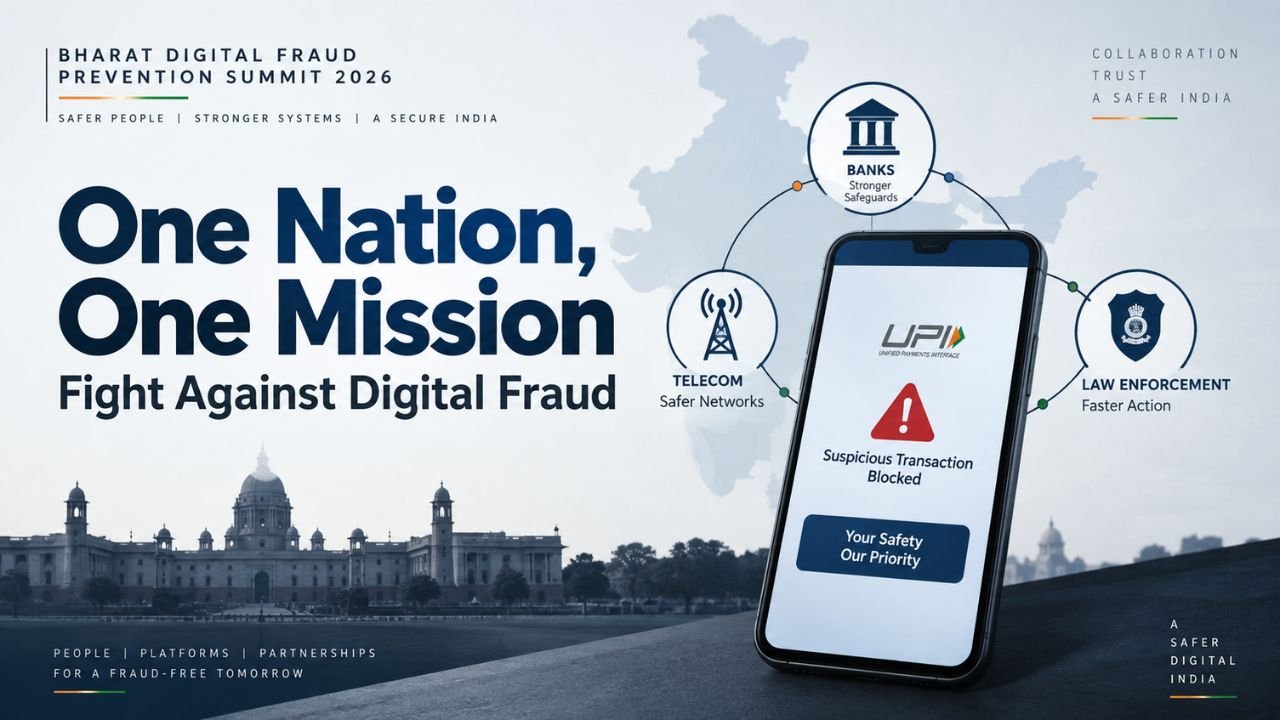

New Delhi. As India’s digital ecosystem continues to expand rapidly, government agencies, law enforcement bodies, financial institutions, telecommunications companies, cybersecurity experts and technology stakeholders called for a coordinated strategy to tackle the growing challenge of digital fraud. The Bharat Digital Fraud Prevention Summit 2026 in New Delhi focused on coordinated efforts under the theme of “Digital Swachhata: A National Mission for a Clean Digital Bharat.”
The objective of the event was to strengthen cooperation across sectors to address the growing threat of digital fraud and reinforce public trust in digital transactions. Discussions highlighted technological innovation, strong legal safeguards, effective enforcement, customer protection and public awareness as key requirements for a safer digital environment.
Proposal for Conducting Cyber Crisis Drill, Tabletop Exercise (TTEx) & CCMP Readiness Exercise
Digital fraud is no longer confined to any single sector, with fraud methods evolving alongside the rapid digitisation of banking and financial services, expansion of telecommunications networks and growing use of online transactions. Stakeholders stressed the need for continuous information sharing and closer coordination among government institutions, banks, telecommunications companies, technology organisations and citizens.
The summit also focused on the role of advanced technology in identifying and preventing emerging fraud risks, while underlining that technology alone cannot address the problem. Participants stressed the importance of real-time cooperation among institutions, stronger security systems and customer-centric processes to prevent fraudulent transactions and respond quickly to emerging threats.
Representatives from the telecommunications sector highlighted the importance of robust digital infrastructure and stronger cross-sector coordination. Discussions noted that securing the digital ecosystem requires not only network protection but also closer coordination among financial institutions, law enforcement agencies and technology companies.
The policy and legal dimensions of digital fraud were also discussed. Speakers emphasised that technological innovation needs to be supported by strong legal safeguards, effective enforcement and citizens who are aware of evolving fraud techniques. Better coordination between legal frameworks and technological systems was also highlighted as digital crimes continue to change.
Law enforcement representatives underlined the importance of vigilance, technological innovation and institutional cooperation in combating digital fraud. The banking sector highlighted the need for continuous monitoring, faster information sharing and a sustained focus on customer security to identify and address suspicious activities at an early stage.
Technical sessions held during the summit examined various aspects of digital fraud and the challenges emerging from increasingly sophisticated methods used by cybercriminals. Participants stressed the need for a whole-of-ecosystem approach involving government agencies, law enforcement, financial institutions, telecommunications companies, cybersecurity organisations and citizens.
The summit was held at a time when digital payments and online services are expanding rapidly across India, while cybercriminals are adopting increasingly sophisticated techniques to target users. Participants emphasised that tackling the evolving threat requires a greater focus on prevention, early identification of risks and rapid response, alongside action after fraudulent incidents occur.
The Bharat Digital Fraud Prevention Summit 2026 provided a platform for stakeholders involved in digital security to exchange views, discuss emerging challenges and explore strategies for strengthening India’s digital ecosystem. The discussions centred on building digital trust, developing technological solutions and creating a coordinated security framework to combat digital fraud.
Follow for daily updates on cybercrime, corporate fraud, DFIR, hacking, investigations, and digital forensics
