

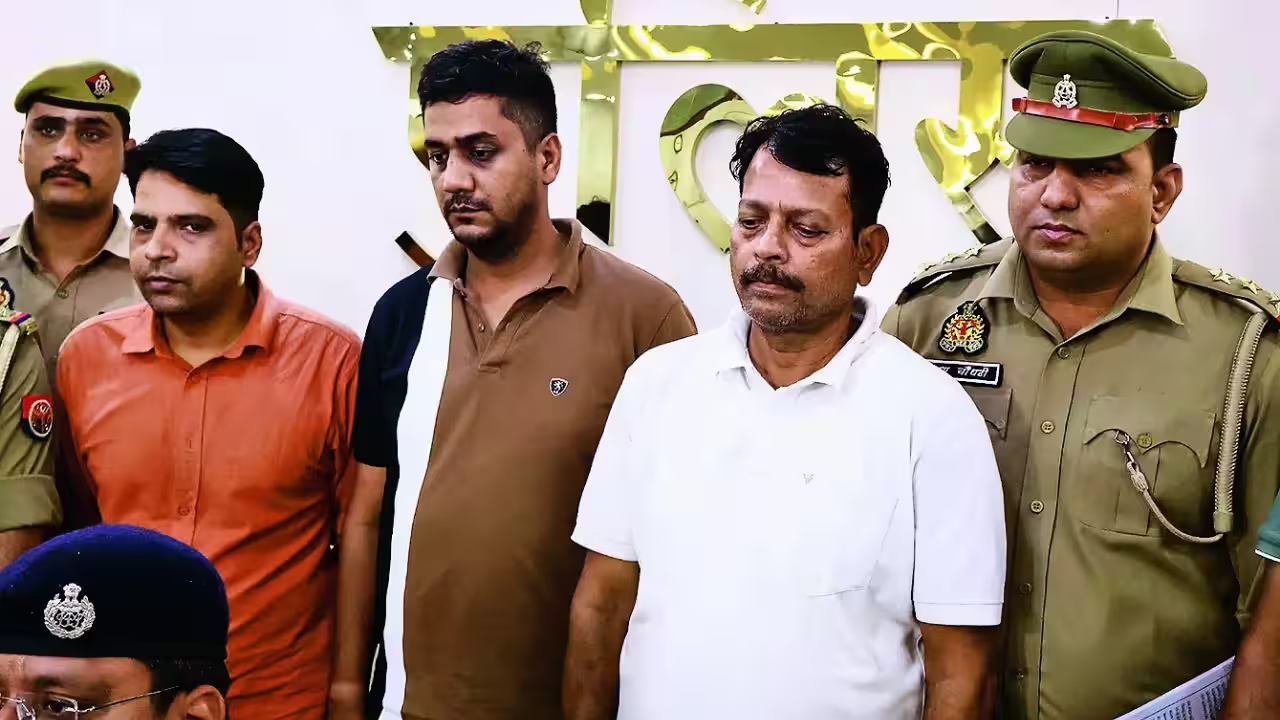

A businessman from Indirapuram allegedly lost ₹55 lakh after a group of men claimed they could “settle” a case involving the Central Bureau of Investigation and National Investigation Agency, while threatening him with arrest and the collapse of his business.
Ghaziabad Police have arrested three men in the case. Two others remain absconding. Investigators say the group initially demanded ₹15 crore and allegedly used the fear of action by powerful Central agencies to pressure the businessman into paying.
The arrested accused have been identified as Anil Pratap Singh, 64, Ankit Dwivedi, 36, and Siddharth Jain, 34. Police recovered around ₹1.9 lakh in cash, three mobile phones and a diary during the operation.
Algoritha Security Launches ‘Make in India’ Cyber Lab for Educational Institutions
A Real Notice Allegedly Became the Entry Point
The case began after the Delhi-based firm of businessman Vikas Mittal reportedly received a notice connected with the CBI or NIA.
According to police, the company’s manager, Yogesh, discussed the notice with an acquaintance named Salman. Salman allegedly claimed that he had contacts with senior government officials and could have the matter resolved.
Police say Salman introduced Yogesh to Siddharth Jain, who in turn connected him with Anil Pratap Singh.
Singh allegedly presented himself as a senior official capable of getting the notice “settled”. The businessman was then warned that he could be arrested and his company could face serious consequences if he did not pay quickly.
The group allegedly quoted a price of ₹15 crore for resolving the matter. A separate Navbharat Times report says the figure was later negotiated down to ₹5 crore and that ₹55 lakh had already been collected before the businessman approached police.
That report also describes Singh as a retired deputy joint director of the Intelligence Bureau. The Times of India report identifies him as the alleged person posing as a senior-ranking officer but does not mention his past service.
What ‘Settlement’ Means in This Kind of Fraud
The word settlement can sound legitimate, but in scams involving fake enforcement officials it usually carries a very different meaning.
Fraudsters create the impression that a criminal case, investigation or government notice can disappear if money is paid secretly.
Legitimate agencies such as the CBI or NIA do not ask suspects to privately transfer money to individuals to stop an arrest or close an investigation.
The technique works because the victim is placed under intense pressure. The caller or intermediary claims that arrest is imminent, the business may be shut down or family members may become involved.
The Indian Cyber Crime Coordination Centre has repeatedly warned about this pattern. Its advisory on “digital arrest” scams says criminals commonly impersonate the CBI, police, RBI and other agencies, accuse victims of serious offences and then demand money to “settle” fabricated cases.
The Ghaziabad case was not a conventional video-call digital arrest, based on the available police account. But the psychological method is closely related: impersonate authority, create urgency and make payment appear to be the only way out.
CCTV and Surveillance Led Police to the Suspects
Mittal filed a complaint at Indirapuram police station on September 1.
A joint operation involving the local police, SWAT personnel and the trans-Hindon surveillance team then examined CCTV footage and other intelligence inputs. Three accused were arrested on Wednesday.
Police allege that Singh later sent his son, Aniket alias Kabir, along with Ankit Dwivedi to collect money from the businessman.
Aniket and Salman are still absconding. Teams have been formed to trace them, while investigators are also checking the criminal backgrounds of those already arrested.
The case is important because the alleged fraud did not depend on sophisticated malware or a fake trading application.
It depended on insider-like knowledge, official-sounding identities and the victim’s fear that a genuine notice could escalate into arrest.
Agency Impersonation Is Becoming a Bigger Fraud Pattern
Similar intimidation scams have caused enormous losses across India.
On September 2, an 82-year-old retired NRI in Surat was reported to have lost ₹2.96 crore after criminals posing as Mumbai Police officials accused him of involvement in a ₹122-crore money laundering case. The fraudsters allegedly kept him under a so-called “digital arrest” and pressured him into transferring money.
The Union Government has acknowledged the scale of the problem. The Ministry of Home Affairs previously told Parliament that authorities had blocked more than 59,000 WhatsApp accounts and 1,700 Skype IDs linked to digital-arrest scams.
The National Cyber Crime Reporting Portal itself currently carries an alert about fake communications impersonating officials from I4C, the Intelligence Bureau and Delhi Police.
The Ghaziabad case shows why such frauds remain effective.
Victims do not necessarily fall for poor spelling or obvious fake calls. Sometimes the fraud begins with a real document or genuine business problem, giving criminals enough credibility to turn fear into payment.
What this means for you: If anyone claiming to represent the CBI, NIA, police or another government agency demands money to “settle” a case, stop the conversation and independently contact the agency or local police. Never pay an individual merely because they threaten immediate arrest or closure of a business.
https://www.linkedin.com/company/policetechnology/home/
