

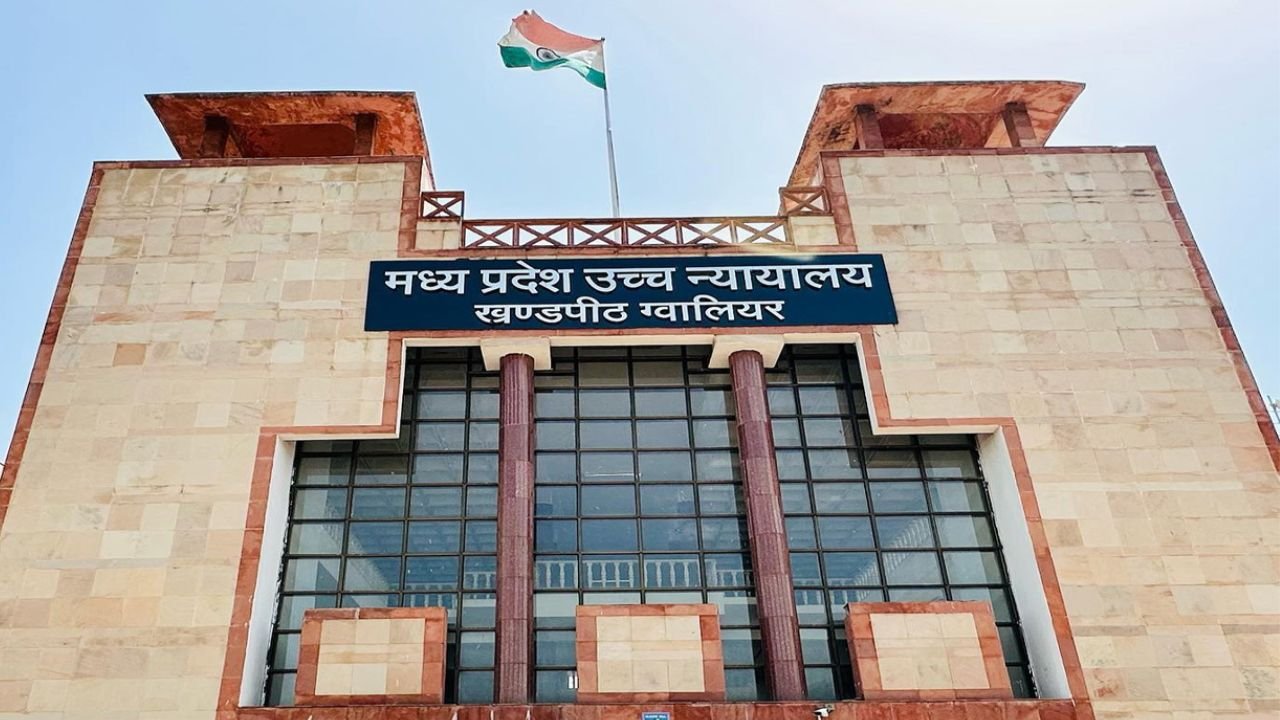

New Delhi. The Madhya Pradesh High Court has provided major relief to a woman whose bank account was completely frozen following a suspicious transaction allegedly linked to cybercrime. The court directed State Bank of India (SBI) to unfreeze the woman’s account while ordering that around ₹2.01 lakh, identified by cybercrime authorities as being linked to the suspicious transaction, be kept secured.
The High Court directed that the disputed amount be placed in a fixed deposit (FD) and allowed the woman to operate the remaining balance in her account. The order makes it clear that merely identifying a particular amount as suspicious does not necessarily justify keeping an entire bank account frozen indefinitely.
Debit Freeze Imposed After Suspicious Transaction
The matter arose after cybercrime authorities instructed SBI to place a debit freeze on the woman’s account. Officials had flagged a transaction involving approximately ₹2.01 lakh as suspicious. Following the restriction, normal withdrawals and other transactions from the account were affected.
The woman subsequently approached the Madhya Pradesh High Court challenging the complete freezing of her account and sought removal of the restrictions. The matter was heard by Justice Sandeep N Bhatt.
The High Court adopted a balanced approach by directing that the amount allegedly linked to the suspicious transaction be preserved for the purposes of the investigation, while finding no justification for continuing restrictions on the remaining balance.
₹2.01 Lakh to Be Kept in Fixed Deposit
The court directed SBI to secure the ₹2.01 lakh linked to the disputed transaction in a fixed deposit. At the same time, the woman was permitted to use the remaining funds available in her bank account.
The arrangement is intended to ensure that money relevant to the investigation remains protected without depriving the account holder of access to funds that are not connected with the disputed transaction.
The direction also highlights the need to distinguish between a specific amount under investigation and the rest of the money held in a bank account when restrictions are imposed during a cybercrime investigation.
Cybercrime Police Given Three Months
The High Court also directed the cybercrime police to proceed with the matter in accordance with law within three months. The court referred to the applicable legal provisions concerning the seizure and preservation of property or funds suspected to be connected with an offence.
The court observed that if the cybercrime authorities fail to take the required legal steps within three months, the amount kept in the fixed deposit may also be allowed to be withdrawn by the petitioner, subject to intimation to the concerned cybercrime agencies.
The direction therefore provides investigators with time to take the necessary legal action while preventing the disputed funds from being released immediately.
At the same time, it protects the account holder from an indefinite freeze on the entire account.
Court Draws Line Between Suspicious Funds and Remaining Balance
Debit restrictions on bank accounts are frequently imposed during cybercrime investigations to prevent suspected proceeds of fraud from being withdrawn or transferred. Such measures can help preserve funds that may ultimately be required as evidence or for recovery.
However, the present case highlights the importance of determining the specific amount connected with the suspected transaction rather than automatically restricting access to the entire account.
Legal experts say that in financial investigations involving cybercrime, banks and investigating agencies need to carefully distinguish between disputed funds and other legitimate money belonging to the account holder. Such an approach can protect the interests of the investigation while reducing unnecessary financial hardship for individuals whose accounts have been restricted.
Cybercrime authorities will now have to take appropriate legal action regarding the ₹2.01 lakh transaction and establish the basis on which the amount was treated as suspicious. If the investigation establishes a connection with an offence, further legal proceedings can follow.
If the required action is not taken within the period specified by the court, the woman may also be allowed to withdraw the amount kept in the FD.
The High Court’s order thus provides relief to the account holder while ensuring that the money allegedly linked to the suspicious transaction remains protected during the investigation. It also sets a time-bound framework for authorities dealing with bank accounts restricted in connection with cybercrime cases.
https://www.linkedin.com/company/policetechnology
