

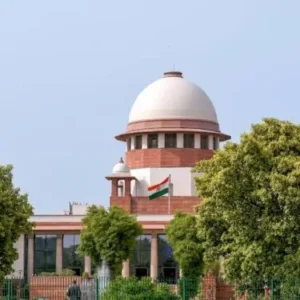
The Supreme Court has upheld professional misconduct proceedings against advocate Rizwan Siddiquee for publicly disclosing confidential information and private communications received from his former client during a television interview.
A three-judge Bench upheld the Bar Council of India’s decision to remove Siddiquee’s name from the roll of advocates for two years and prohibit him from appearing before any court, tribunal or authority during that period.
However, the court rejected former client Rehana Khan’s plea seeking enhancement of the punishment. The Bench held that Khan had also not approached the court with complete candour in the proceedings. The Supreme Court consequently imposed costs of ₹5 lakh each on both parties.
The Bench comprising Justice Vikram Nath, Justice Sandeep Mehta and Justice Vijay Bishnoi expressed strong disapproval of the conduct of both sides. It observed that judicial proceedings cannot be used as a means to settle personal disputes or obtain an advantage from controversies created or prolonged by the parties themselves.
Dispute Originated From Advocate-Client Relationship
The dispute arose from the professional relationship between Khan and Siddiquee, whom she had engaged as her advocate during 2013 and 2014.
According to Khan, she came into contact with a senior police official after visiting Malad Police Station following an altercation with her brother. She alleged that the official, while claiming to assist her, later attempted to sexually assault her.
Khan approached Siddiquee as her lawyer and shared confidential and sensitive information concerning her personal life and allegations against the police official.
A legal notice was subsequently issued to the police official through Siddiquee’s office. The circumstances surrounding the notice became a matter of dispute between the two sides.
Khan alleged that the notice dated July 15, 2014, had been issued without her authorisation, while Siddiquee maintained that it was based on a draft supplied by Khan and issued on her instructions.
On July 24, 2014, Khan filed an FIR against the police official under serious provisions of the law. Siddiquee was also named in the FIR as a person allegedly acting under the influence of the police official.
Confidential Communications Aired on Television
On July 28, 2014, Khan appeared before electronic media with her face covered and spoke about the allegations. On August 5, Siddiquee also gave television interviews.
During the broadcasts, conversations between Khan and Siddiquee, along with material said to contain their messaging exchanges, were aired publicly.
The investigating agency later searched Siddiquee’s office on August 13, 2014. The search was also broadcast on television the following day.
Khan subsequently filed a professional misconduct complaint against Siddiquee under Section 35 of the Advocates Act, 1961, on February 26, 2015. The complaint was initially taken up by the Bar Council of Maharashtra and Goa before being considered by the Disciplinary Committee of the Bar Council of India.
Bar Council Found Advocate Guilty on Three Grounds
On August 11, 2025, the Bar Council of India’s Disciplinary Committee found Siddiquee guilty of professional misconduct on three grounds.
These included allegedly issuing the legal notice without proper authorisation, disclosing confidential information that resulted in Khan’s identification in the media, and making derogatory public remarks concerning her.
The committee ordered that Siddiquee’s name be removed from the roll of advocates for two years. During that period, he was also barred from appearing before any court, tribunal or authority in India or holding himself out as an advocate.
The committee further directed him to pay ₹3 lakh to Khan and deposit another ₹2 lakh in the Welfare Fund of the Bar Council of India. Both sides challenged the disciplinary order before the Supreme Court.
Duty of Confidentiality Continues After Professional Relationship Ends
Siddiquee argued that the disciplinary proceedings were defective and that he had been denied a reasonable opportunity to defend himself. The Supreme Court rejected the contention, noting that he had appeared in the proceedings, filed a written statement, was represented by counsel and participated in the recording of evidence.
The court also rejected his justification for the television interview. Siddiquee had argued that Khan had already named him in the FIR, that he was no longer acting as her lawyer and that he was responding to allegations made against him.
The Supreme Court made it clear that an advocate’s professional duty of confidentiality does not end merely because the advocate-client relationship has come to an end or because the former client subsequently becomes an adversary.
The Bench held that an advocate cannot use information received confidentially from a client against that client. The court also emphasised that an advocate who believes he has been falsely accused has legal remedies available, but those remedies do not include publicly disclosing privileged communications.
According to the court, Siddiquee could have placed his version before the investigating agency or pursued appropriate legal proceedings. He could not, however, take confidential communications to a television channel, play recorded conversations with his former client or publicly disclose information obtained during the professional relationship.
Two-Year Disciplinary Action Upheld
The Supreme Court held that the disclosure of confidential communications was sufficient to sustain the finding of professional misconduct. It therefore declined to interfere with the two-year disciplinary action imposed by the Bar Council of India.
The court also rejected Khan’s plea seeking permanent removal of Siddiquee from the roll of advocates and ₹2 crore in compensation. The Bench found that the material on record did not justify granting enhanced relief and noted circumstances concerning Khan’s own conduct during the dispute.
The court also took note of the fact that Khan had voluntarily appeared before the electronic media and discussed her case. It further considered the subsequent legal developments in the criminal case arising from her allegations.
₹5 Lakh Costs Imposed on Both Parties
The Bench criticised both parties for prolonging litigation that had occupied the attention of the Bar Council of India, the High Court and the Supreme Court for around 11 years.
The court observed that judicial time spent on the dispute belonged to other litigants who were waiting for relief in their cases. The Supreme Court ultimately upheld the Bar Council of India’s disciplinary order dated August 11, 2025 and dismissed the connected proceedings. Both parties were directed to pay ₹5 lakh each as costs to the Supreme Court Legal Services Committee within four weeks.
The judgment therefore leaves intact the two-year removal of Siddiquee’s name from the roll of advocates, his restriction from appearing before courts and other authorities during that period, and the monetary directions imposed by the disciplinary committee.
