

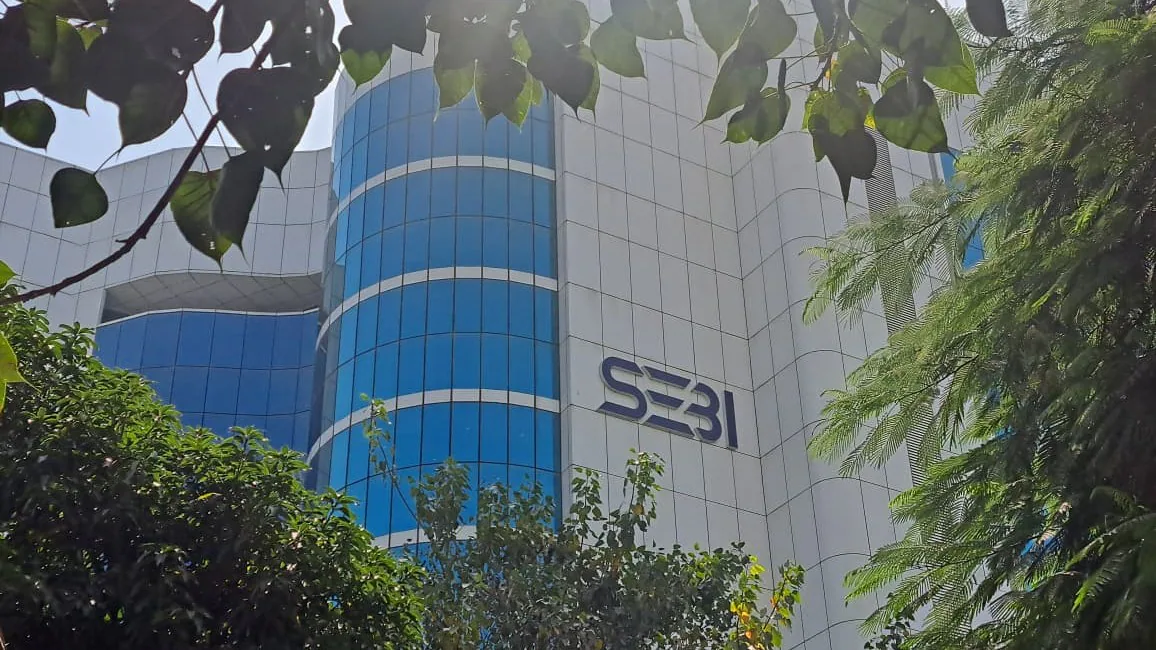

The Securities and Exchange Board of India has delivered a sweeping regulatory ruling against SME-listed entity Varanium Cloud Limited and its promoter Harshawardhan Hanmant Sabale, dismantling a high-profile corporate fraud centered on fake financials and systemic fund diversion. In a decisive final order issued by Whole Time Member Amarjeet Singh, the market regulator imposed cumulative monetary penalties totaling ₹33.08 crore on Varanium Cloud, Sabale, and seven associated entities. The regulatory body further banned both Varanium Cloud and Sabale from accessing securities markets for seven years, while prohibiting Sabale from holding any directorship or key managerial role in listed companies or registered intermediaries over the same period.
The enforcement action follows a detailed investigation initiated after preliminary examinations and media reports raised alarms regarding the financial health and disclosures of the NSE Emerge-listed company. Initial interim orders passed in May 2024 and later confirmed in October 2024 had temporarily restrained the entities pending full forensic scrutiny. The final findings have now laid bare an elaborate web of financial engineering designed to mislead investors, inflate stock valuations, and siphon public funds into private hands.
Algoritha Security Launches ‘Make in India’ Cyber Lab for Educational Institutions
The Mechanics of Financial Fabrication and Fund Diversion
SEBI’s comprehensive probe established that Sabale exercised absolute operational control over the movement of capital raised through Varanium Cloud’s initial public offering and subsequent rights issue. Of the total capital raised, the regulator identified that ₹62.51 crore—comprising ₹18.98 crore from IPO proceeds and ₹43.53 crore from the rights issue—was systematically diverted to related parties and external entities. Notably, Sabale personally received ₹32.73 crore from these diverted funds. To restore the enterprise’s balance sheet, SEBI has directed Varanium Cloud to repatriate the entire ₹62.51 crore along with 12 per cent annual interest.
The regulatory investigation uncovered a sophisticated mechanism of financial fabrication, where Varanium Cloud published astronomical sales growth figures supported entirely by bogus accounting entries. Financial statements displayed hundreds of crores in reported revenue from entities such as Amtelfone and Courage Clothing LLP, yet forensic audits of bank statements revealed zero corresponding cash receipts. By generating fictitious sales and purchase ledgers, Sabale successfully projected an illusion of hyper-growth, portraying the IT services firm as a major market innovator.
Market Manipulation, Disgorgement Orders, and Intermediary Failure
This artificially generated corporate narrative fueled intense retail investor demand, enabling the promoter to execute a classic pump-and-dump strategy. As optimistic public announcements drove equity prices higher, Sabale systematically liquidated large tranches of his holdings, reducing the promoter stake from over 63 per cent to roughly 36 per cent within a single quarterly reporting cycle. Through these unearned share sales, Sabale generated unlawful profits amounting to ₹128.77 crore at the expense of unsuspecting retail participants.
To enforce full financial accountability, SEBI ordered Sabale to disgorge the entire ₹128.77 crore in illicit gains, accompanied by a 12 per cent per annum interest penalty calculated from the transaction dates. The regulatory action extended beyond the core promoter group to penalise gatekeepers responsible for market oversight. Merchant banker First Overseas Capital was suspended from securities market activities for two years due to a grave failure in exercising due diligence and standard regulatory care while preparing the company’s prospectus.
Systemic Oversight and Safeguarding the SME Ecosystem
The stringent judgment reflects a broader regulatory pivot by the Central Government and market authorities to tighten supervision over India’s expanding SME capital markets. Over recent years, high retail participation on SME exchanges has increased the urgent necessity for stringent governance standards, rigorous audit verification, and aggressive regulatory deterrence against fraudulent listing schemes.
Legal analysts and market experts view the Varanium Cloud order as a benchmark ruling that underscores SEBI’s determination to protect retail capital from deceptive corporate practices. By combining heavy monetary fines, long-term market exclusions, mandatory disgorgement, and intermediary suspensions, the regulator has reaffirmed that market integrity remains paramount. As digital enterprise listings proliferate across national exchanges, continuous forensic scrutiny will prove crucial in safeguarding institutional credibility and sustaining long-term investor confidence.
