

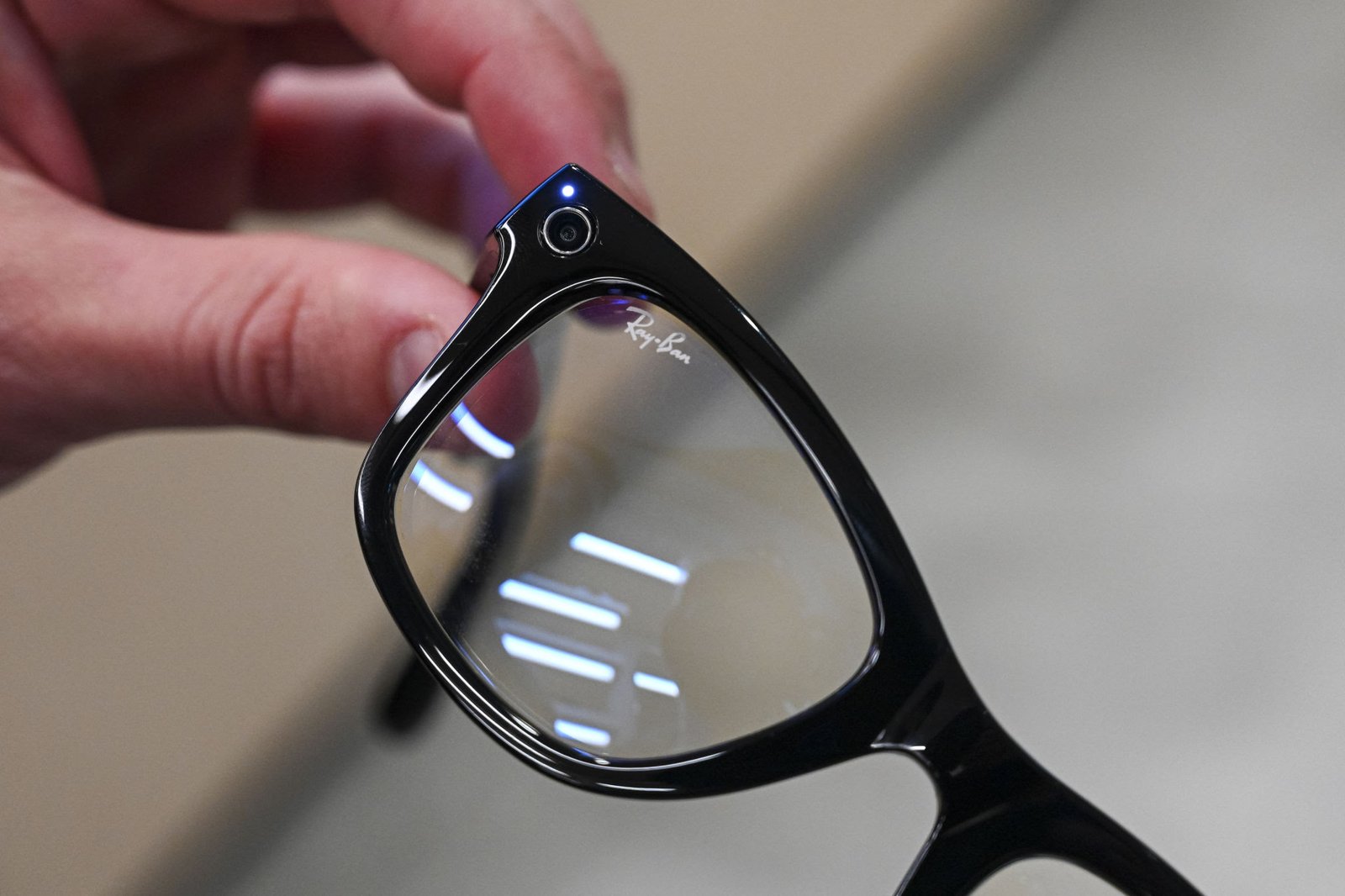

In the corridors of educational institutions across the globe, a subtle optical shift is quietly dismantling the expectation of personal privacy. Sleek, camera-equipped smart glasses, designed to look identical to everyday eyewear, have moved rapidly from niche technological novelties into mainstream student culture. What was initially marketed as a hands-free tool for content creation has quickly transformed into an unmonitored surveillance mechanism inside classrooms, hallways, and lecture halls.
The pervasive presence of these unobtrusive wearables has sparked alarming reports of covert filming, cyberbullying, and non-consensual recording of students and faculty members alike. Unlike conventional smartphones, which require a clear physical gesture to initiate recording, smart glasses allow wearers to capture high-definition audio and video through simple taps or voice commands. Consequently, fellow students and educators often remain entirely unaware that their private interactions are being broadcast or stored.
Algoritha Security Launches ‘Make in India’ Cyber Lab for Educational Institutions
The Rise of Ambient Capture on Campus
This quiet proliferation has given rise to a phenomenon researchers describe as ambient capture, where individuals are recorded without their knowledge during routine daily activities. On social media platforms, prank channels and creator accounts have increasingly deployed camera spectacles to film unsuspecting peers for sensationalist content. Young women on university campuses have reported targeted harassment, where strangers wearing smart glasses engage them in conversation while secretly streaming the interaction online.
The harm generated by these encounters extends far beyond the immediate moment of interaction. Once uploaded, these clips frequently attract targeted online abuse, public ridicule, and doxxing, where victims find their personal contact information exposed to anonymous commentators. Within secondary schools and colleges, the ease of capturing and instantly uploading such media has intensified systemic concerns surrounding digital harassment and peer-to-peer surveillance.
Educational administrators are finding themselves ill-equipped to police devices that visually mirror standard prescription frames. While traditional campus codes of conduct strictly prohibit unauthorized recording in sensitive areas like changing rooms and examination halls, detecting a miniature lens integrated into a frame arm presents unprecedented logistical hurdles for school authorities.
From Exam Cheating to Algorithmic Doxxing
Beyond student safety and psychological well-being, camera-laden spectacles are undermining academic integrity and institutional security. In India, law enforcement and educational boards have already intercepted smart glasses being utilized for sophisticated cheating schemes in competitive examinations. In Pune, two engineering students were caught wearing Meta smart glasses during university examinations, prompting authorities to investigate broader syndicates leveraging wearable tech for academic fraud.
The privacy risks associated with these devices expand exponentially when combined with emerging artificial intelligence capabilities. At Harvard University, a student project titled I-XRAY demonstrated how smart glasses paired with public facial recognition search engines could identify strangers in real time. By streaming video directly to a server, the system scoured public databases to instantly reveal names, home addresses, phone numbers, and family details of unsuspecting passersby.
This technical synthesis turns standard eyewear into a walking database lookup, stripping away any lingering boundary between public visibility and personal anonymity. The demonstration highlighted how easily commercial hardware can be repurposed for intrusive tracking, transforming an everyday casual encounter into a severe personal security liability.
The Regulatory Void and Technological Countermeasures
In response to growing public outcry, hardware manufacturers have introduced software and hardware safeguards to signal active recording. Meta and other technology developers have implemented automated protocols designed to shut off the camera if the front-facing LED light indicator is covered, painted over, or physically tampered with. However, privacy advocates contend that software-level fixes remain vulnerable to aftermarket modifications and digital bypasses.
From a legal standpoint, India’s regulatory framework is actively grappling with the rapid evolution of consumer surveillance hardware. While the Digital Personal Data Protection Act and provisions under the Bharatiya Nyaya Sanhita address unauthorized data processing, voyeurism, and criminal stalking, there is currently no dedicated legislation specifically governing AI-enabled wearable cameras. Legal experts emphasize that existing statutes were framed around static cameras and smartphones rather than continuous, covert wearable capture.
As the Central Government evaluates systemic updates to privacy standards, educational institutions are taking proactive steps by establishing clear technology guidelines. School boards across several states are moving to enforce ban policies on all smart wearables within academic blocks and test centers. Ultimately, restoring campus safety will require a combination of strict institutional rules, legal accountability, and robust hardware enforcement to ensure that digital innovation does not come at the expense of fundamental personal privacy
