

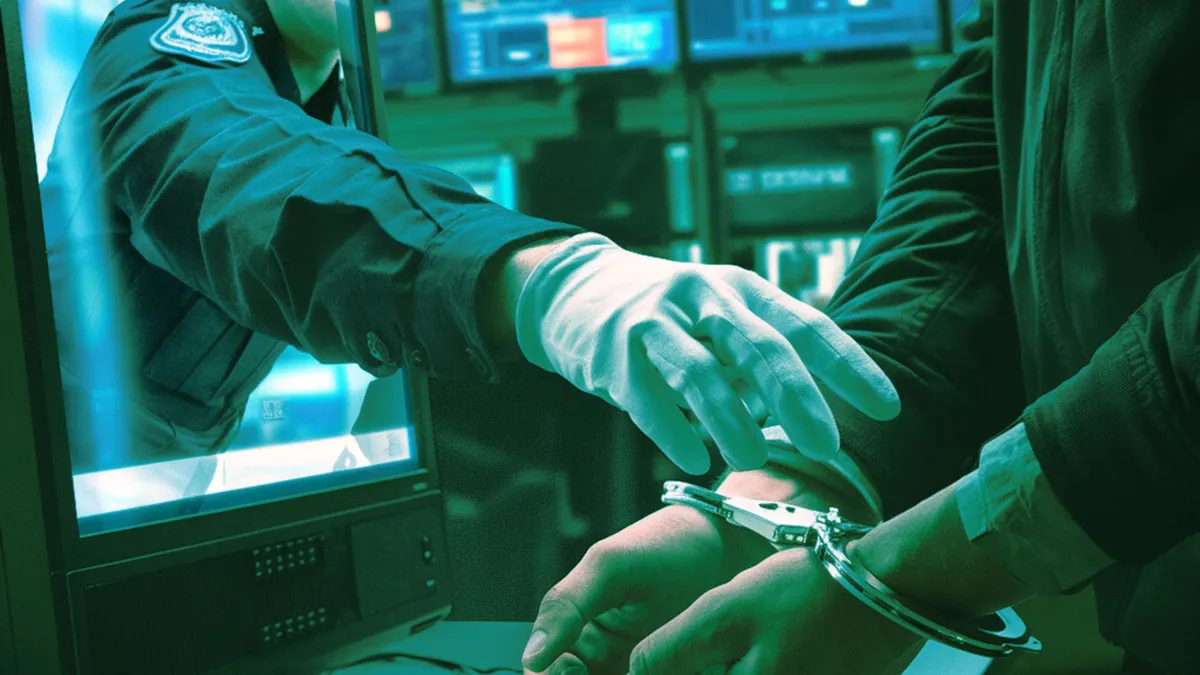

Mohan Lal Ahuja had to fly back from Sikkim to Lucknow in the middle of the night, gripped by fear that his entire family faced arrest by the Anti-Terrorism Squad. The retired captain and principal of a marine college in Sikkim had spent five days under sustained digital surveillance by fraudsters posing as police and Enforcement Directorate officials, ultimately transferring ₹52 lakh before the deception unravelled. Lucknow’s cybercrime police have registered a case and frozen ₹20 lakh of the amount so far.
The ordeal began on 18 August with a call from someone identifying himself as Inspector Jitendra Tripathi, claiming to be posted at Delhi headquarters. The caller alleged that a SIM card and debit card issued using Ahuja’s Aadhaar details were being used for illegal activities, and that an arrest warrant had already been issued against him.
Isolation as the Fraud’s Central Mechanism
Over the following days, the fraudsters allegedly maintained contact through a mix of phone and video calls, rotating between personas claiming affiliation with different agencies to reinforce the impression of a coordinated, multi-agency investigation. Ahuja was specifically instructed not to disclose the situation to anyone, a directive central to nearly every documented digital arrest case in India, since isolation prevents victims from consulting family members or colleagues who might recognise the fraud immediately.
This case follows a now well-established template. A retired marine biotechnologist in Goa lost ₹97 lakh after a four-day digital arrest last year despite her own initial scepticism, while an 82-year-old Pune resident was defrauded of ₹10.74 crore in January after fraudsters invoked the same fabricated link to businessman Naresh Goyal’s name that has recurred across multiple unrelated digital arrest cases nationally. The consistency of these fabricated details, from invoking real public figures to citing Aadhaar misuse, suggests organised scripting rather than improvised individual deception.
The Threat That Forced a Midnight Flight
What distinguishes Ahuja’s case is the specific threat that fraudsters allegedly deployed once he showed hesitation: that his entire family, not just him personally, could face action from the Anti-Terrorism Squad if he failed to comply. This escalation from individual to familial threat appears designed to overcome exactly the kind of resistance a retired military officer might otherwise offer, compelling him to abandon his post in Sikkim and return to Lucknow specifically to arrange the payment in person.
On 20 August, Ahuja visited an ICICI Bank branch in Gomti Nagar and transferred ₹45 lakh to one account and a further ₹7 lakh to another, both provided directly by the fraudsters. The money moved to accounts linked to Federal Bank in Kerala and Punjab National Bank’s payments banking arm, a geographic dispersal pattern consistent with how digital arrest proceeds are typically routed through disconnected regional accounts to complicate tracing.
Why the Golden Hour Determined What Could Be Saved
The fraudsters switched off their phones almost immediately after receiving the funds, and Ahuja approached Gomti Nagar police the same night before being redirected to the dedicated cybercrime station. The ₹20 lakh police managed to freeze reflects the same “golden hour” principle that has become central to India’s fraud recovery framework, where reporting within the first sixty to 120 minutes after a fraudulent transfer allows the 1930 helpline to request an account freeze before funds are withdrawn or moved through additional layers.
India’s broader recovery infrastructure has scaled substantially in response to this fraud category, with the Indian Cyber Crime Coordination Centre having frozen approximately 1.33 million mule accounts and recovered roughly ₹5,489 crore nationally as of mid-2026, aided by an AI-based detection platform called MuleHunter.AI that the Ministry of Home Affairs has directed all financial institutions to integrate by December 2026. Digital arrest scams specifically accounted for more than 30,000 complaints in 2025 alone, with the Supreme Court estimating nationwide losses near ₹3,000 crore for the year, a figure that has prompted the apex court to demand dedicated criminal legislation addressing deepfake-enabled and impersonation-based fraud.
Investigators continuing to trace the remaining ₹32 lakh are working with Federal Bank and Punjab National Bank to identify the account holders and any subsequent transfers, while reiterating the standard warning that no genuine Indian law enforcement or investigative agency conducts arrests through video calls or demands payment to cancel a warrant.
