

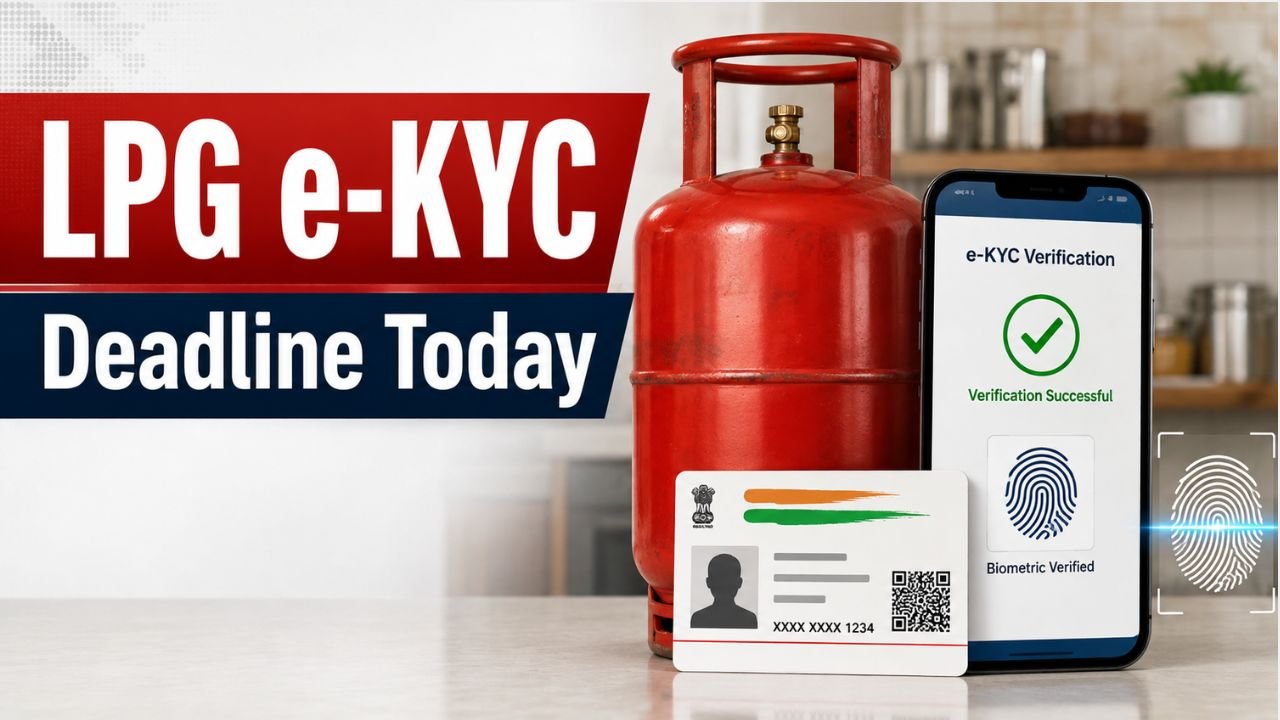

New Delhi: The deadline for domestic LPG customers to complete Aadhaar-based e-KYC is August 16, 2026. IndianOil has urged customers who have not yet completed the process to undergo Aadhaar-based biometric authentication at the earliest. According to the company, failure to complete e-KYC within the stipulated period could affect access to LPG cylinders at domestic rates.
However, the deadline does not mean that an LPG connection will be cancelled immediately. Instead, the benefit of receiving cylinders at the domestic rate could remain affected until the customer completes the verification. In such a situation, some consumers may have to pay a higher price for LPG. Customers who have not completed Aadhaar authentication have therefore been advised to complete the process without delay.
e-KYC Introduced for LPG Connection Verification
Aadhaar-based e-KYC is aimed at strengthening the identification and verification of LPG consumers. The process is intended to ensure that domestic LPG connections are being used by the genuine beneficiaries. It is also expected to improve transparency in domestic LPG distribution and help prevent misuse of connections and diversion of subsidised or domestic cylinders.
Aadhaar-based biometric authentication was made mandatory for non-PMUY LPG customers from March 2026, according to the information provided by the oil companies. Since then, oil marketing companies have been sending reminders to customers who have not completed the verification process.
How IndianOil Customers Can Complete e-KYC at Home
Indane customers can complete their e-KYC from home through the IndianOil ONE app. Customers first need to register on the app using the mobile number and email address linked to their LPG connection. They then have to enter their 16-digit LPG ID, which can be found on the cash memo or subscription voucher.
After the consumer details appear, customers can go to the My Profile section and select the re-KYC option. After providing the required consent and following the instructions, they can choose face authentication and complete identity verification through the Aadhaar FaceRD app.
Customers who do not wish to complete the process at home can visit their Indane distributor. They can also seek assistance from the delivery personnel at the time of cylinder delivery to complete the e-KYC process.
Bharat Gas and HP Gas Customers Also Have Options
Bharat Gas customers can complete e-KYC through the Hello BPCL app. After registration, customers can select the e-KYC option and complete verification using the OTP sent to their registered mobile number.
HP Gas customers can use the HP Pay app to initiate the process. After registering with the mobile number linked to their LPG account and completing OTP verification, customers need to go to the My HP section and select LPG followed by e-KYC. After providing consent, they can select the Capture Face option and complete facial authentication through the Aadhaar FaceRD app.
Customers who have not yet completed Aadhaar authentication can also approach their respective LPG distributor or seek assistance from delivery personnel.
Domestic and Commercial LPG Prices Differ Sharply
In August 2026, the price of a 14.2-kg domestic LPG cylinder is ₹942 in Delhi. The price is ₹968 in Kolkata, ₹941.50 in Mumbai and ₹957.50 in Chennai.
The 19-kg commercial LPG cylinder is considerably more expensive. Its price is ₹2,738 in Delhi, ₹2,691.50 in Mumbai, ₹2,872.50 in Kolkata and ₹2,906 in Chennai.
The 14.2-kg cylinder is primarily used by household consumers, while 19-kg cylinders are generally used by restaurants, roadside eateries, shops and other commercial establishments. With the e-KYC deadline approaching, eligible LPG consumers who have not yet completed Aadhaar authentication should complete the process through their oil company’s official channels to avoid any potential disruption to domestic-rate LPG benefits.
About the author — Suvedita Nath is a science student with a growing interest in cybercrime and digital safety. She writes on online activity, cyber threats, and technology-driven risks. Her work focuses on clarity, accuracy, and public awareness.
