

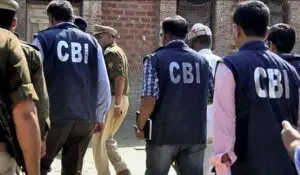
A special CBI court in Mohali has rejected the bail plea of Kanhaiya Lal, who is accused of allegedly providing a mule bank account used by cyber fraudsters to route and withdraw part of the ₹2 crore allegedly defrauded from a retired chief engineer of the Punjab State Power Corporation Limited (PSPCL).
Special CBI Judge Baljinder Singh Sra dismissed the bail application, observing that the investigation was still underway, the chargesheet had not yet been filed and the defrauded money had not been recovered. However, the court allowed the accused to approach it again for bail after the filing of the chargesheet. The court also clarified that its observations on the bail application would not affect the merits of the main case.
The CBI has registered the case under Section 318(4) of the Bharatiya Nyaya Sanhita for cheating and Section 66D of the Information Technology Act. The agency took over the investigation following an order of the Punjab and Haryana High Court dated March 17. The original FIR had been registered at the Cyber Crime Police Station in Jalandhar.
According to the investigation, PSPCL chief engineer Sukhmander Singh retired on April 30, 2025. The cyber fraudsters allegedly contacted him on May 9, 2025, impersonating government officials and law enforcement personnel. They allegedly told him that a SIM card issued in his name was being used for illegal activities in Mumbai and that a bank account linked to him was involved in a money-laundering case.
The fraudsters allegedly threatened Singh with legal action and arrest and kept him under continuous phone and video calls. The method is commonly known as a “digital arrest” scam. The accused allegedly sent bank account details to Singh through WhatsApp and instructed him to transfer money through RTGS.
Acting under fear and coercion, Singh allegedly transferred a total of ₹2 crore in 10 transactions to nine bank accounts between May 13 and June 11, 2025. He realised that he had been cheated on June 12 and subsequently approached the authorities.
During the investigation, the CBI traced the movement of the money through first-, second- and third-layer beneficiary accounts. According to the agency, substantial portions of the funds were withdrawn through ATMs, cash transactions and cheque withdrawals or transferred to other accounts, in several cases on the same day the money was credited.
Kanhaiya Lal, a resident of Nagaur in Rajasthan, was identified during the investigation as one of the individuals allegedly linked to the money trail. According to the CBI, ₹1.5 lakh was credited to his Punjab National Bank account on May 23, 2025, from an account belonging to Saismruti Charitable Trust, which was identified as the first beneficiary account under investigation.
The CBI alleged that Lal subsequently withdrew ₹45,000 through an ATM, transferred ₹20,000 through UPI to Sher Mohammad, paid ₹1,000 to Bharat Garva and transferred another ₹90,500 through the Immediate Payment Service (IMPS).
The agency arrested Lal from his residence in Nagaur on June 30. After obtaining transit remand from a Nagaur court, the CBI produced him before the special CBI court in Mohali on July 1, following which he was sent to judicial custody.
While seeking bail, Lal claimed that he was innocent and had been falsely implicated. His counsel told the court that a search of his residence on June 30, conducted under a search warrant issued on June 23, had not resulted in the recovery of any incriminating material.
The accused further claimed that during the investigation he had disclosed that he had sold his PNB account to a person named Gajendra from Nagaur for ₹5,000 and had handed over the SIM card linked to the account. His counsel argued that the disclosure could not be treated as admissible evidence and that no incriminating material had been recovered from his possession.
The CBI opposed the bail plea, arguing that Lal had provided a mule account to cyber criminals, which was allegedly used to layer and withdraw part of the fraud proceeds. The court referred to a recent Delhi High Court judgment concerning mule accounts and observed that persons providing such accounts can play an important role in a criminal conspiracy and their involvement cannot automatically be treated as peripheral.
Considering that the investigation is still pending, the chargesheet has not been filed and the defrauded money remains to be recovered, the Mohali court found no grounds to grant bail at this stage and dismissed the application.
