


New Delhi: Continuing the post-lunch proceedings on the second day of the FutureCrime Summit 2026 at Bharat Mandapam, experts, law enforcement officials, and child safety advocates gathered for Panel 11. Titled “Protecting the Vulnerable: Child Safety, Cyberstalking and Online Victim Protection & CSAM,” the session examined the rising threat of digitally manipulated content, deepfake exploitation, and social media abuse targeted at minors.
Evolving Delivery Architecture and Digital Risk Dynamics
Moderated by Garima Goswamy, Principal Risk Advisor at Inquest Global, the panel focused on bridging gaps between technological delivery systems, statutory compliance, and trauma-informed law enforcement responses.
The transition of predatory behavior from public physical environments to encrypted digital spaces presents severe challenges for child safety. By leveraging algorithmic recommendation engines and unencrypted media, threat actors exploit gaps in digital platforms, requiring structural safety-by-design frameworks to protect minor users.

Detailed Perspectives Across Digital Design, Global Enforcement, and Cyber Psychology

Paakhi Garg, Founder of the World Cybersecurity Forum, detailed the evolution of digital threat delivery mechanisms, pointing out that while child abuse itself is not new, the digital delivery architecture has expanded drastically. She explained that online platforms allow predators to bypass traditional physical barriers and enter private personal spaces directly. Addressing statutory protections, Garg highlighted Section 9 of India’s Digital Personal Data Protection (DPDP) Act, noting that practical enforcement remains a primary operational hurdle. She called for mandatory “safety by design” standards across software platforms, observing that underage users routinely circumvent age verification controls due to algorithmic engagement loops, while educational institutions inadvertently increase minor exposure by publishing unencrypted photos and video footage online.
Smita Mitra, Former Criminal Intelligence Officer at INTERPOL, outlined the operational transformation required within policing agencies, arguing that law enforcement strategies must shift from being strictly offender-centric to victim-centric. She emphasized that multi-agency intelligence sharing surrounding sensitive exploitation material must follow stringent “need-to-know” protocols to protect victim privacy. Citing global enforcement models such as the Victim Identification Task Force, Mitra explained that international law enforcement bodies must operate as an interconnected network to accelerate victim identification, halt ongoing abuse, and provide long-term psychological support to survivors.
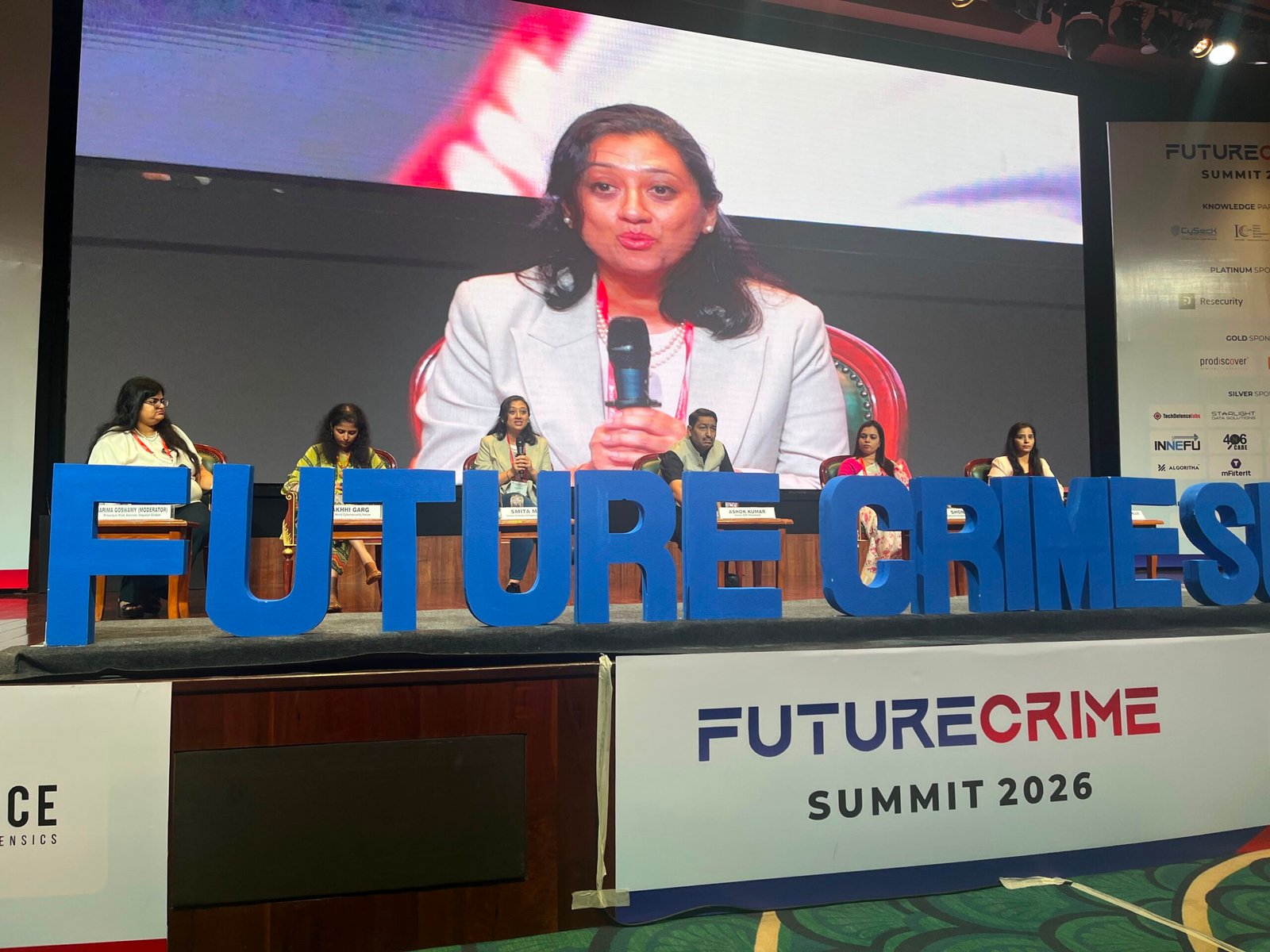
Ashok Kumar, DGP, Uttarakhand, examined the psychological dimensions of online child exploitation, stressing the necessity of early behavioral symptom recognition in affected minors. He observed that many domestic exploitation incidents—particularly those involving familial dynamics—remain unreported due to systemic fear and institutional distrust. Warning that existing legal frameworks lack sufficient deterrence against AI-generated child abuse material and deepfake manipulation, he advocated for specialized legislation similar to the POCSO Act, specifically tailored to govern digital spaces and mandate structured monitoring across school administrations, parents, and peer support networks.

Shonal D, Anti-Cybercrime Strategist, AI & Cyber Psychologist, focused on the operational friction caused by technological speed, pointing out that the rapid velocity of synthetic media creation far outpaces traditional police investigative cycles. She emphasized that expanding community education and public awareness is vital to bridging this operational gap and encouraging early reporting.

Complementing this perspective, Tanmayee Tilekar, Cybersecurity Expert, highlighted the importance of social support structures, asserting that building community trust and actively encouraging child victims to disclose abuse are essential prerequisites to restoring confidence and ensuring comprehensive survivor protection.
Follow for daily updates on cybercrime, corporate fraud, DFIR, hacking, investigations, and digital forensics
