

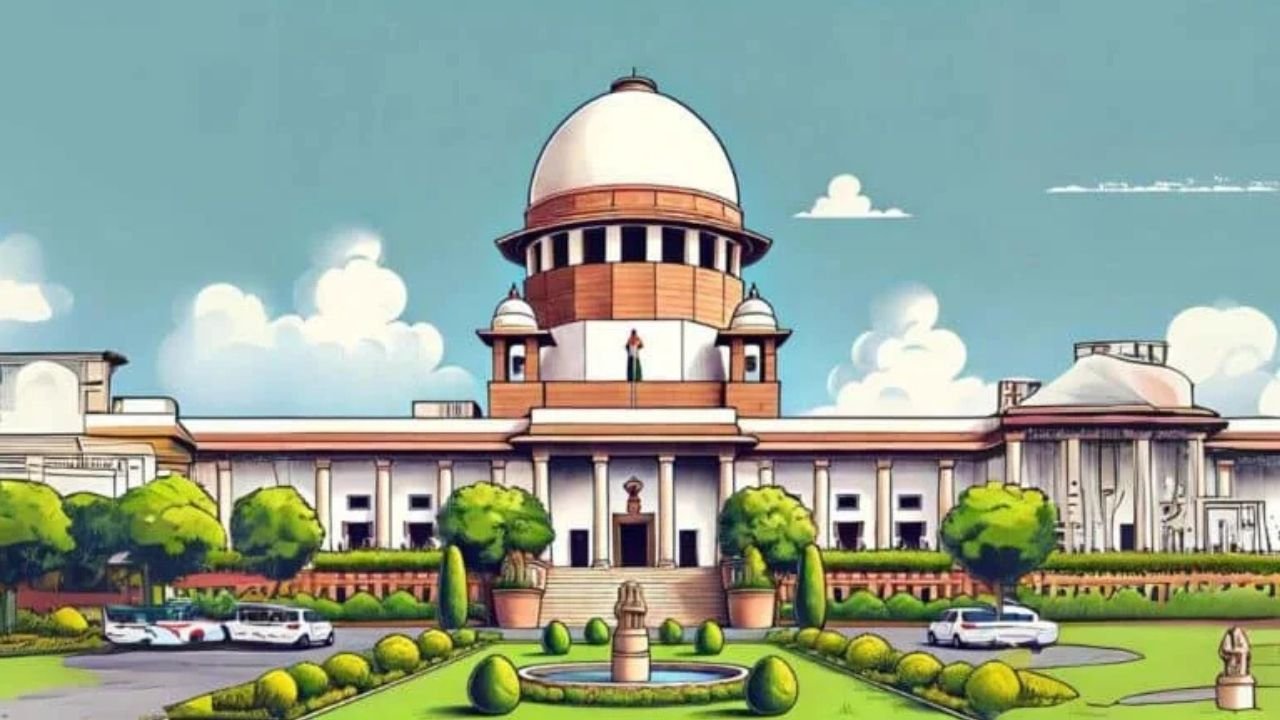

New Delhi: Taking serious note of the growing menace of digital arrest scams, the Supreme Court on Tuesday issued 13 interim directions aimed at strengthening India’s response to cyber-enabled financial frauds. The apex court directed the Reserve Bank of India (RBI) to prepare and circulate a Standard Operating Procedure (SOP) within four weeks for handling mule accounts and cyber fraud accounts across the country. The court also ordered the nationwide implementation of grievance redressal and money restoration mechanisms, stronger coordination among enforcement agencies and greater public awareness to prevent victims from falling prey to organised cybercrime networks.
A Bench headed by Chief Justice of India Surya Kant observed that its earlier directions issued in December 2025 and February 2026 had already sought coordinated action against digital arrest frauds, mule bank accounts, SIM box misuse and weaknesses in cybercrime grievance redressal systems. While reviewing the progress made so far, the court emphasised the need for faster implementation of existing mechanisms and issued fresh interim directions to improve investigation, prevention and recovery of fraudulently transferred funds.
The Supreme Court directed the RBI to formulate and circulate a comprehensive SOP for identifying, monitoring and dealing with mule accounts that are frequently used by cybercriminals to receive and transfer proceeds of fraud. The court also instructed all States, Union Territories and law enforcement agencies to expeditiously adopt the grievance redressal and money restoration modules provided under the Ministry of Home Affairs’ SOP issued on January 2, 2026. Authorities were also directed to create widespread public awareness regarding these mechanisms and ensure that courts dealing with frozen bank accounts are informed about the available restoration process without affecting any other legal remedies available to victims.
The Bench further ordered that future status reports must include detailed state-wise and bank-wise data on complaints received, grievances disposed of, restoration orders issued, restoration completed and the total amount of money successfully returned to victims. The court said such data would help assess the effectiveness of the country’s cyber fraud response framework and identify areas requiring further improvement.
The court also directed all remaining States and Union Territories that have not yet operationalised their State Cyber Crime Coordination Centres to notify and establish them within four weeks. In addition, the States have been asked to adopt the e-Zero FIR mechanism in consultation with the Indian Cyber Crime Coordination Centre (I4C) to enable faster registration and investigation of cybercrime complaints.
The Supreme Court directed the I4C to provide all necessary assistance to States for implementing these measures. It also instructed authorities to ensure the expeditious disposal of matters relating to frozen bank accounts in cyber fraud investigations. The Inter Departmental Committee (IDC) has been asked to undertake nationwide awareness campaigns on cybercrime prevention, grievance redressal mechanisms, recovery procedures and the Ministry of Home Affairs’ SOP.
The Bench further directed the IDC to examine additional technological measures that could help prevent digital arrest scams, facilitate faster recovery of stolen funds and improve investigation capabilities. It has also been asked to study proposals relating to shared liability, victim compensation mechanisms and the possibility of reducing the CBI’s existing ₹10 crore threshold for investigating digital arrest cases while permitting aggregation of linked network-based fraud cases.
The court additionally instructed the Department of Telecommunications (DoT), the Ministry of Electronics and Information Technology (MeitY) and the I4C to examine the feasibility of introducing time-based restrictions on audio and video calls as a preventive measure against digital arrest frauds. A detailed report outlining the practicality, safeguards and possible use cases has been sought during the next hearing.
The Supreme Court noted encouraging progress presented by the I4C, which reported that complaints relating to digital arrest scams had declined from 1.23 lakh in 2024 to 58,249 during 2025 and further to 16,377 cases up to June 2026. The court also observed a corresponding reduction in the total amount defrauded. It was informed that the CBI is presently investigating 10 digital arrest cases, including one organised network involving 238 victims, 67 bank accounts and approximately ₹80 crore, with searches conducted across 16 States. The matter has been listed for further hearing on September 16, 2026.
Prof. Triveni Singh, renowned cybercrime expert and former IPS officer, said digital arrest scams have evolved into highly organised crimes involving fake identities, forged legal documents, mule accounts and sophisticated psychological manipulation. He said strict coordination among banks, telecom operators, regulators and law enforcement agencies, coupled with rapid reporting by victims and effective public awareness, remains essential to disrupting cyber fraud networks and minimising financial losses.
About the author — Suvedita Nath is a science student with a growing interest in cybercrime and digital safety. She writes on online activity, cyber threats, and technology-driven risks. Her work focuses on clarity, accuracy, and public awareness.
Follow for daily updates on cybercrime, corporate fraud, DFIR, hacking, investigations, and digital forensics
