

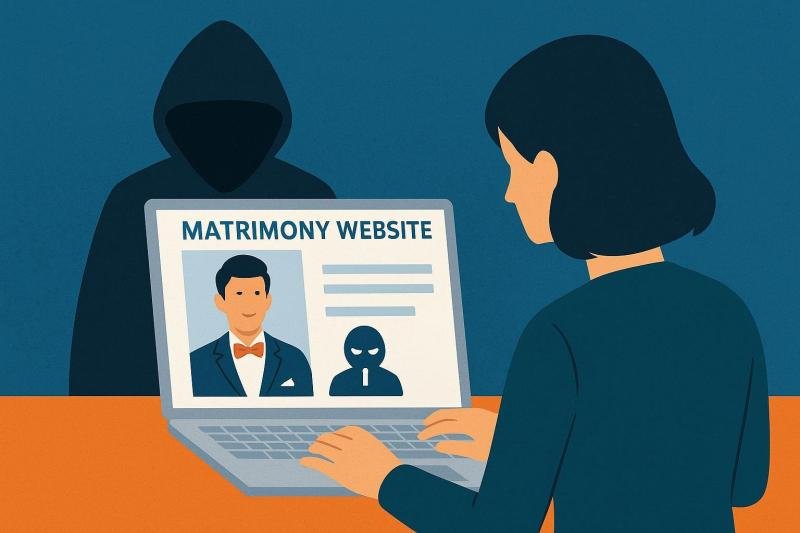
New Delhi: People searching for life partners on matrimonial platforms are facing an increasingly sophisticated cyber threat as fraudsters leverage generative Artificial Intelligence (AI) to create highly convincing fake identities. AI-generated photographs, deepfake video calls, forged identity documents and natural-sounding conversations are making these scams far more difficult to detect. Cybercriminals first build trust with victims before luring them into investment schemes, fabricated emergencies or other financial frauds.
In one recent case, a 35-year-old software engineer received a marriage proposal from a woman claiming to be an architect through a matrimonial platform. Her profile featured attractive photographs, verified documents and an active social media presence. After several weeks of conversations and seemingly genuine video calls, she introduced him to a forex trading opportunity, claiming it offered safe and consistent returns. The victim invested through what appeared to be a legitimate trading platform, where the dashboard initially displayed steady profits. However, when he attempted to withdraw his money, the platform became inaccessible. Investigators later discovered that the woman never existed. Her photographs had been generated using AI, the video calls were deepfakes, and the identity documents were entirely forged.
According to a global identity verification study, India now ranks third worldwide in the number of newly created romance scam profiles, accounting for nearly 12 percent of such fraudulent profiles globally.
Several similar cases have surfaced in recent months across states including Gujarat and Kerala. In Surat, Gujarat Police arrested five accused allegedly involved in operating fake matrimonial profiles to lure victims into fraudulent forex investment schemes. Meanwhile, Kochi Cyber Police have also warned that cybercriminals are increasingly using matrimonial platforms to identify financially stable individuals and target them for fraud.
According to a Researcher at Algoritha Security, cybercriminals previously relied on stolen photographs and fake names to create fraudulent profiles. Today, however, AI enables them to generate entirely new, realistic-looking faces and digital identities, making it significantly harder for users to distinguish genuine profiles from fake ones. The objective remains the same—to gain trust before stealing money or sensitive personal information.
Renowned cybercrime expert and former IPS officer Prof. Triveni Singh said matrimonial fraudsters rarely ask for money immediately. Instead, they spend weeks or even months building emotional connections through regular conversations and video calls before introducing investment opportunities or seeking financial assistance under the pretext of medical emergencies, visa issues, customs charges or other fabricated situations. He advised users not to rely solely on online profiles, photographs or video calls, and stressed the importance of involving family members and independently verifying a person’s identity.
Experts recommend treating certain behaviours as major warning signs, including attempts to build emotional trust very quickly, moving conversations to private messaging apps early, avoiding in-person meetings or interactions with family, requesting personal information, or introducing investment opportunities or financial assistance soon after establishing contact. Unusually polished photographs, inconsistent personal details and suspicious behaviour may also indicate an AI-generated fake profile.
Anyone who becomes a victim of such fraud should immediately stop communicating with the scammer, preserve all digital evidence—including chat records, screenshots, payment receipts, phone numbers and emails—and report the incident without delay through India’s National Cyber Crime Helpline (1930) or the National Cyber Crime Reporting Portal. Victims should also report the fraudulent profile to the matrimonial platform to help prevent others from falling prey to similar scams.
